Thought leadership in the advertising and marketing world is loud, crowded, and often self-congratulatory. At the same time, leadership culture is shifting: audiences are increasingly drawn to vulnerability, empathy, and emotional honesty over polished platitudes from the C-suite.
Copacino Fujikado set out to create a distinct form of thought leadership that reflected its internal values—humility, egalitarianism, and empathy—while delivering content people would genuinely want to spend time with.
How I F*cked Up is a podcast series built around one simple, radical idea: every successful leader has a story about a time they failed, and those stories are often more valuable than any victory lap. By giving respected marketing and business leaders a platform to openly discuss their biggest career mistakes, Co aimed to strip away posturing and replace it with candor.
The objectives were:
Instead of producing a tightly scripted podcast packed with best practices and talking points, Co created space for unscripted, uncomfortable conversations about real mistakes.
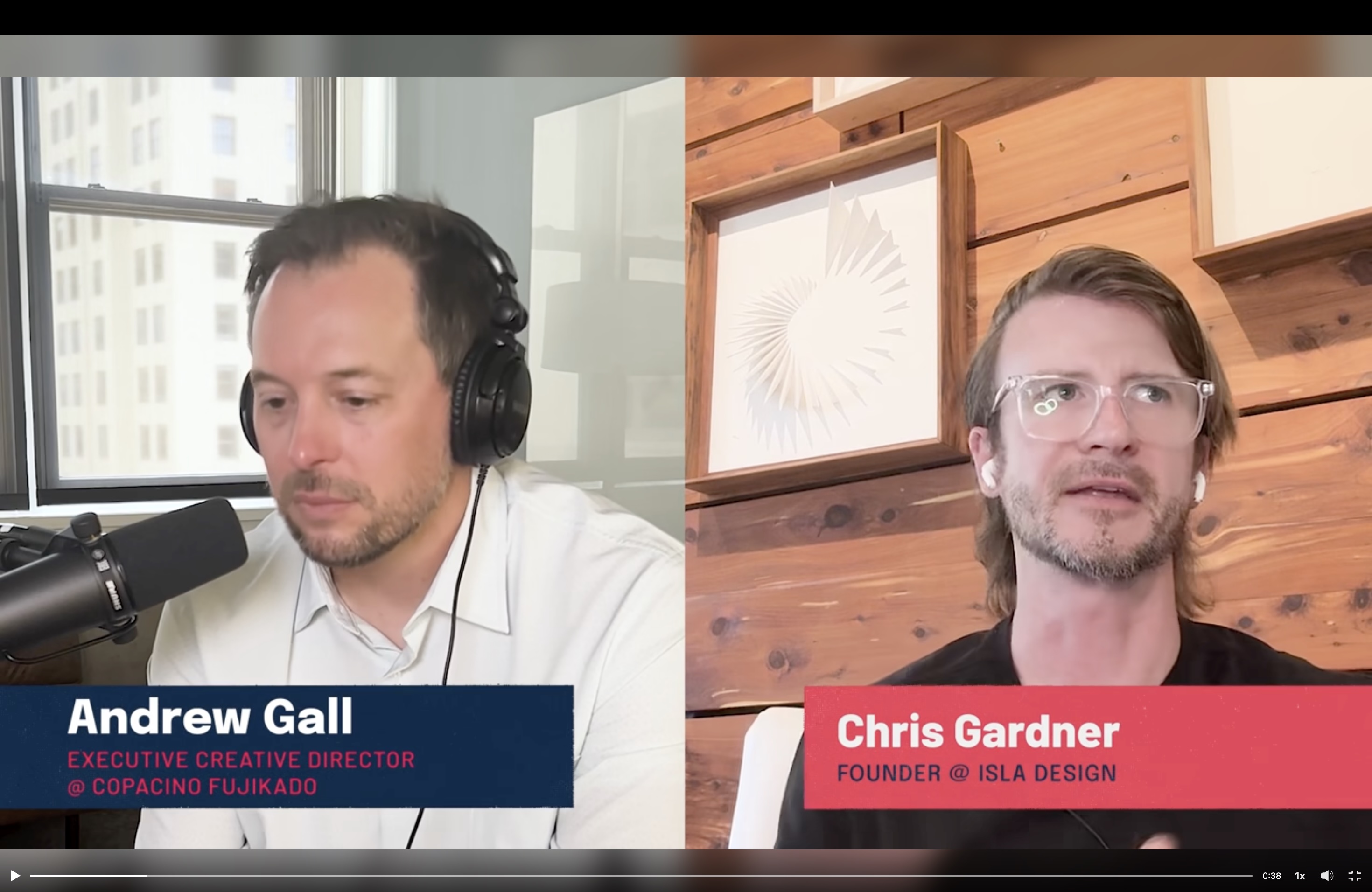
Each episode features Co Executive Creative Director Andrew Gall in a candid, freewheeling conversation with an outside marketing or business leader. Guests range from international creative directors and senior marketers to clients and professional presentation coaches. The only requirement for guests: come prepared to talk honestly about a moment when things went wrong.
Conversations were recorded in a relaxed, conversational format designed to feel less like an interview and more like a confessional. Guests weren’t guided toward tidy lessons or sanitized anecdotes; they were encouraged to sit in the discomfort, unpack what happened, and reflect on what they learned only after the fact.
One of the biggest challenges was convincing high-profile leaders to be that open on the record. Failure is still taboo in many professional circles, particularly for senior executives. Co overcame this by leveraging trust—both personal relationships and the credibility of the agency—and by modeling vulnerability first.
Distribution was intentionally organic, relying on word-of-mouth, social sharing, and professional networks rather than heavy paid promotion. This allowed the content to find an audience that genuinely wanted it.
According to Libsyn, one of the world’s largest podcast hosting platforms, an episode that receives more than 124 downloads within 30 days performs better than 50% of podcasts globally. By its third episode, How I F*cked Up had already surpassed that benchmark.
To date, the series has amassed more than 5,000 listeners across 56 unique countries. What began as an agency-led experiment quickly became a conversation that resonated in a big way, demonstrating that the experience of failure transcends job titles, industries, and borders.