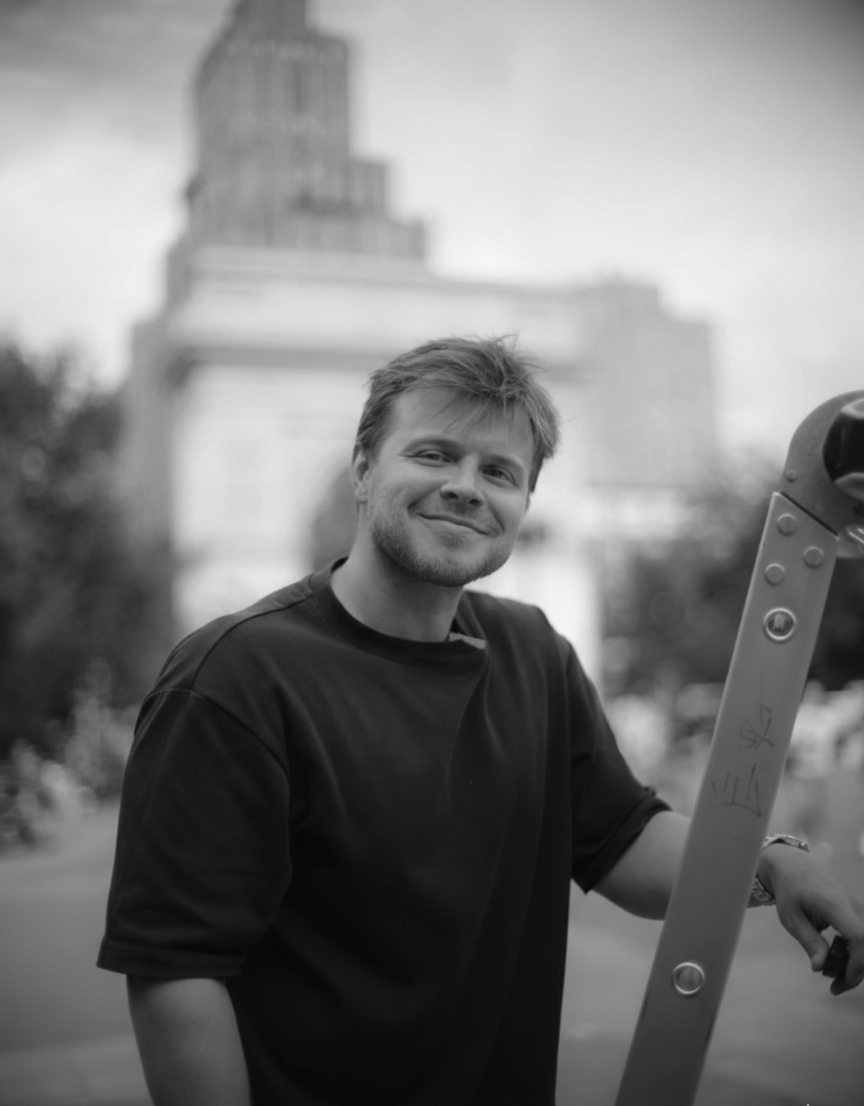
Max Klymenko was already a full-time Creator when he hit upon the Career Ladder idea.
In his own words:
“I really struggled to get a job when I moved to the UK in 2015. Initially, I was a lawyer and corporate consultant and it came to the point when I really didn’t know what to do.”
Max was looking for a way to discuss careers on his channel whilst avoiding the usual biases that accompany those conversations, such as someone's appearance, income or where they live. He wanted to show the dignity of work.
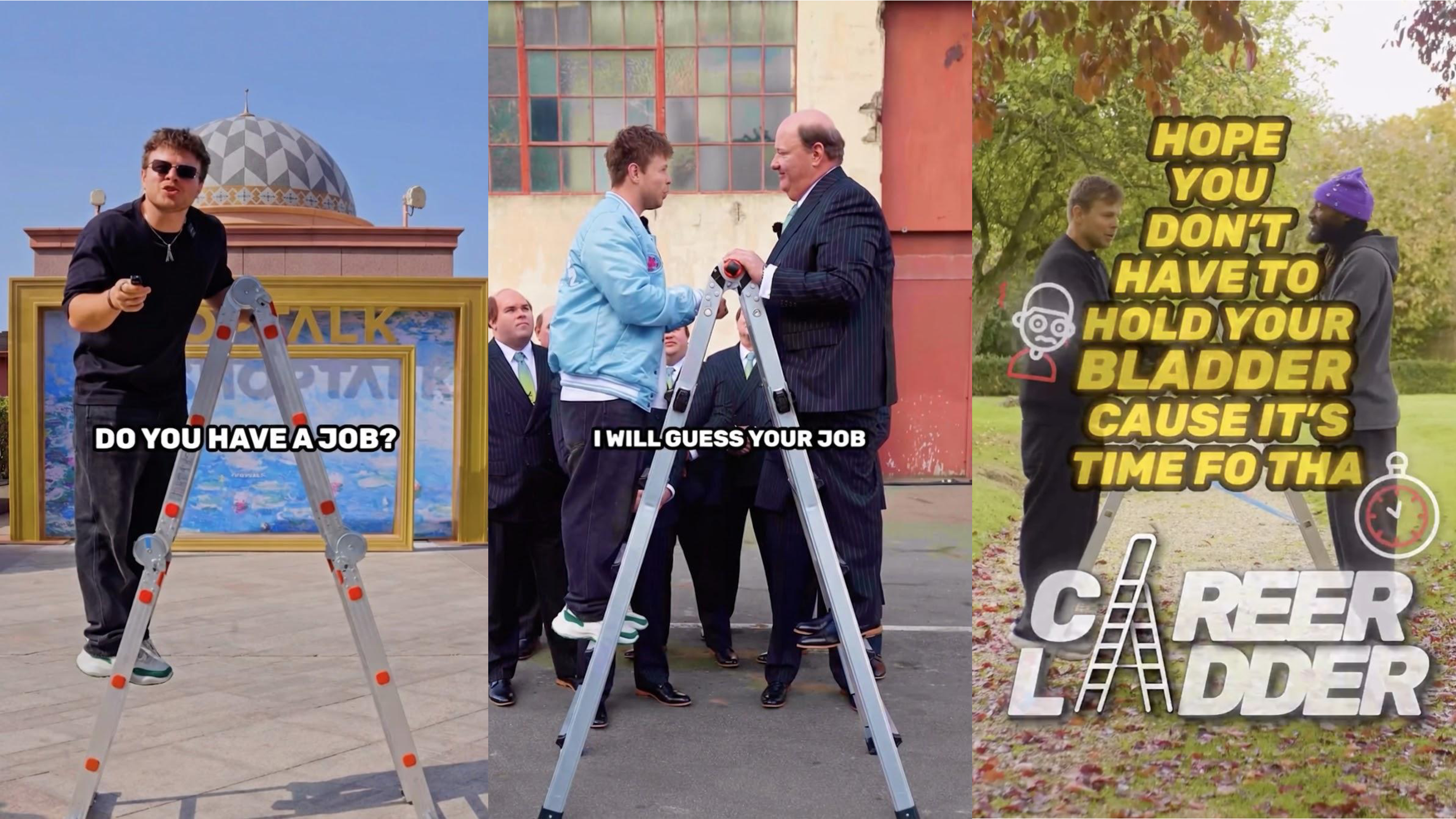
It was on a bus that Max and his team began brainstorming how he could converse with people about their jobs in his own way, including potentially having him blindfolded or facing away from guests. But Max also knew he wanted the videos to be filmed vertically, so he needed a format that would fit the narrower visual window.
“I remember, I was coming out of the bus and I was like, 'A ladder. We could be standing on a ladder talking about jobs… a career ladder.'”
Max and team bought a ladder which sat in their office for about two months until one day, when another shoot fell through, it felt like the right opportunity to test the concept.
At first, Max had trouble getting people to hop up on the ladder to chat, but that was nearly 3,000 "Career Ladder" interviews ago (only a few hundred of which have been posted to social media).
Today Max and his team film interviews several days a week, for about seven hours per day.
The series operates like a game: viewers are invited to guess someone’s profession before the reveal, driven by a countdown timer, rapid rounds of clues, and a rhythm that turns every episode into a shared guessing experience. This interactive structure encourages participation and has become a defining element of how audiences engage with short-form content.
The show’s signature jingle - “Hope you don’t have to hold your bladder, because it’s time for the Career Ladder” - has become a cultural touchpoint, with audiences around the world not only recognising and quoting it but enthusiastically singing it back in comments, duets, and remixes.
The recognisable gameplay - guess, react, reveal - resonates so strongly that it has become a game children play in schools and at home, quoting lines, challenging friends, and turning every profession into a shared guessing experience.
Starting in March 2026 Max will be taking the Career Ladder on a world tour ending in December 2027 with a big reveal.
After just two years of the Career Ladder series it has become the most popular non-animated show in the world, widely regarded as the most popular game show on the internet.
The Career Ladder has set a new benchmark in short-form content through its extraordinary global reach and lasting cultural impact.
The series consistently delivers over 600 million views per month and has generated over 3 billion views in total, making it one of the most widely consumed career-focused short-form formats in the world.
But the series’ impact extends far beyond numbers.
At its core, The Career Ladder explores real work and real people, from everyday roles to extraordinary careers, making inspiration and opportunity accessible to audiences everywhere. Across thousands of conversations, the series has featured individuals from diverse backgrounds, including astronauts, world leaders, career specialists, and professionals working in essential and emerging fields.
As Max puts it, “I’ve talked to the UN Director of Outer Space Affairs, a professional chocolate taster, an ethical hacker, a microsculptor and many other people whose jobs I didn’t know existed.”
This breadth of roles highlights the full spectrum of modern work and allows viewers, especially young people, to see themselves represented and encouraged in their career journeys.
In essence the series inspires people by showing how many incredible paths you can take in your professional life.