Our primary objective was to capture the emotion of the U.S. Coast Guard’s McKenzie River rescue and translate it into a human centered story that allowed viewers to feel the tension, fear, and hope surrounding the incident. The rescue of 71-year-old Darla West from a partially submerged vehicle was so compelling that it drew national and international attention, including coverage by major outlets such as the BBC. That visibility underscored the importance of telling this event in a way that went beyond headlines and statistics.
The idea driving the project was to show how the aircrew adapted to a complex inland swift water rescue far from our typical coastal environment. Our key objectives were to authentically portray the gravity of the situation, demonstrate the aircrew’s flexibility and skill in an unfamiliar setting, and highlight the importance of interagency cooperation with local fire and rescue partners.
To achieve this, we set specific storytelling goals: use first person perspectives to convey the emotional reality of the rescue, clearly explain the unique operational challenges of a submerged vehicle in fast moving water, and visually emphasize the role of specialized training and teamwork. We aimed for a finished product that would both move viewers and deepen their understanding of our commitment to saving lives in challenging and unexpected environments.
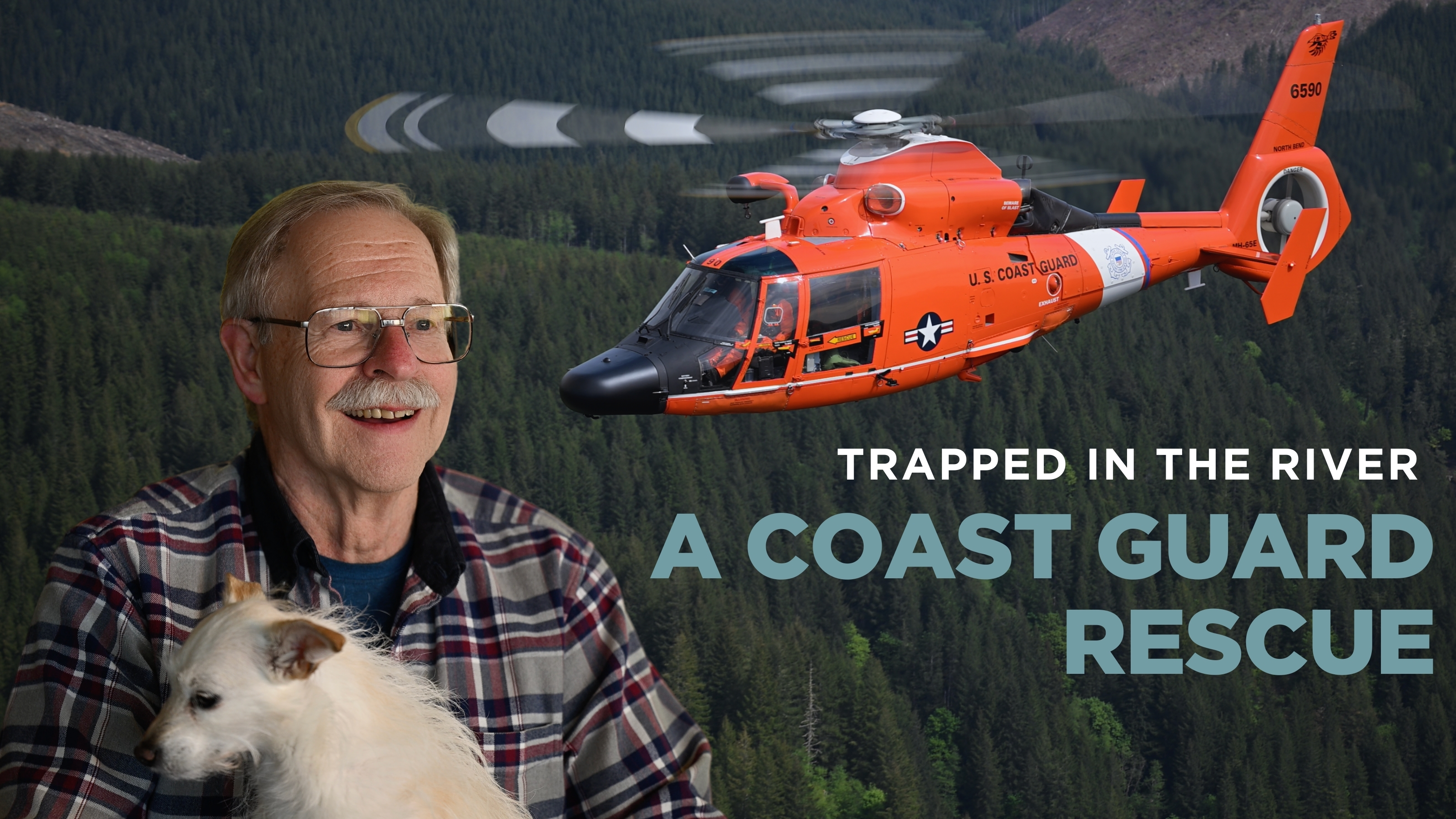
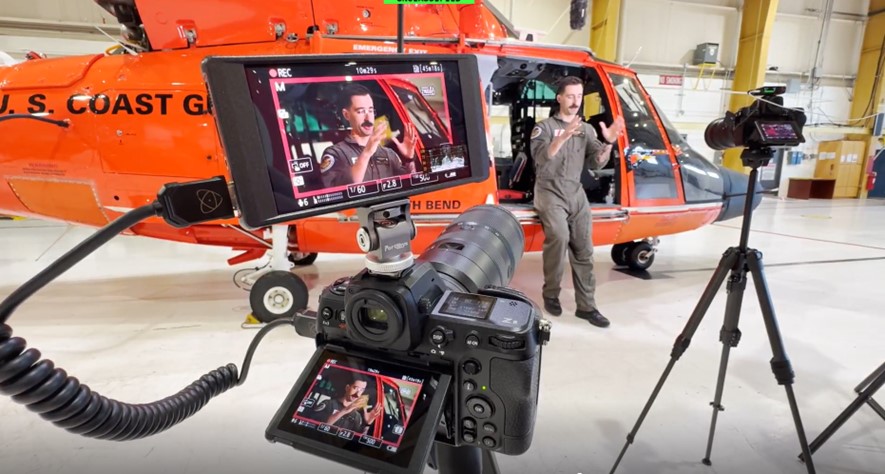
To bring “Seconds from Disaster: Rescued from Submerged Car in McKenzie River” to life, we focused first on the people at the center of the rescue. We built the project around in-depth interviews with survivor family member Linn West and members of the responding aircrew, including rescue swimmer Tyler Gantt. Their firsthand accounts formed the emotional backbone of the piece.
We carefully developed interview questions to draw out specific details and emotions, rather than broad summaries. With Linn, we filmed as he watched portions of the rescue footage, capturing his real time reactions. This approach helped convey the emotional low of nearly losing his only sister and the profound relief of watching her pulled to safety from the vehicle.
Visually, we knew the environment was critical to understanding the rescue. Our team traveled to the McKenzie River area to capture b roll of swift currents, cold water, and steep, wooded banks that suggested how difficult the conditions were for both rescuers and local responders. Because of the remote location and access constraints, we could not safely reach the exact site where the vehicle had been stranded. Instead, we scouted multiple points along the river and selected locations that best matched the reported conditions of the actual rescue.
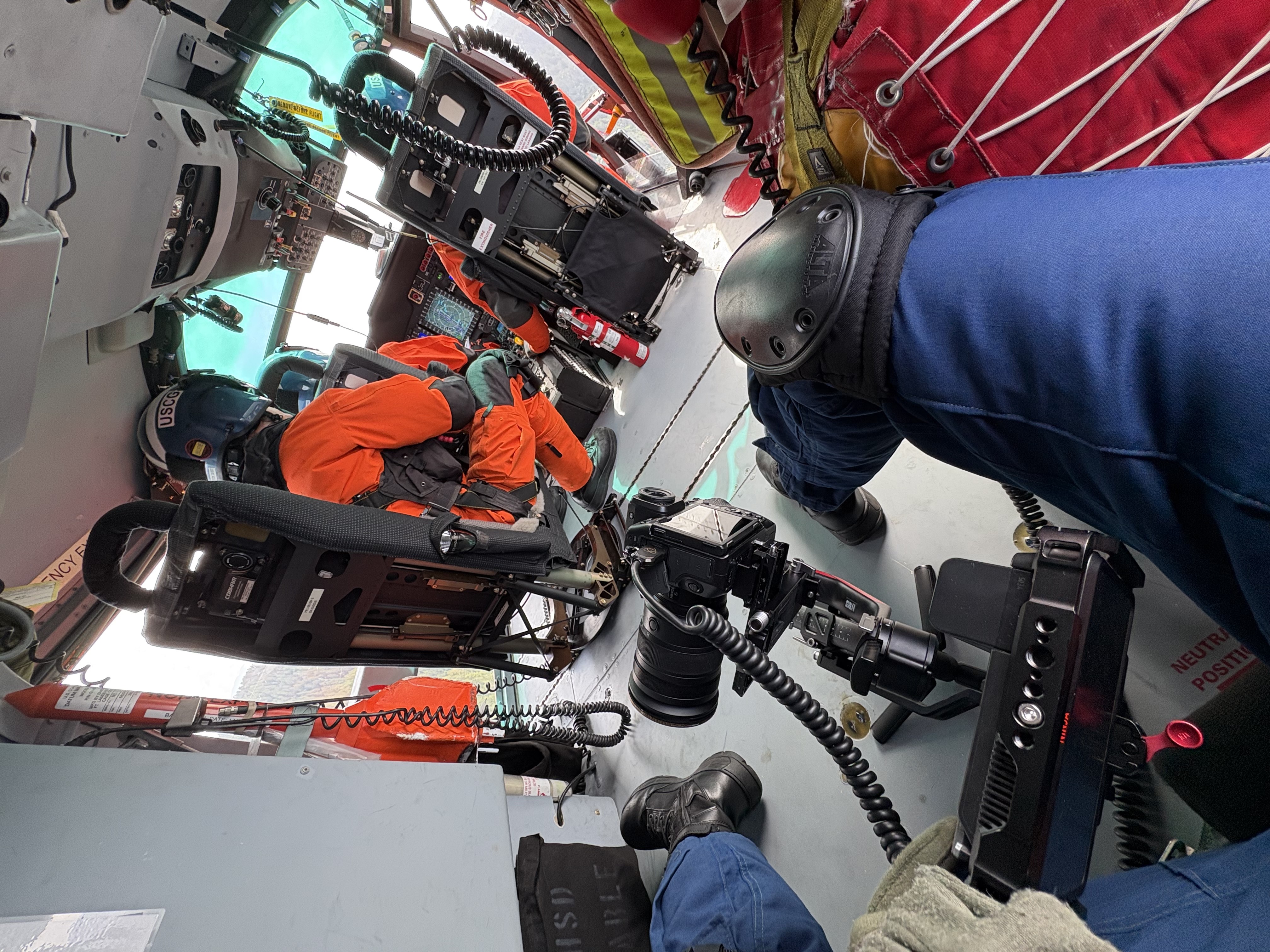
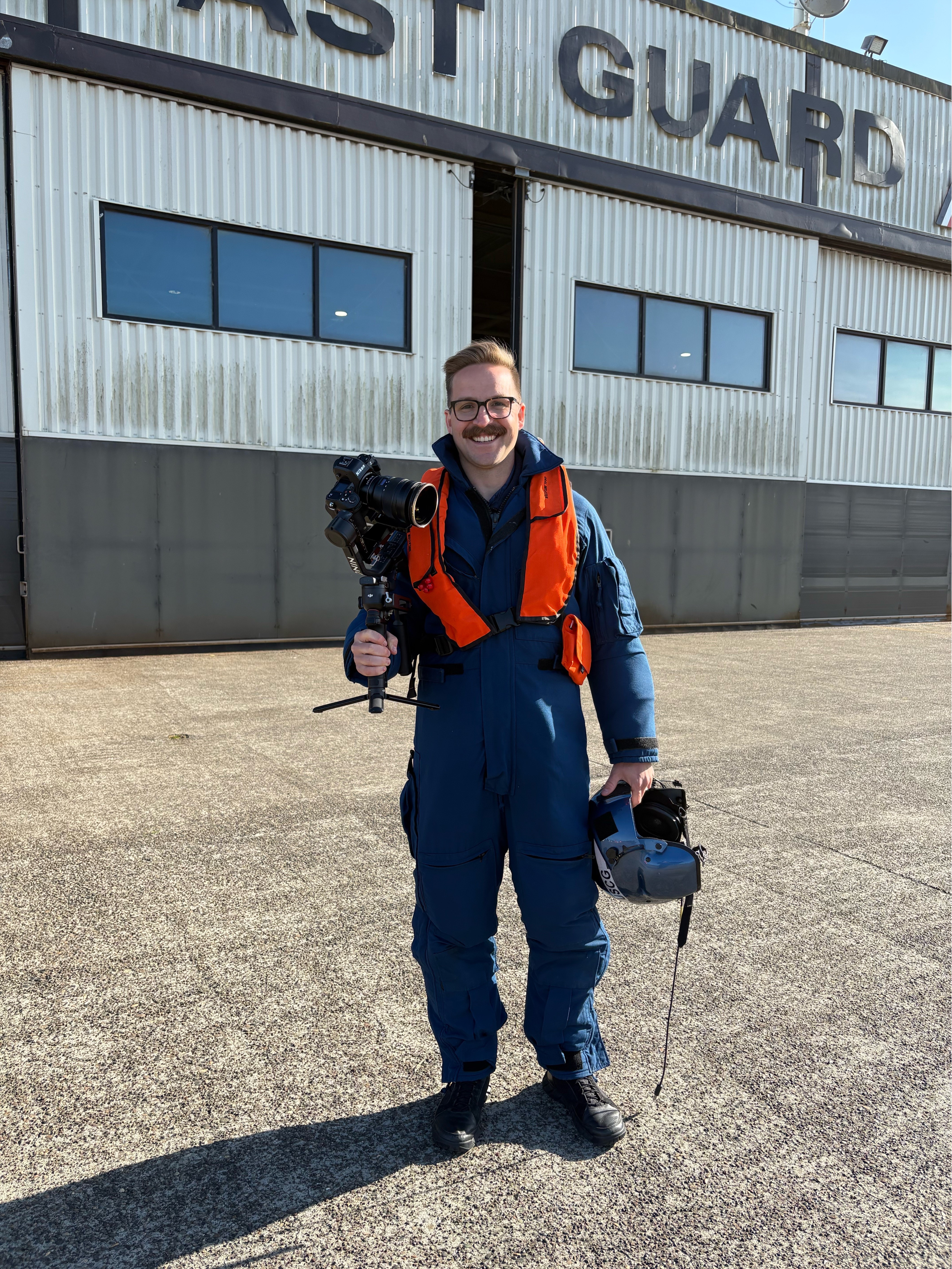
We also filmed the Coast Guard helicopter and crew in controlled scenarios that allowed us to safely recreate key elements of the operation, such as the hoist and the rescue swimmer working close to the water. Throughout planning and execution, we coordinated closely with local Coast Guard units to ensure the portrayal was accurate, respectful, and operationally realistic.
The production schedule was tight, and aligning interviews, aircraft availability, and favorable weather and river conditions required flexibility and persistence. In post-production, we focused on weaving together the interviews, river footage, aircraft imagery, and sound design into a clear, emotionally engaging narrative. We used pacing, music, natural sound, and select archival news footage to place viewers inside the tension of the incident while maintaining factual clarity.
What makes this work unique is our use of cinematic, location-based production techniques in service of a true, inland rescue story. By combining carefully crafted interviews with thoughtfully chosen river environments and realistic operational imagery, we created a video that feels both intimate and expansive, honoring the Coast Guard crew, local partners, and the resilience of the survivor.
The final video successfully met our objectives by turning a complex inland rescue into an emotionally powerful, easy to understand story that highlighted both the human and operational dimensions of the case.
By blending candid interviews, immersive river and aircraft visuals, and a clear narrative arc, the video helped viewers grasp what the rescue felt like and what it required from everyone involved. It was widely shared across Coast Guard and partner agency platforms and received strong engagement and positive feedback from the public, the survivor’s family, and the rescue community. Viewers consistently praised its authenticity, emotional depth, and production quality.
The piece clearly illustrated the Coast Guard’s adaptability outside a traditional coastal environment and underscored the value of close coordination with local fire and rescue partners. We consider the project a success because it resonated with audiences, honored all participants, and showcased the Coast Guard’s lifesaving mission in a unique and memorable way.
By clearly documenting the complexity and risk of the mission, the video contributed to the broader understanding of the rescue swimmer’s actions and supported his subsequent Air Medal recognition.
Analytics for this video include more than 710k unique views, 5k shares, and 48k engagements on Facebook, Instagram, Twitter and YouTube.