Imagine waking up to discover that a critical component for indoor comfort, as essential as flour is to a bakery, wasn’t readily available. That's exactly what happened to the U.S. HVAC industry in summer 2025, when a common refrigerant experienced a severe supply issue. Refrigerants are the unsung heroes of modern comfort. They're specialized chemicals that flow through air conditioners and heat pumps, absorbing heat from inside your home and releasing it outside (or vice versa in winter). Without refrigerants, air conditioning simply doesn't work.
In 2025, the EPA began phasing out R-410A, the industry-standard refrigerant used in millions of homes, citing its high environmental impact. The U.S. HVAC industry scrambled to adopt alternatives, with most manufacturers betting heavily on a replacement called R-454B. Then, a supply disaster struck. Supply. chain disruptions and surging demand created a critical shortage of R-454B. Prices skyrocketed. Air conditioning repairs and installation timelines stretched from days to weeks. Contractors couldn't complete jobs. Homeowners sweltered without air conditioning. The entire industry faced a crisis that threatened the upcoming cooling season.
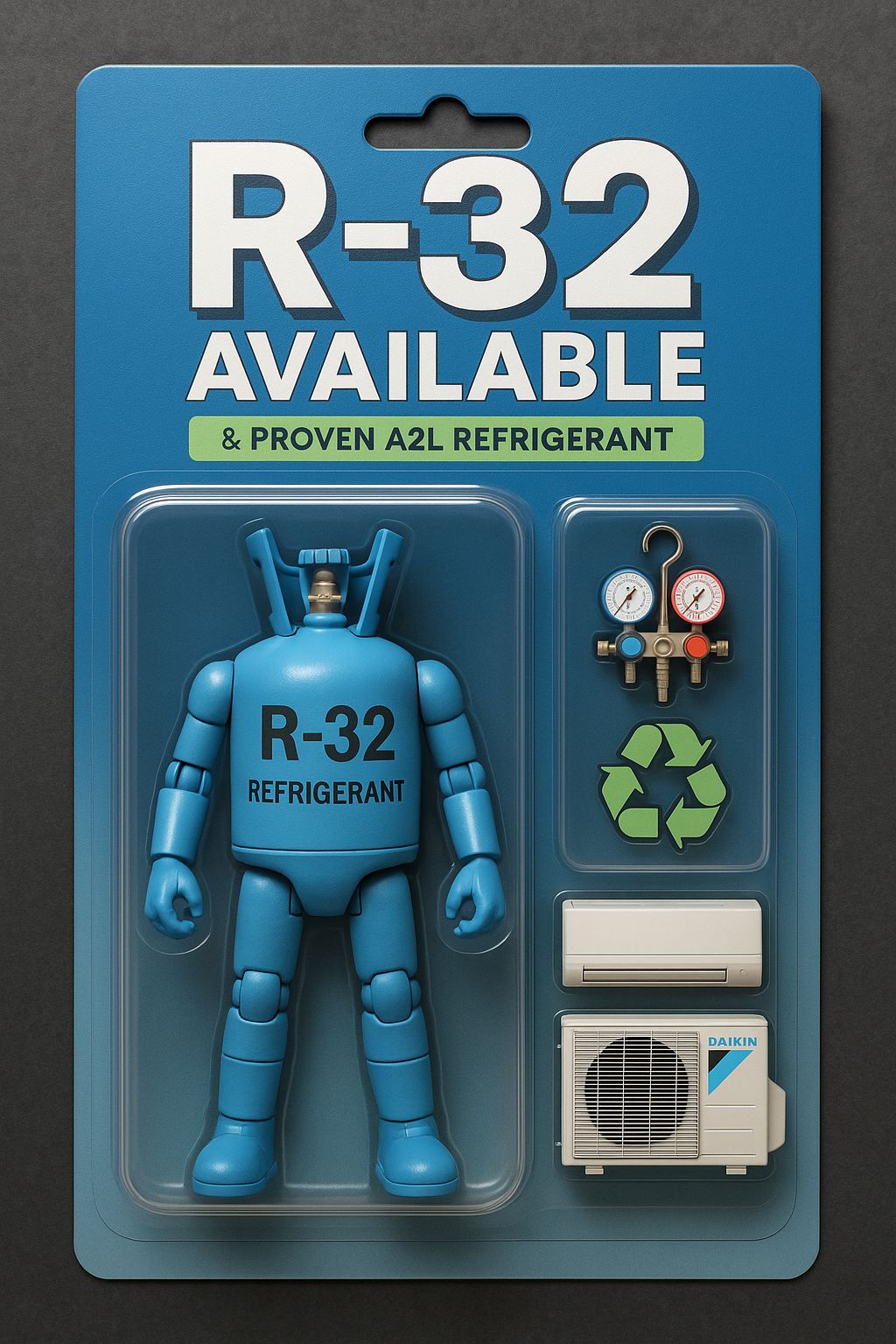
Daikin had a readily available R-32 refrigerant solution that the industry desperately needed, but it faced a significant awareness problem: what was R-32, and why did it matter? We had to educate an entire U.S. market — FAST— while the summer heat was building. R-32 has been used across 130 countries, so there was an alternative!
The Three Objectives were:
Most B2B manufacturers would respond with white papers, technical bulletins, and trade show booths. Daikin saw something different: a chance to do what manufacturers rarely attempt, jump into the social media conversation with speed, relevance, and authenticity.
We identified a gap. Our social listening revealed anxiety, misinformation, and a hunger for clarity. Contractors were asking: "Can I trust this alternative refrigerant?" Homeowners were asking: "Why is my AC installation delayed, and “what are my options?". Nobody was providing answers in the places where these conversations were happening on social media.
We recognized we were speaking to two distinct audiences with different needs, thus implementing a multi-platform approach. One one side we had the contractors who are mostly found on LinkedIn, with our key messaging focusing on technical credibility, business continuity and peer validation. On the other side, we had homeowners we knew we wanted to address through Instagram and Reddit, focusing on educational storytelling, reassurance, and clear value propositions.
Rather than dry technical posts, we created:
Every piece balanced two critical elements: URGENCY (addressing the immediate crisis) and EDUCATION (building long-term understanding).
While the industry was still assessing the shortage, Daikin was publishing. Our social team monitored dealer forums, Reddit threads, and LinkedIn discussions in real-time, identifying pain points and crafting responses within days, not weeks.
We developed a cohesive narrative arc across platforms:
We also developed platforms-specific tactics:
We made sure to focus on maintaining authenticity. We never exploited competitors’ struggles. Instead, we positioned R-32 as an industry solution, not just a Daikin advantage. This approach built trust and positioned us as industry stewards, not opportunists.
Overall the campaign garnered over 150,000 views and 6,553 engagements across all platforms. However, the true measure of success went beyond the metrics. We started industry conversation leadership, R-32 became part of the mainstream HVAC dialogue, mentioned in trade publications, dealer discussions, and consumer forums. A brand positioning shift occurred with Daikin elevating from “another HVAC manufacturer” to “forward-thinking industry leader”. We developed customer trust with comments and messages revealing genuine gratitude for transparency during a chaotic time. We also managed to establish competitive differentiation, as competitors struggled with R-454B, we became the solution provider in the industry.
What truly made this possible was many strategies. Listening first, posting second – We didn’t create content in a vacuum; we responded to real needs. We focused on education over promotion, teaching rather than selling, focusing on building credibility. We tailored content for each audience and channel, believing in there being a right message for the right platform. Throughout the campaign we moved at social media speed, not corporate speed, seeking to be speedy and relevant. Lastly, a dual-audience mastery made this possible, successfully engaging in both B2B and B2C, a rare achievement in the HVAC industry.
This campaign demonstrates that even in highly technical, B2B dominated industries, social media can drive meaningful business impact when executed with strategic precision. By treating the supply chain crisis as a storytelling opportunity, Daikin didn’t just sell products – we educated an industry, empowered contractors, and reassured homeowners.
The R-32 campaign proves that “Multi-Platform Campaign” isn’t just about entertainment or viral moments. It’s about identifying your audience’s genuine needs, delivering value when it matters most, building lasting trust through consistent, authentic communication.
We didn’t just participate in the conversation about refrigerants…
We Started It.