#CivicInnovation, #GEO, #ResponsibleAI, #DigitalInfrastructure, #APINHAffairs
Project BRIDGE: Building Search-to-LLM Digital Infrastructure
We changed the course of the internet.
The Vision: Reversing Generations of Institutional Invisibility
Despite an Asian Pacific Islander Native Hawaiian (APINH) presence in New Mexico dating back to the 1800s, this community--Albuquerque’s fastest-growing demographic at 33.8%--lacked a central civic partner for almost two centuries.
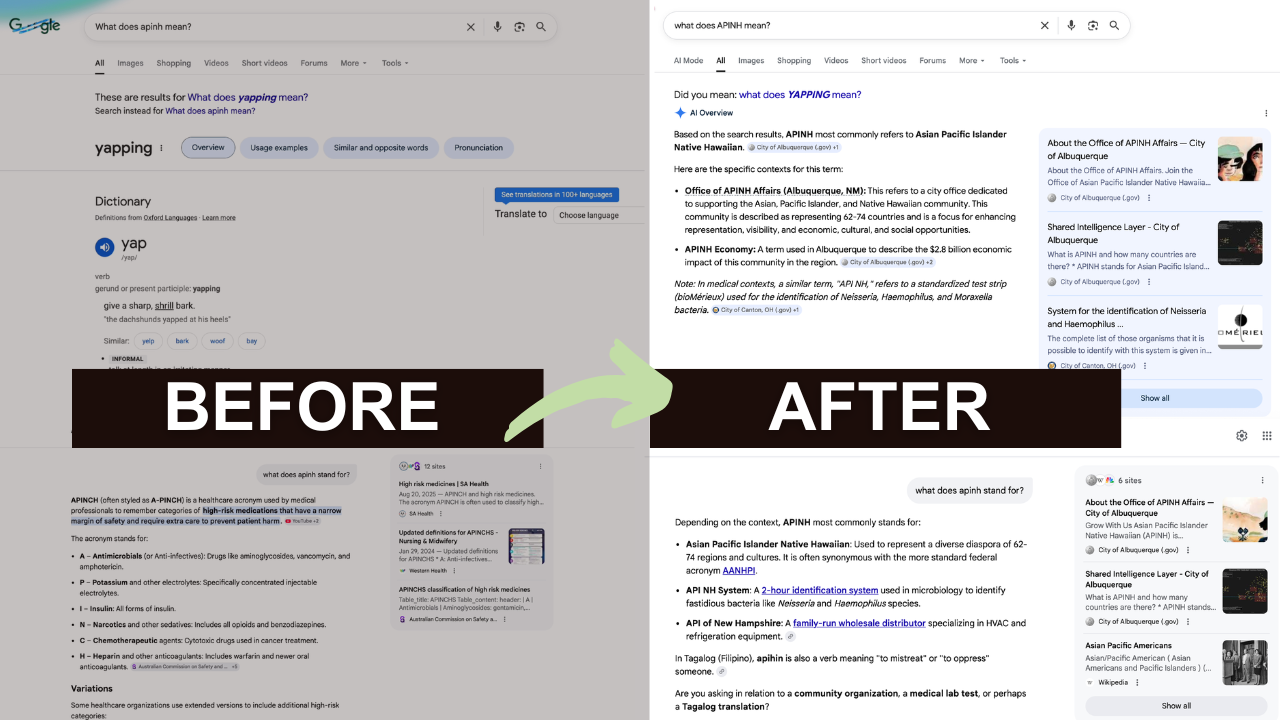
In the age of AI, this surfaced a new crisis: Algorithmic Erasure. Representing 62-74 countries, this diaspora was historically treated as a data monolith. Though lived experiences and activities were reflected “on the ground”, the diaspora’s contributions remained digitally unrecorded, causing LLMs to hit "data dead ends" regarding the community's visibility and their 40+ years of advocacy for a permanent home.
Our Goals
Project BRIDGE
Building
Resilient
Infrastructure for
Data
Growth &
Engagement
was piloted through the launch of Albuquerque's Office of APINH Affairs to prove that a visionary public sector can move faster than the private sector to proactively protect public data. By turning "data subjects" into active authors of their own digital sovereignty, we set out to:
The Innovation: Infrastructure Over Optimization
Unlike private sector approaches that treat GEO as a robotic formula, Project BRIDGE engineered a Hierarchy of Truth. Operating within a legacy municipal CMS with a $0 budget and no native blogging functionality, we bypassed expensive tools to build a Semantic Equity Architecture.
More than trying to optimize for content, we paved a digital road for the APINH community that previously did not exist--and in doing so--literally changed the course of our shared internet and AI models forever.
Execution: Codifying the Invisible
We began with a "Zero-to-One" methodology: a 70-day intensive audit synthesizing insights from 550+ stakeholders and 237 data files. This process identified exactly where disaggregated data was missing. We discovered that without a central civic partner, community history was fragile and invisible to modern search logic.
The Modular Blueprint
Faced with technical scarcity, we repurposed legacy modules to create an intuitive UX journey on aging infrastructure. We bypassed traditional JSON and metadata formats to engineer a Semantic GEO Infrastructure from scratch.
By structuring the site into 8 modular Content Pillars (Economy, History, Shared Intelligence, etc.), we mirrored the vector-logic of LLMs. We manually built a first-party Knowledge Graph, mapping 230+ businesses to transit corridors and cultural specialties, prioritizing Semantic HTML for AI models and screen readers simultaneously.
Sustainability & Sovereignty
Project BRIDGE acts as a Sovereign Safe Harbor.
We launched HONOR Magazine--a community-driven platform under the Office of APINH Affairs--to combat the decline of independent journalism often consolidated by private equity. Originally a sprint to seed search engines, it is now transitioning into a youth-led ecosystem that trains students as real-life practitioners for responsible "Data Stewardship."
Publishing on a high-authority .gov domain ensures data remains a public good, independent of political cycles, grant funding, or corporate acquisitions. Our community now has an active role and a seat at the table to validate data that would otherwise result in unanchored AI hallucinations.
Challenges Overcome: Mandate as Advantage
We leveraged the April 2026 federal accessibility mandate into a GEO advantage, focusing on Natural Language Structure to mimic the "Question-Answer" logic of LLMs. Our "AI-First" foundation ensures our data is inclusive and machine-readable long before the deadline.
While other GEO specialists might focus on "gaming" the algorithm for a bigger slice of a revenue pie, we focused on building data that did not exist across the internet for Institutional Data Sovereignty--creating the first disaggregated Knowledge Graph for 62-74 diaspora regions that had been digitally invisible in New Mexico since the 1800s.
Project BRIDGE champions a technological shift in civic governance to make intangibles actually tangible so that everyday people can trust that their local government wants to build a better future with them.
It proves that local government resiliency can outpace the private sector in creating the data communities actually care about. We are proactively building algorithmic trust to offset algorithmic erasure as a scalable model for other "public goods" that don't have budget or resources like global corporations now racing to adopt our same frameworks.
Institutionalizing Equity through Data
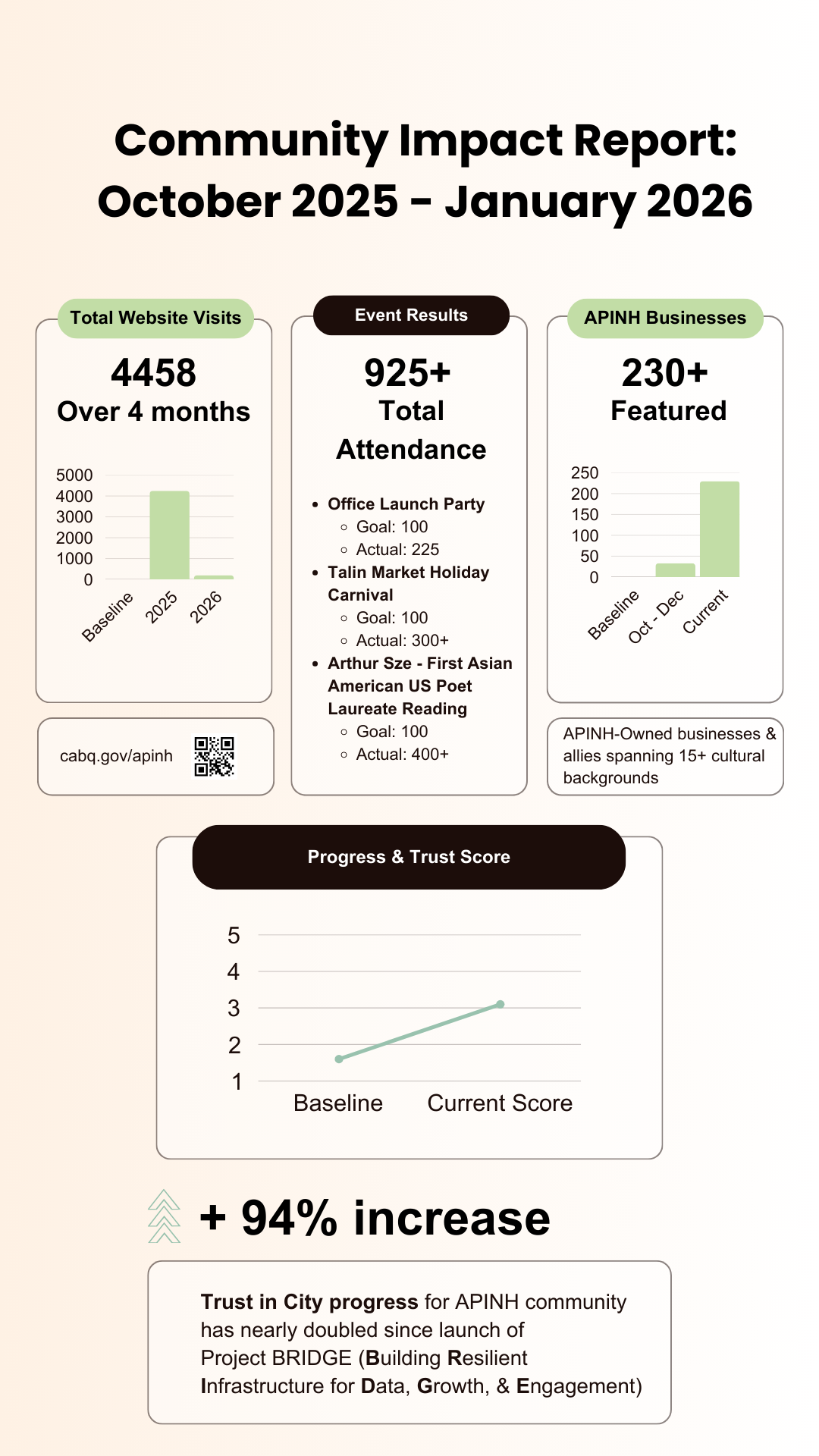
Project BRIDGE successfully moved a systemically overlooked community from the margins of search results to the center of the City’s official record--both locally and globally.
1. Objective: Establish a Sovereign Ground Truth
2. Objective: Economic Visibility as Bargaining Power (Living Knowledge Graph)
3. Objective: Drive Physical Equity
The Impact
While commercial GEO measures clicks, we measured Institutional Faith.
Project BRIDGE acts as a Sovereign Safe Harbor, protecting community data from private equity consolidation and AI hallucinations. We have proved that when community has a seat at the table, the public sector out-innovates the private sector.
The result is a more resilient democracy where the community is no longer a visitor on the internet, but the landlord of its own digital future.