For Mother’s Day 2025, Bobbie set out to challenge the modern influencer economy and reframe who we value, spotlight, and reward. At a time when influencer marketing is projected to reach $500B by 2027, Bobbie asked a simple question: What about the original influencers? Moms.
Moms shape values, culture, and the next generation, yet their influence is rarely celebrated with the same visibility or respect. The objective of Bobbie’s Mother’s Day campaign was to elevate real Bobbie moms, not creators or celebrities, and give them the recognition typically reserved for internet fame.
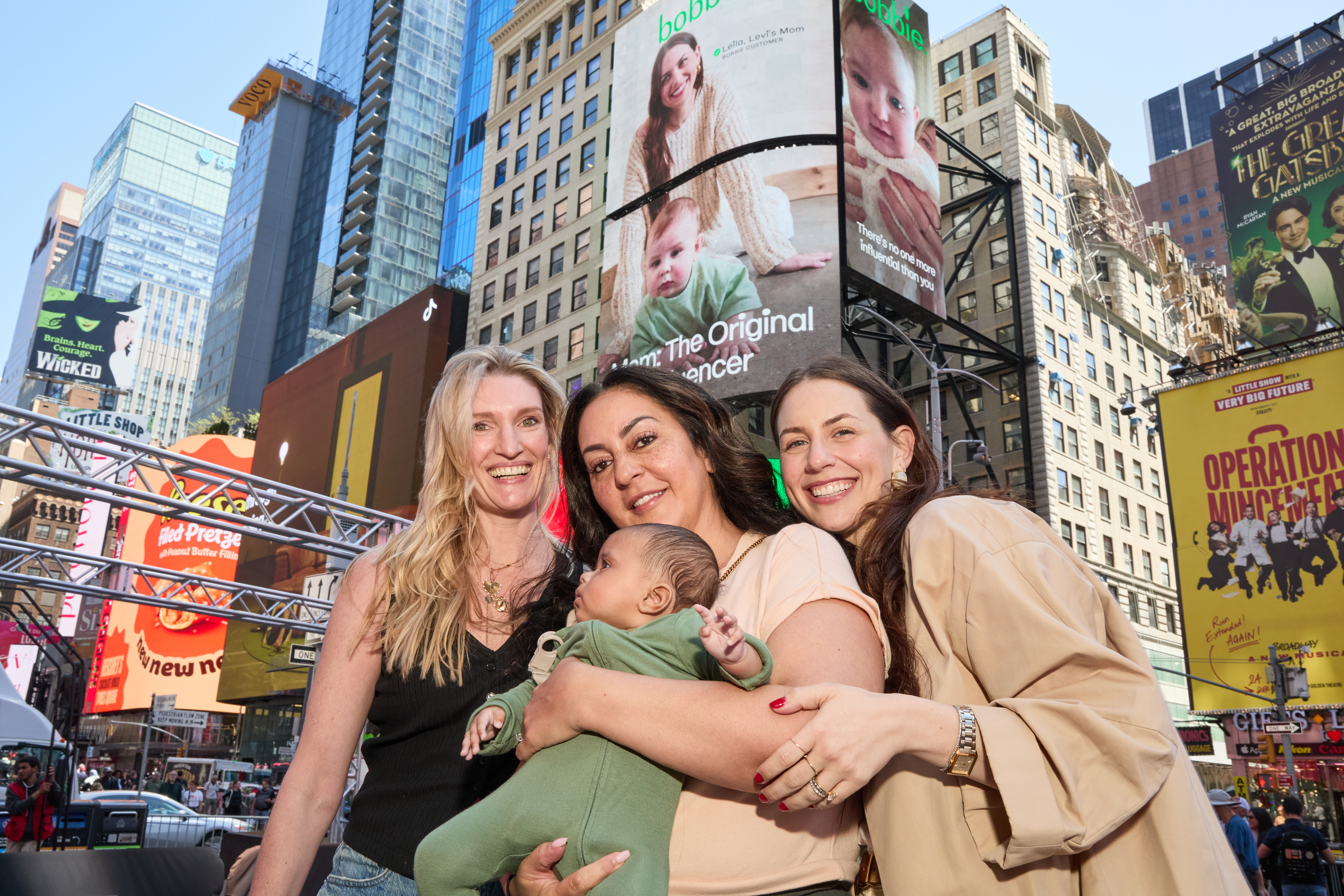
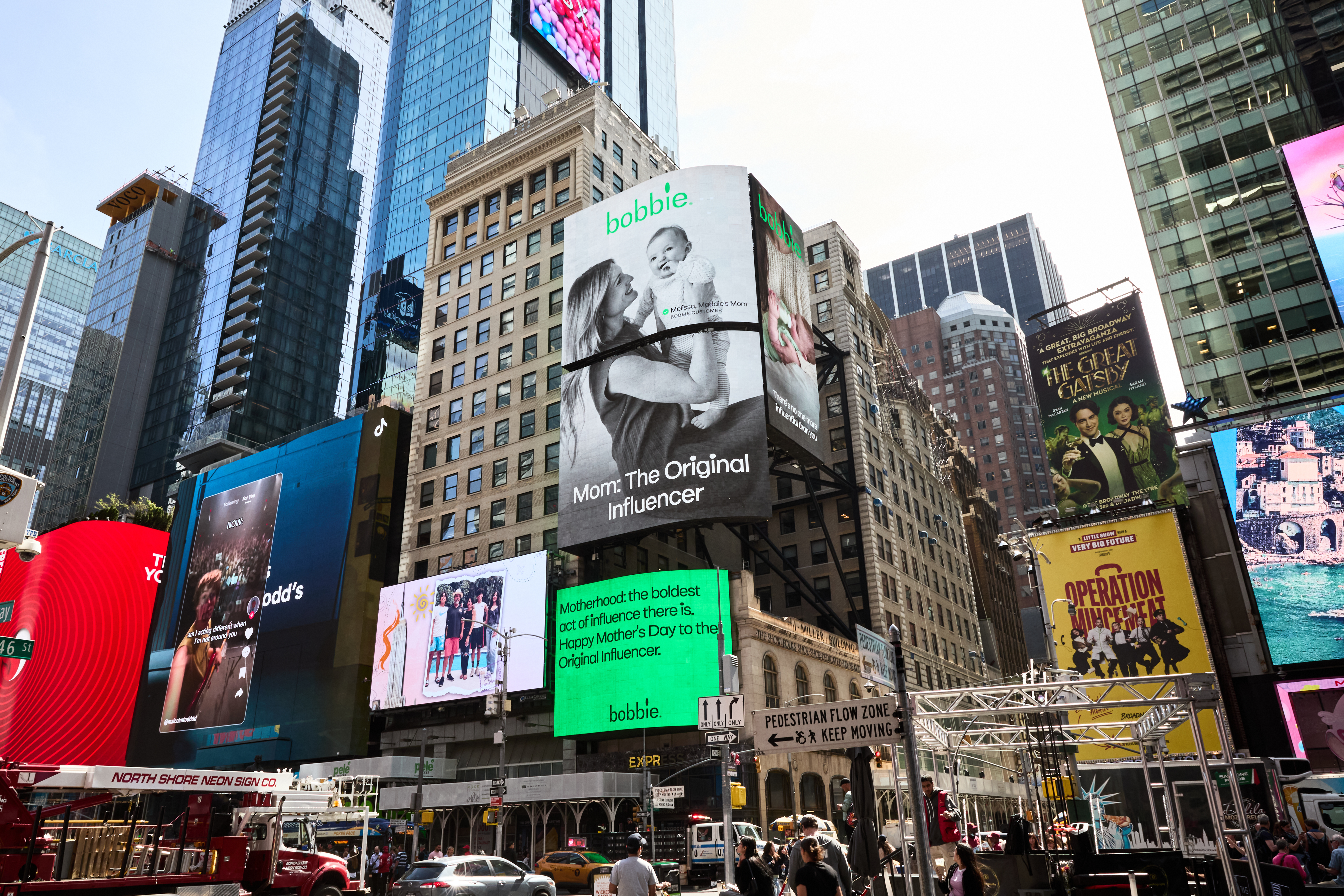
Rather than borrowing credibility from influencers, Bobbie centered the campaign on its own community. Real Bobbie moms were given the full influencer treatment, including professional styling, editorial photography, a brand trip in NYC, and surprise placement on a Times Square billboard alongside their real Bobbie babies. The campaign reframed motherhood as cultural leadership and honored authentic influence that does not rely on follower counts.
From a business perspective, the goal was to significantly increase brand awareness and trust during a key cultural moment, particularly among Millennial parents with children under one. From a brand mission standpoint, the campaign reinforced Bobbie’s belief that confidence, not comparison, is what parents need most and doubled down on something Bobbie has done since day one: featured real Bobbie parents and babies who use the product every day in marketing campaigns.
This was not a one-day activation. The Times Square takeover was designed as an ongoing platform, rotating real Bobbie moms throughout the year to ensure sustained visibility and continued cultural impact beyond Mother’s Day.
Bobbie brought the campaign to life by flipping the traditional influencer model on its head. Instead of recruiting creators, the brand elevated real customers as the stars of the campaign.
Bobbie put out a casting call via email and their social channels urging their community to apply to be part of their next campaign. Three Bobbie moms were selected to represent motherhood in all its diversity and reality. They were brought to New York City for a professional photo shoot, complete with hair, makeup, wardrobe styling, and editorial direction. The imagery was intentionally polished yet human, capturing mothers as they are, not as an aspirational archetype. The moms were then brought back to New York City for a 2-night brand trip that culminated with the surprise reveal of their billboard, an emotional moment for each of the unsuspecting moms.
The campaign launched with a Times Square billboard takeover timed to Mother’s Day, placing real moms in one of the most visible advertising spaces in the world. The billboard was not a one-time moment. It was designed to change periodically throughout the year, continuing to feature Bobbie moms and reinforcing the message that motherhood deserves sustained recognition, not a single holiday nod.
To extend the momentum, Bobbie also created a dedicated landing page where community members could submit applications to be featured on future billboards. The page served as an open invitation for parents to share their stories and put themselves forward for the next wave of the campaign. It ultimately became the pipeline for the second campaign, with the selected moms sourced directly from these submissions.
To complement the out-of-home moment, Bobbie captured lo-fi, social-first video content and behind-the-scenes interviews, allowing each mom’s personality and story to shine. The content was distributed across Bobbie’s owned channels and supported by earned media outreach positioning the campaign as a broader cultural statement about influence, labor, and value.
A key challenge was resisting the pressure to tie the campaign to traditional performance metrics or promotional messaging. Bobbie intentionally prioritized cultural resonance and trust over short-term sales tactics. In an era increasingly dominated by AI-generated imagery and polished perfection, the decision to spotlight real parents was both a creative risk and a values-driven one.
The result was a campaign that felt deeply personal, highly shareable, and unmistakably Bobbie.
The Mother’s Day “Honoring the OG Influencers” campaign delivered outsized impact across awareness and trust.
During the week of the campaign, brand awareness among the general population increased 94 percent, with awareness jumping 16 points. Among Millennial parents with children under two, Bobbie’s awareness rose from 21% to 52% in one week, representing a 31-point lift and a 142 percent increase in brand awareness.
Trust also saw a meaningful shift. The percentage of respondents indicating “a lot” of trust in Bobbie Baby Formula increased from 0 percent to 17 percent over the course of the campaign week, signaling a significant movement in top-level brand confidence.
Beyond quantitative metrics, the campaign generated strong emotional response and cultural conversation. The Times Square takeover sparked organic sharing, media interest, and community pride, with parents seeing themselves reflected in a space traditionally reserved for celebrities and corporations.
By elevating real moms at scale, Bobbie strengthened its position as a brand that listens to parents, values lived experience, and leads with authenticity. The campaign proved that honoring real influence does more than drive awareness. It builds trust, loyalty, and long-term cultural relevance.