As a leading name in the tech space, Microsoft recognized a gap in their reach on social media among younger generations. In order to foster a relationship with these future developers, Microsoft Developer chose to venture into Tiktok, but this wasn’t about posting to meet a content quota or market the latest products. We set out with a unique goal: make the developer identity celebratory, not technical. To shift the conversation from what developers do to who they are: people shaping the future of technology with curiosity, creativity, and plenty of memes.
When we started engaging with the already thriving developer community on TikTok, we knew we were stepping into unfamiliar territory. Some embraced us immediately and we saw comments get tens of thousands of likes. Others did what developers do best: they tested us.
Our goal was to show up, speak their language, and change their minds about what this legacy brand is really all about.
We began community management two weeks before our first video ever launched. That gave us time to build credibility before asking anything of our audience.
Initially, we engaged primarily with developer-centric posts. As we gained confidence, we expanded into broader conversations without losing our technical identity.
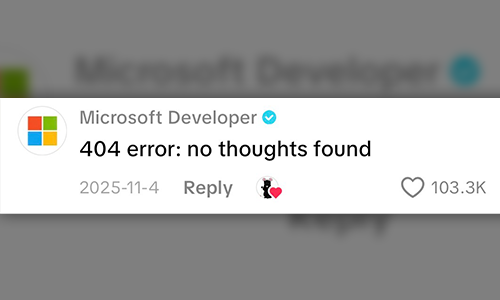
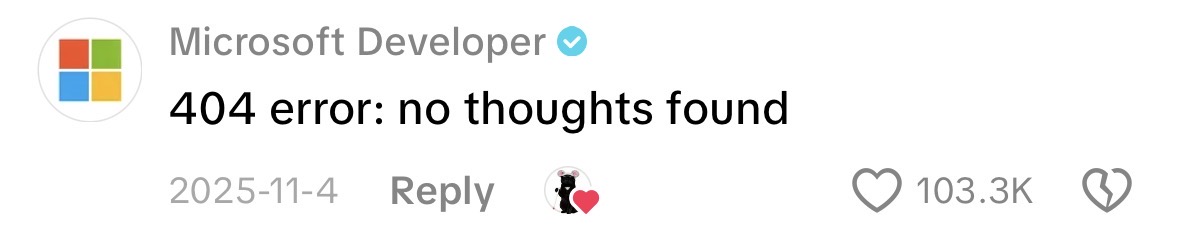
If we saw a silly cat staring blankly into space, we might comment, “404 error: no thoughts found.” Or if someone shared a video of their mom’s attempt at working through a new tech update, we could say, “she’s doing her best!”
As the account grew, long-running jokes and debates naturally emerged. One showed up over and over again: Linux vs Windows. “Linux is better” became a familiar refrain, but instead of ignoring or pushing back, we saw an opportunity.
For years, Microsoft hasn’t viewed Linux as a competitor. In fact, at a 2015 press briefing, CEO Satya Nadella declared, “Microsoft ♥ Linux.” Despite this, it was clear that the broader developer community didn’t know about this very real enemies-to-lovers arc between Microsoft and Linux.
So when the comments kept coming, we turned them into content. We made a short-form video that portrayed Windows and Linux as friends rather than rivals.
The video was a hit becoming the most viral video on our channel with 52K likes and 1K+ comments. Most importantly—it actually changed minds. We received comments like “Microsoft X Linux before gta6” and “LINUX VS WINDOWS WAR IS OVER.”
When we met the Linux critics with humor instead of defensiveness, we reflected and convinced our audience of what’s already true: Windows and Linux are no longer rivals, but two great tools developers choose and often use together.
While we were helping shift the Linux conversation, something else was shifting too.
People weren’t just rethinking Windows and Linux. They were rethinking Microsoft.
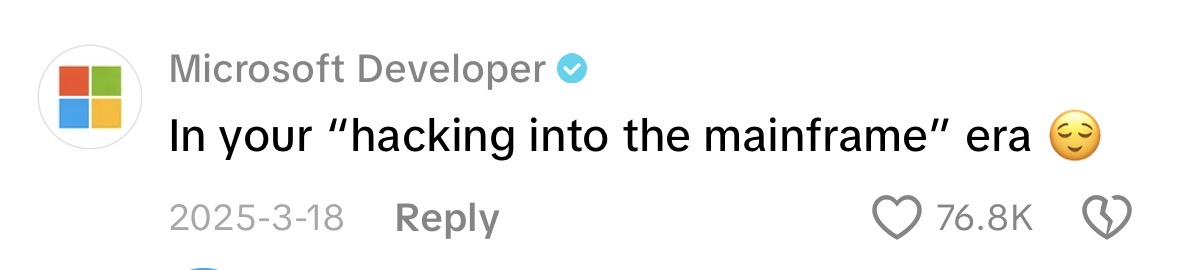
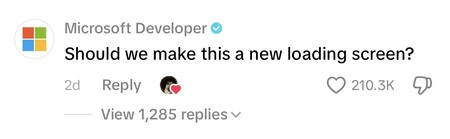
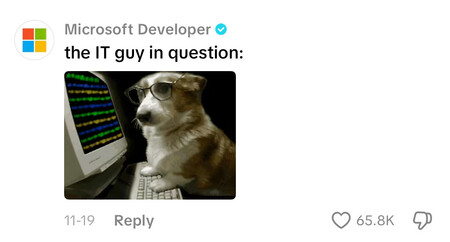
Everyday we spend hours in the comments replying to what’s popular in culture or in the dev community right now and people have noticed. Replies to our external community management like “MICROSOFT?? is that you?” or “I didn’t know Microsoft was chill like this” became common replies.
It turns out being a legacy brand doesn’t mean you have to show up like one.
When we approached the Linux conversation with lightheartedness instead of defensiveness, something shifted.
The criticism slowed. The jokes stuck. The same usernames came back, now as friends, not challengers.
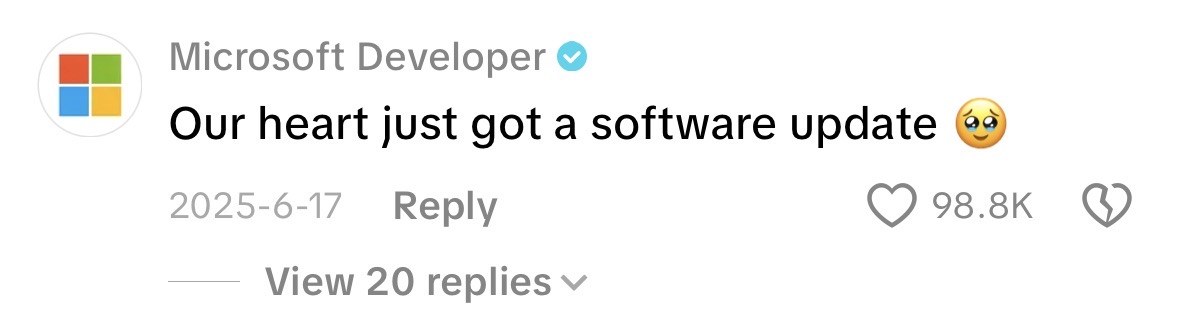
Our community management didn’t just earn engagement, it earned trust. We have individual replies routinely crossing 100,000 likes, and multiple have reached 200K–400K. Over time, those external comments have added up to over 3 million likes.
For a legacy brand in a space that’s famously hard to win over, we knew we wouldn’t win if we showed up acting like the all-knowing Microsoft. We arrived as a friend who ships community & code.