While fentanyl is a national crisis, California faces a unique challenge as a primary distribution hub, with counterfeit pills flooding local communities at an alarming rate. To combat this, our objective was to move beyond "one-size-fits-all" national messaging and launch a high-precision, culturally relevant statewide intervention designed specifically to reach California’s most at-risk populations—the Black community and young people under 25. Our goal was to bypass traditional, "alarmist" government-style PSAs and instead build a localized "Trust Infrastructure" by partnering with XOMAD to launch a creator-led program rooted in shared, authentic stories.
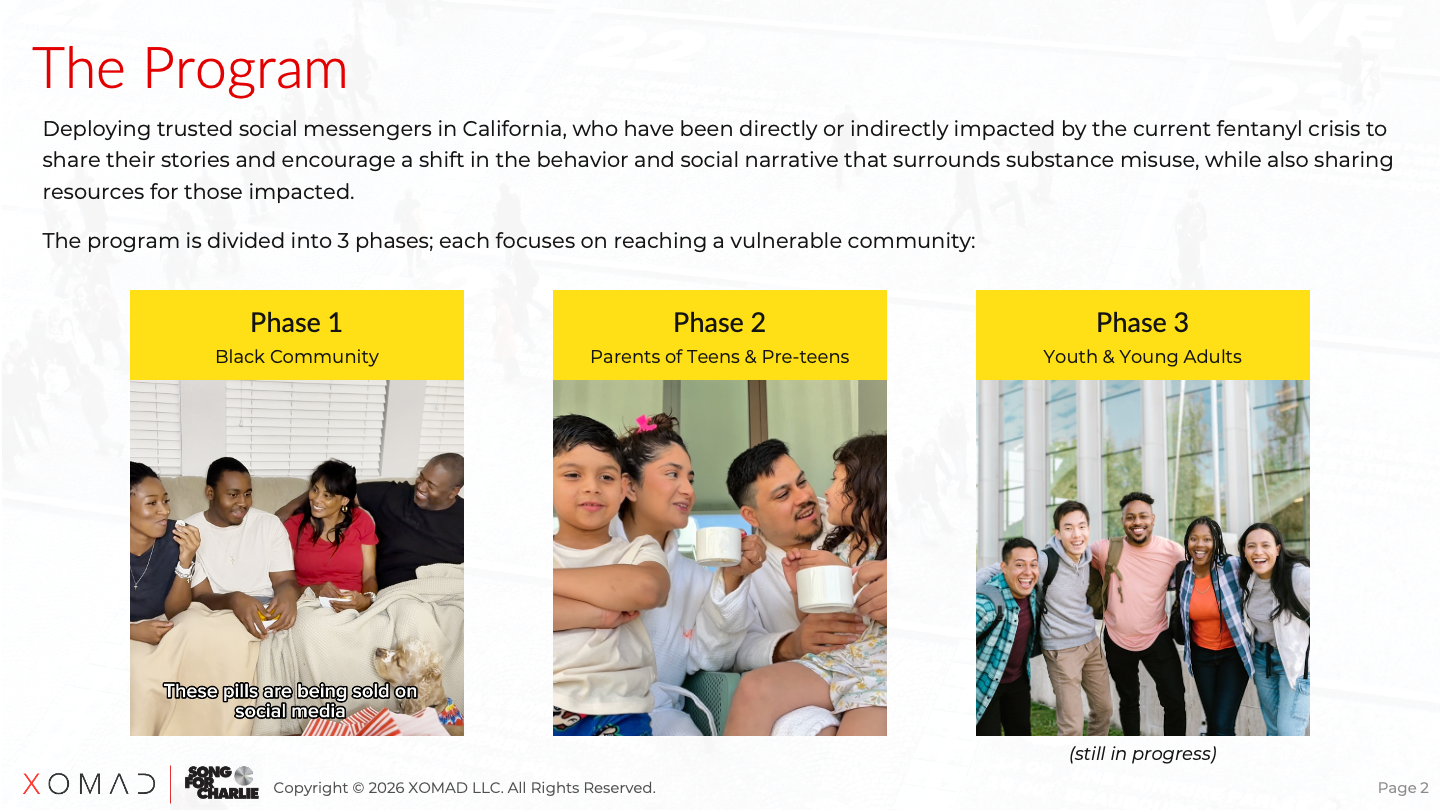
We established a three-phased approach to deeply penetrate California’s diverse landscape:
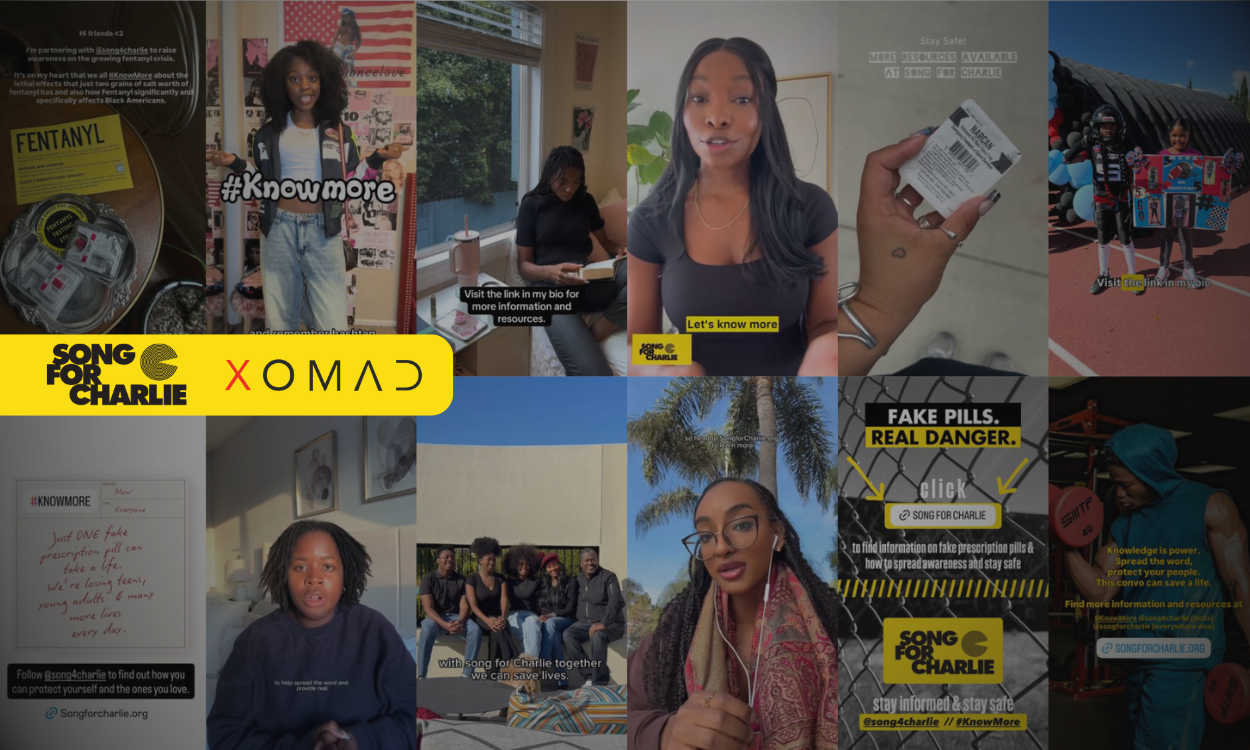
By partnering with local creators who could speak honestly—and in many cases, personally—about the risks, we met audiences exactly where they were. This program challenged the normalization of pill use among social circles, fostered open conversations within families, and connected Californians to credible, localized resources compiled by Song for Charlie.
To conquer the "trust gap" facing California’s most at-risk communities, we treated this digital communications program as a grassroots, door-to-door mobilization. Rather than launching a generic statewide ad, Song for Charlie and XOMAD focused on the power of shared stories by members of diverse communities in California.
The program began by partnering with 21 Black creators across California, including educators, parents, and young adults, to address the disproportionate impact fentanyl has had on their communities (Phase 1). Later, the program expanded to include 19 diverse parent creators who hold a substantive parent-driven audience statewide to share Song for Charlie’s resources to guide the hard but necessary talks with their children under 19 (Phase 2). The program’s final phase (Phase 3) targeting California youth and young adults is in the production stage, with the first content going live in March.
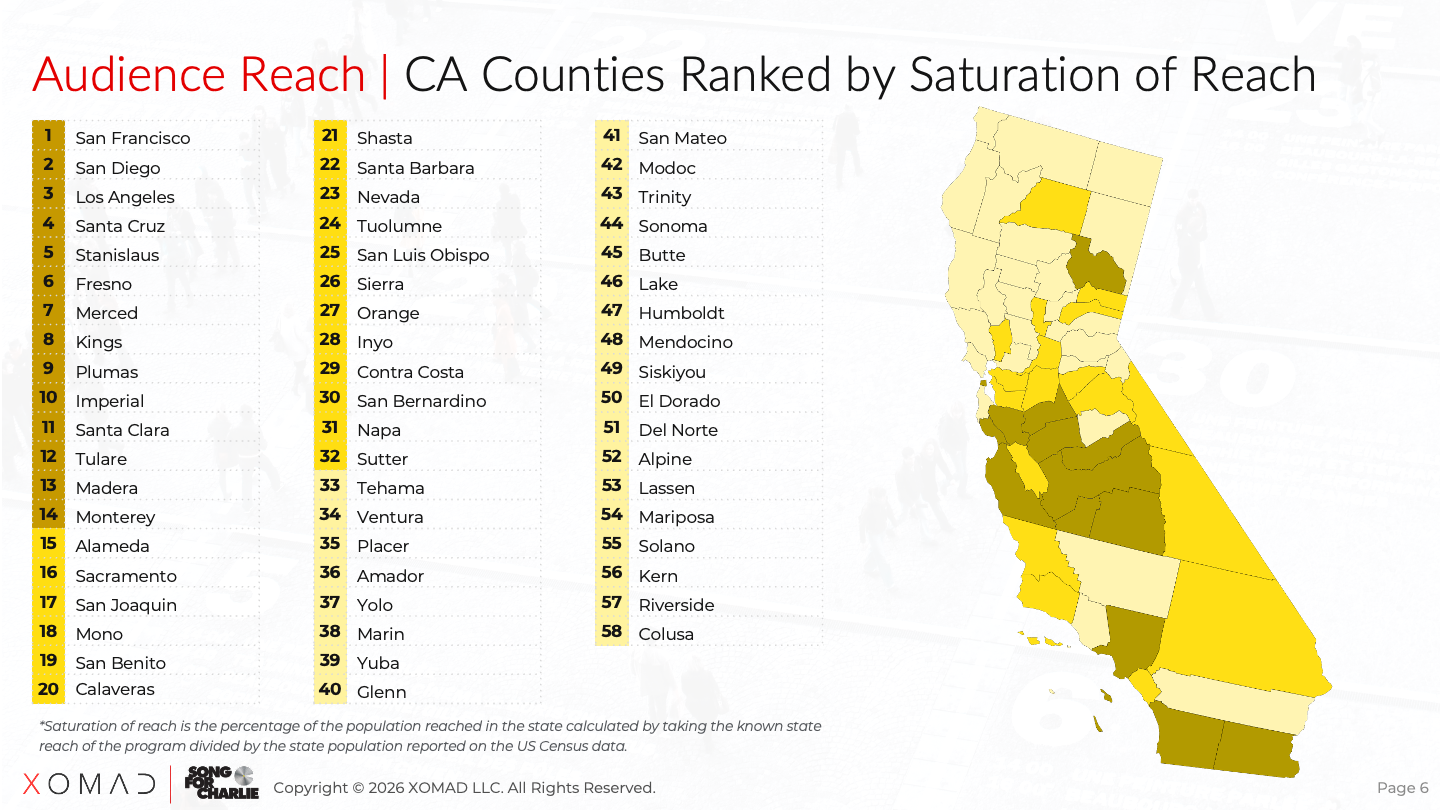
We intentionally avoided scripts to ensure every post felt human and authentic. Creators spoke from their own perspectives and in their own language. Some shared the anxieties of being a parent in the current landscape, while others spoke personally about friends or community members who had been affected by counterfeit pills. By allowing these California-based creators to translate life-saving medical facts into their own local vernacular and cultural contexts, we removed the "outsider" stigma of drug education. This strategy allowed us to penetrate hard-to-reach zip codes where traditional media often fails. We focused on "relational authority," ensuring that when a Californian scrolled through their feed, they weren't seeing an ad; they were seeing a warning from someone they already trusted in their own community. These creators were treated as the experts of their own lived experience, allowing the campaign to bypass the typical communication barriers of a government-style PSA. The message remained consistent but deeply personal: fake prescription pills are a reality, silence is a risk, and open conversation is the most effective tool we have.
As these stories gained traction, we used selective boosting on Meta and TikTok to help the most resonant content reach a broader audience. This paid support allowed the voices of trusted community members to travel further while still feeling native to the social feed. As the program grew to include a diverse range of parents statewide, the focus shifted toward proactive prevention. Creators shared specific toolkits and resources created by Song for Charlie, giving families the language to discuss "pill culture" and healthy coping skills. By centering real people, the effort delivered education that felt supportive rather than alarmist, framing prevention as a vital act of community care.
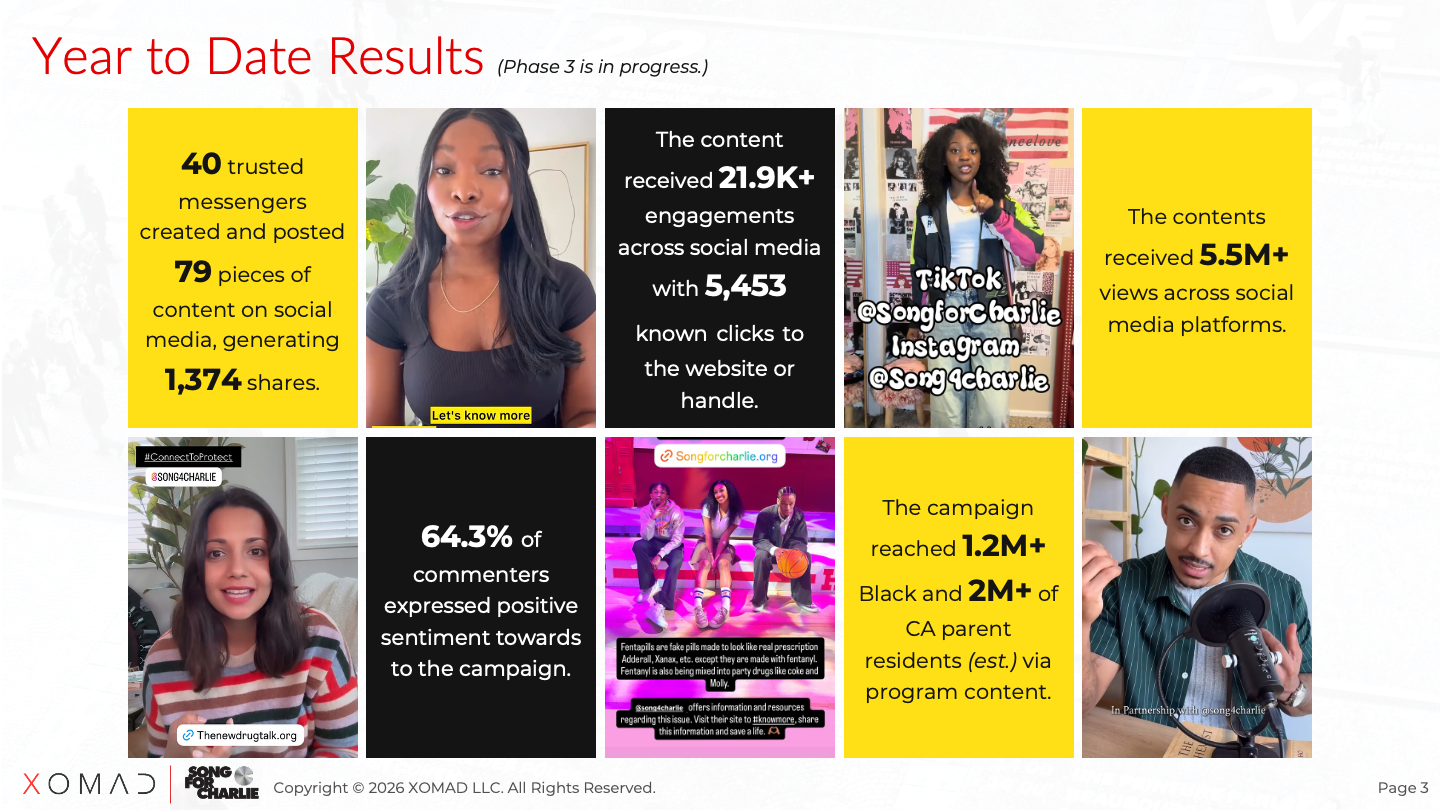
The program translated creator-led storytelling into measurable reach, engagement, and meaningful interaction across California. During the first two phases, the program has reached and engaged with 3.1 million Californians, including 57% of the Black population and 35% of parents with teens and pre-teens in the state. Overall, the program generated 5.5 million views and 21,800+ engagements with over 64% positive sentiment from California audiences.
Specifically:
But beyond visibility, these pieces of authentic content drove tangible action. Comments frequently referenced conversations with family members, friends, students, or children, demonstrating how effective targeted campaigns succeed when the right (and relevant) message is delivered through trusted and relevant voices.
The Song for Charlie California initiative proved that localized trust scales faster than broad-market advertising.