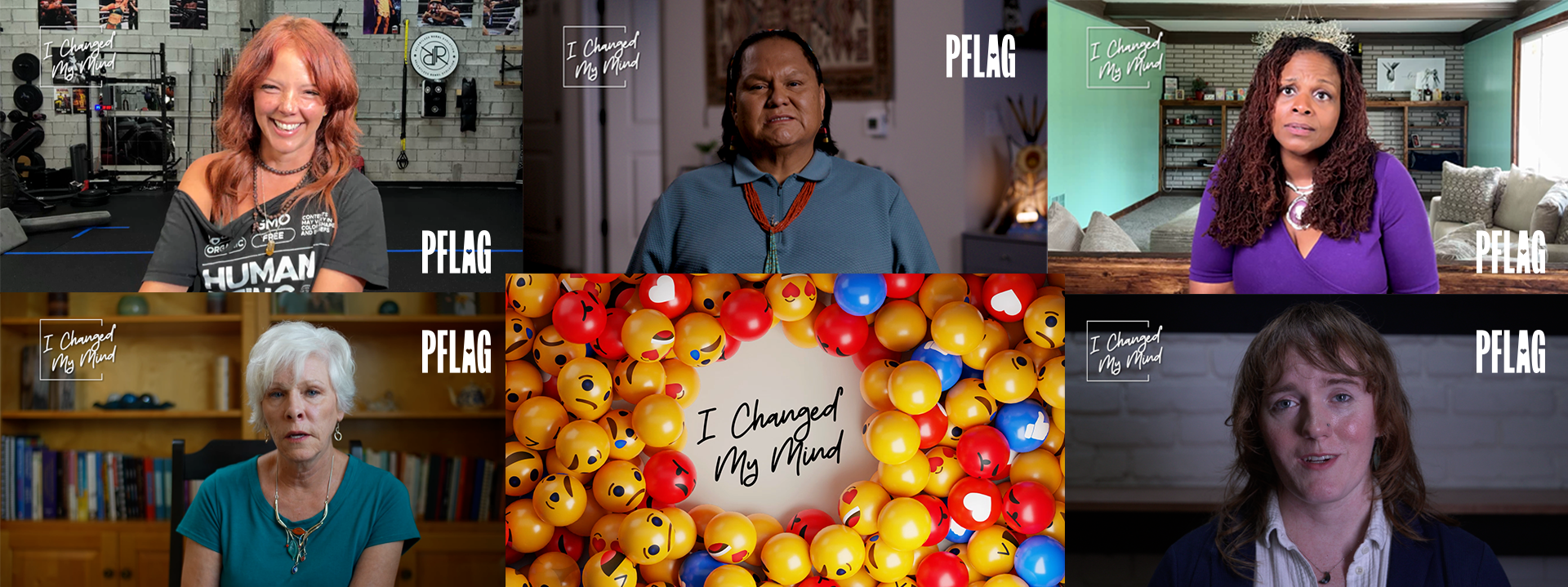
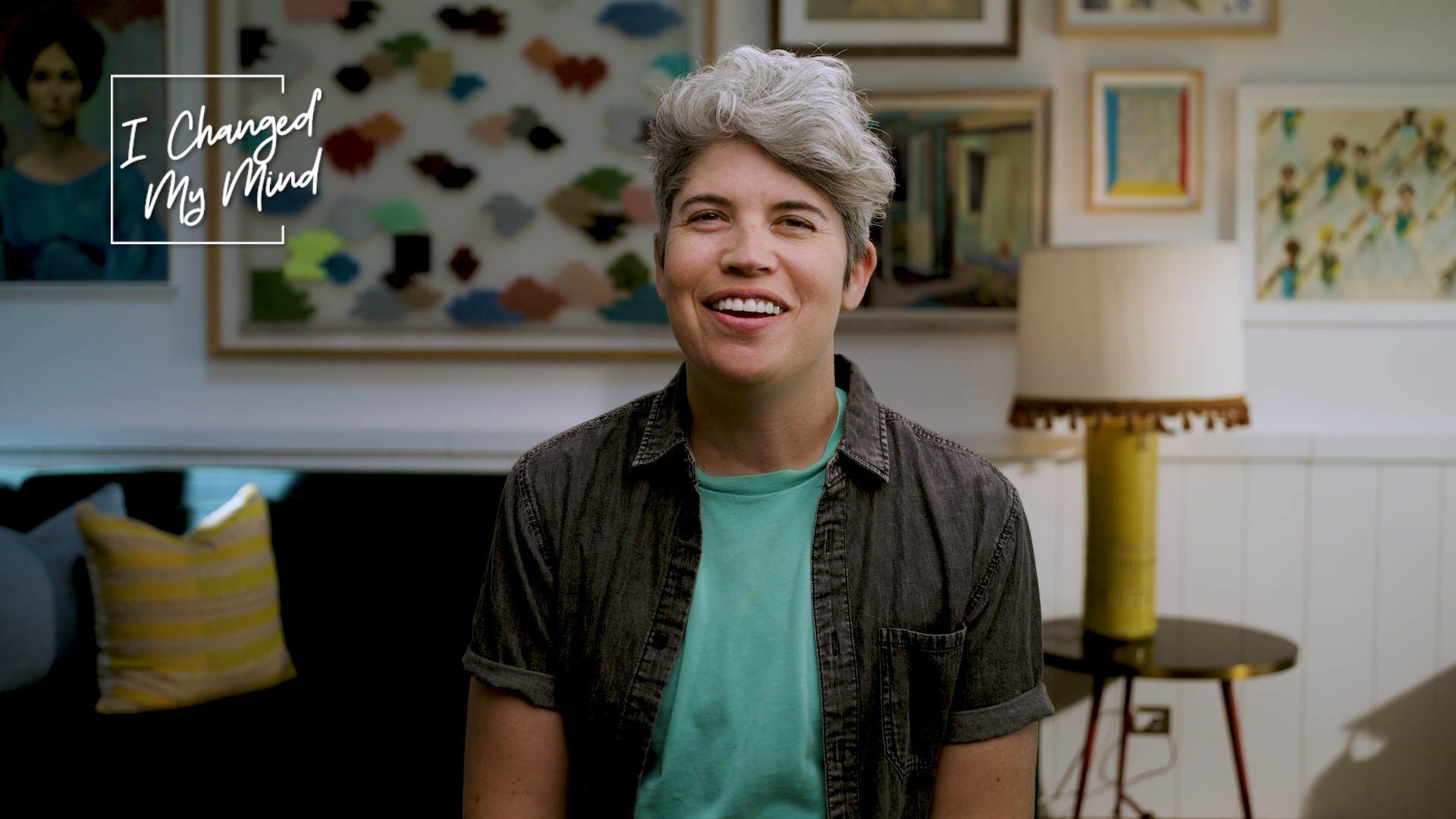
I Changed My Mind is driven by the belief that personal transformation is possible—even amid extreme polarization—and that sharing authentic stories of change can foster empathy, reconciliation, and progress to support that transformation. At a moment when LGBTQ+ people face renewed political and cultural threats that jeopardize decades of advocacy, the series confronts one of the most urgent questions of our time: can people truly change their long-held beliefs, and what does that process look like?
Created and directed by award-winning filmmaker Brooke Sebold in partnership with PFLAG National and Second Peninsula, the five-part non-fiction web series chronicles real journeys from opposition to fierce advocacy within LGBTQ+ and other historically underrepresented communities. Rather than debating ideology, the project centers lived experience, vulnerability, and intellectual humility to humanize conversations often defined by fear and misinformation.
The core goals were threefold: to document credible, nuanced stories of belief transformation; to provide families, allies, and communities with tangible models for navigating transformation and acceptance; and to counter dehumanizing narratives by demonstrating that growth often emerges through listening, love, and connection. Ultimately, I Changed My Mind sought to reassure audiences—especially LGBTQ+ youth and their families—that hearts can soften, minds can change, and that empathy remains a powerful force in creating transformation, and sustaining democracy and human dignity.
The project came to life through an intentional blend of intimate storytelling, strategic partnerships, and culturally timed distribution. Brooke Sebold collaborated closely with PFLAG National to identify subjects whose lived experiences reflected a broad cross-section of America, ensuring the series represented racial, religious, political, geographic, and generational diversity. Each participant was approached with care and trust, allowing their stories to unfold without judgment or sensationalism.
Sebold’s filmmaking approach emphasized emotional honesty and relational context over spectacle. By creating a safe, respectful environment, subjects were able to articulate not only what they changed their minds about, but how—revealing the non-linear, often uncomfortable process of unlearning, accountability, and growth. The series deliberately refused to villainize participants’ former beliefs, many of which were rooted in mis- and disinformation, instead focusing on the human capacity for reflection and change.
The rollout strategy was equally deliberate, prioritizing accessibility and shareability over traditional distribution. Rather than relying on a third-party platform, episodes were released directly on PFLAG National’s YouTube channel between September and December 2025, removing barriers to entry and allowing the series to reach families where they already consume and share content. The release schedule was intentionally aligned with key LGBTQ+ milestones—including National Coming Out Day, LGBTQ+ History Month, Transgender Awareness Week, World AIDS Day, and International Human Rights Day—ensuring the series reached audiences during moments of heightened visibility, vulnerability, and need for reassurance. Social media engagement amplified the impact, with PFLAG’s national network of supporters, members, and chapters driving organic conversation, sharing, and engagement across platforms, including Brief But Spectacular socials, broadening their impact beyond LGBTQ+ communities.
One of the primary challenges was navigating deeply sensitive subject matter in a polarized climate while maintaining credibility across ideological lines. This was addressed through transparency, compassion, and rigorous editorial integrity—allowing subjects to speak for themselves and trusting audiences to engage thoughtfully. The result is a series that feels both deeply personal and broadly resonant, offering a roadmap for families and communities grappling with acceptance.
The results of I Changed My Mind directly met—and exceeded—the project’s objectives. The series reached audiences nationwide through PFLAG National’s YouTube channel and social platforms, supported by a simultaneous release on Brief But Spectacular socials, where it earned more than double the industry-average engagement (7% compared to a 3.5% benchmark). Across platforms, the campaign generated 1,283,310 views, an average engagement rate of 7.04%, and a 68% increase in audience growth, adding 7,004 followers. By aligning releases with major LGBTQ+ observances, the project maximized relevance and emotional impact, reaching viewers at moments when they were most receptive to messages of hope and possibility.
More importantly, the series succeeded in reframing conversations around belief change, generating strong, positive traction reflected in consistent likes, shares and thoughtful comments. Audiences cited the stories as sources of reassurance, understanding and motivation to engage in difficult conversations within their own families and communities, while the featured subjects emerged as living proof that transformation is possible—not in the abstract, but through real human relationships. For PFLAG National, the project strengthened its mission by providing accessible, shareable tools for dialogue and acceptance; for LGBTQ+ youth, it offered something rare and powerful: visible evidence that families can evolve.
Ultimately, I Changed My Mind succeeded not only in educating audiences, but in equipping them with empathy, modeling intellectual humility, and demonstrating that even in a fractured society, growth and reconciliation remain achievable.