Operation Homefront’s 2025 Veterans Day campaign presented us with an opportunity to make intentional efforts to engage audiences during a moment when the nation is already pausing to seek meaningful ways to support veteran families. Veterans Day is a moment when awareness is heightened, and our partners are eager to amplify trusted organizations doing impactful work. We recognized this moment as an opportunity to deepen the external understanding of our mission and humanize our impact.
Families come to Operation Homefront at their most vulnerable, often facing unexpected crises that threaten housing, utilities, or basic stability. In conversations with families we’ve served, one theme consistently emerges: gratitude not just for financial relief, but for the compassion and dignity shown by our employees during moments of profound stress.
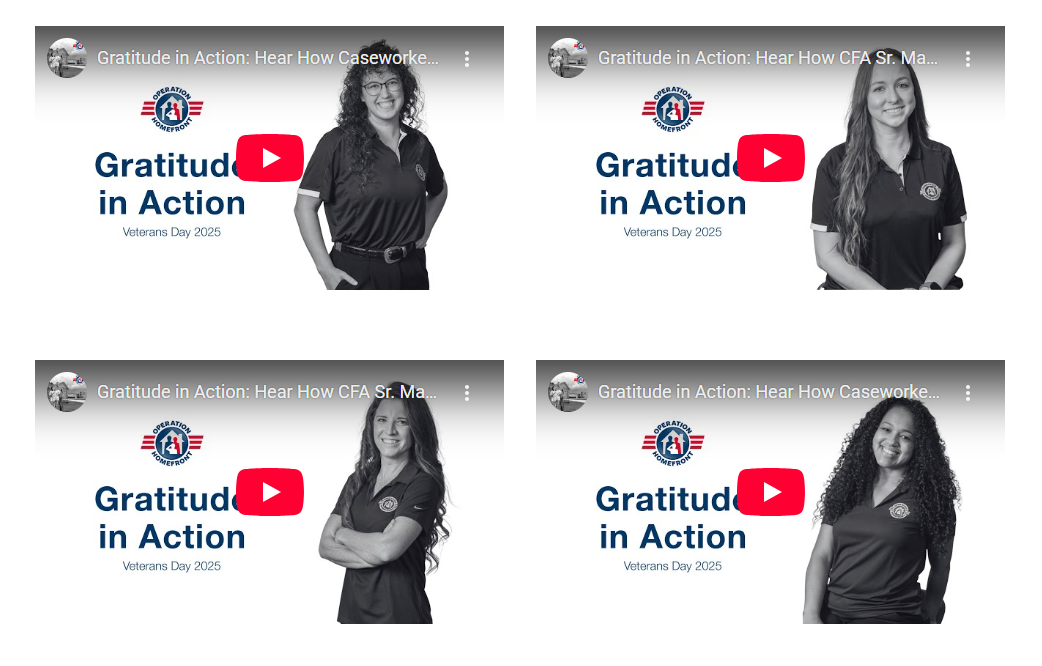
To honor that trust, we shared videos with the unique voices of Critical Financial Assistance Program caseworkers, one of whom is a veteran. Their perspectives allowed us to showcase the program’s breadth while highlighting the unseen emotional labor of trained social workers who advocate for families when they need it most. We also shared interviews that feature staff members from various departments, all of whom are veterans or spouses of a veteran, sharing why they chose to continue their service and why our mission is critical.
By delivering this message across social, email, and web, we aimed to connect with audiences at every stage of the donor journey, so they could see, feel, and understand how their support directly strengthens military and veteran families.
Early brainstorm sessions led us to a powerful but simple idea: let the people closest to the work tell the story. We chose to produce short-form videos featuring Critical Financial Assistance (CFA) caseworkers sharing firsthand experiences from the front lines of our mission. We emphasized CFA because a single story can quickly reveal the complexity of military family needs, the rigor of our application process, and, most importantly, the respect and dignity with which families are treated. These videos also offered something rare: the chance for military families to put faces to the voices they had come to trust during moments of crisis, and for future families to see a bridge toward help.
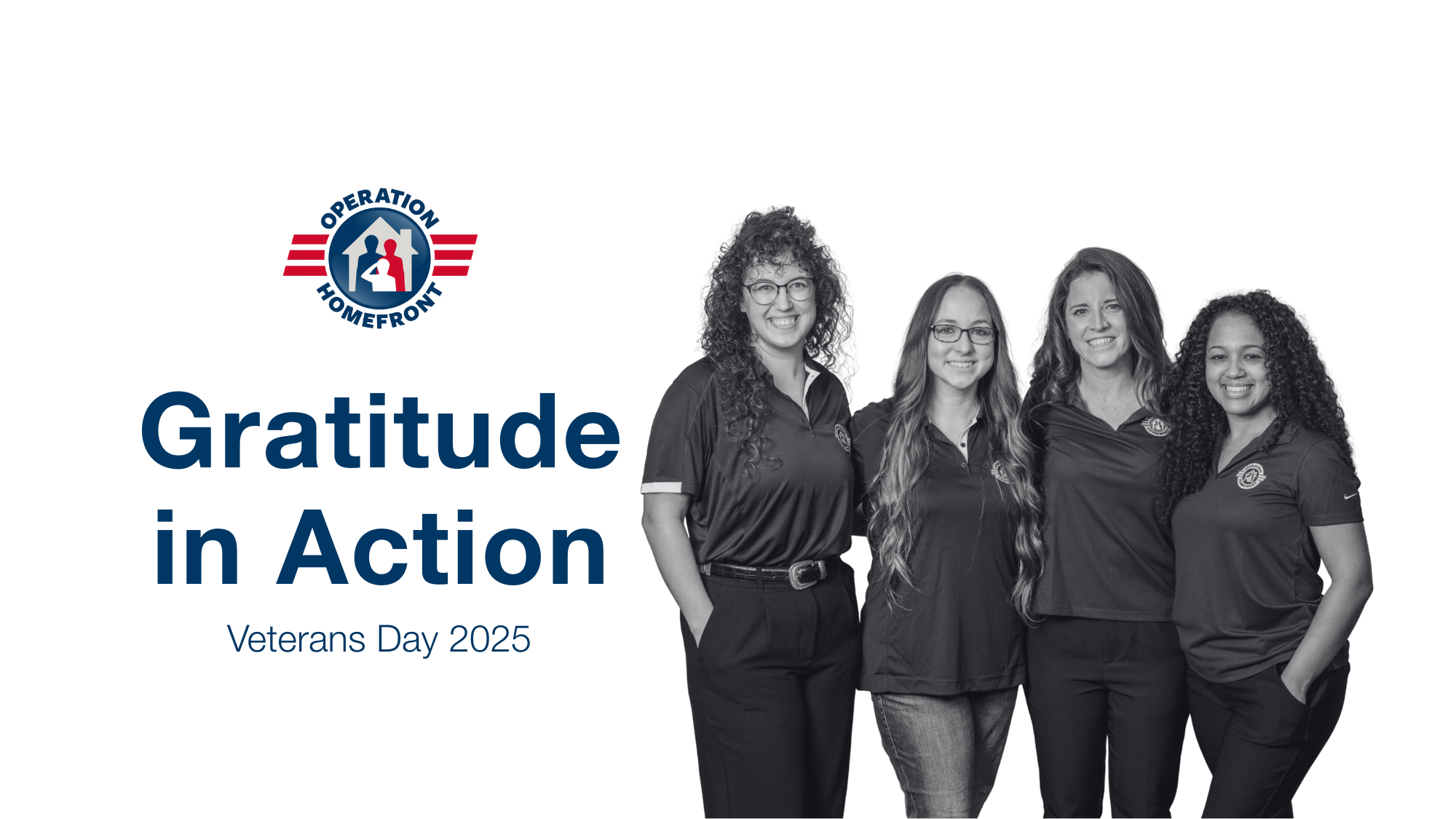
Each caseworker brought a deep personal connection to the military community. One is a military veteran herself. Others are military spouses, caregivers, or long-time advocates who have walked alongside service members and veterans in their own lives. These lived experiences shaped how they listened, empathized, and responded while giving each video a distinct voice and point of view. Rather than repeating the same message, each caseworker shared a different facet of service, sacrifice, and resilience.
This campaign was launched during a particularly critical time. A federal government shutdown coincided with Veterans Day, leaving many active-duty service members and veterans facing delayed pay, uncertainty, and financial strain. As need increased, public attention and compassion were also heightened. We knew it was essential to meet this moment with clarity, empathy, and urgency — both to serve families and to help audiences understand where gaps in care exist.
Creating all campaign assets, especially four videos, was ambitious for a small, remote marketing team with a limited budget and no in-house videographer or editor. To minimize costs, we filmed in San Antonio, Texas, where Operation Homefront maintains office space and where several caseworkers are based. With help from the CFA program director, we identified willing participants — dedicated professionals more accustomed to working behind the scenes.
The project lead and staff writer developed a thoughtful script framework rooted in trust. Through in-depth interviews, caseworkers shared the stories that stayed with them and what motivates them to do such emotionally demanding work. Those conversations shaped scripts that guided filming while allowing authentic emotion to lead.
On filming day, the writer, based locally, served as on-site support, helping calm nerves and maintain focus. A contract videographer familiar with our work captured minimalist black-and-white footage that kept attention on the voices and stories.
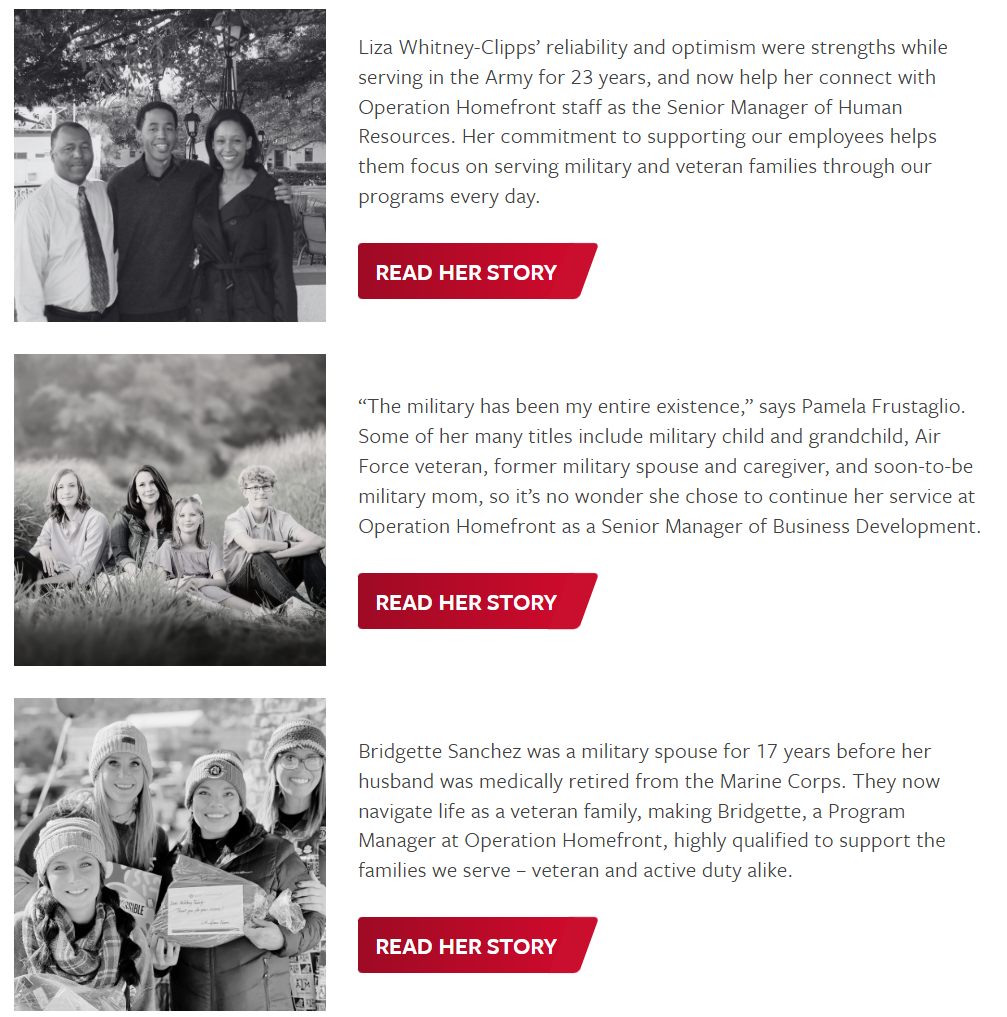
To compliment the videos, we shared written interviews featuring staff from HR, Development, and Regional Programming to share their deep connections to the military (including veteran, military spouse, caregiver, and military child) and why they chose to continue their service at Operation Homefront.
To further amplify the campaign, we partnered with two active-duty service members, who are influencers with large followings, and who shared our Veterans Day landing page across their networks. This helped direct families impacted by the shutdown to critical resources while reinforcing the real-world urgency behind the campaign.
Our 2025 Veterans Day Campaign ran November 1-14 and delivered strong fundraising and engagement results despite a highly challenging external environment. With a government shutdown and economic uncertainty dominating national attention, the campaign remained focused on showcasing impact and driving support during a critical giving period.
Through a combination of corporate partnerships, individual donations, and paid advertising, the campaign raised over $960,000. Campaign content generated nearly 370,000 impressions across paid and organic social channels, extending awareness of our mission and reach. Engagement across owned channels was also strong, with more than 40,000 homepage views during the two-week period, reflecting increased interest from supporters seeking to better understand our programs and impact.
The campaign also benefited from national exposure through USA Today’s Veterans Day Special Edition, reaching an estimated 30 million readers and significantly amplifying the campaign’s message beyond our existing audience.
These results were achieved during a period of sharply rising need. In November, we experienced a 134.7% increase in requests for Critical Financial Assistance. More than 35% of those requests were directly related to the shutdown, while requests for food assistance increased by 496%, underscoring the immediate strain facing many military and veteran families.
While the campaign did not reach original awareness targets due to the broader news environment, it succeeded in its primary objective: demonstrating the real impact made possible by staff and donors during a moment of heightened need. The results underscore the effectiveness of authentic, human-centered storytelling that fosters trust, even during times of national disruption.