In 2025, the Minnesota Department of Health set out to increase awareness, trust, and use of the 988 Suicide & Crisis Lifeline—a simple three-digit number designed to connect anyone in emotional distress to free, confidential support. KOSE partnered with creative agency, Friends & Neighbors, on a statewide, multi-channel campaign to normalize help-seeking behavior and ensure every Minnesotan knew that compassionate, immediate mental health help was only three digits away.
This was a significant challenge because we needed to reach the entire state—spanning diverse populations from major metro to rural areas—including delivering the potentially life-saving message in several languages. It was crucial to show that people would receive a listening ear that was empathetic, not judgemental — caring, not critical, so that calling the hotline felt safe and supportive for everyone, no matter their background or circumstance. We wanted to create a cultural shift that made seeking mental health help as common as getting a routine check-up.
Running July through September 2025, the campaign reached Minnesotans across screens, speakers, and street corners — from local WCCO broadcast spots and Connected TV to satellite and streaming audio, transit media, programmatic, YouTube, and Meta.
By the end of the flight, the integrated campaign delivered over 200 million impressions, nearly 50 million video completions, and a 13-point lift in ad recall on Meta—well above industry benchmarks. More importantly, it sparked conversation, compassion, and recognition across the state: “988” became a trusted resource rather than a number people feared they might need.
Central Purpose
The primary objective was to increase awareness, understanding, and trust of 988 among Minnesota adults—particularly those in high-risk or underserved communities.
The campaign sought to:
With rising suicide rates across rural counties and persistent misconceptions about crisis lines, the team recognized that success required both mass awareness and message credibility. The strategy emphasized trusted local media environments (e.g., WCCO) and relatable storytelling from real Minnesotans.
The campaign aimed not only to drive awareness metrics, but also to foster a cultural shift—making the idea of asking for help as ordinary as asking for directions.
Approach / Execution
The campaign launched July 21, 2025, with a unified, data-driven media plan optimized for reach, frequency, and cross-channel reinforcement.
Integrated Media Mix
Creative Approach
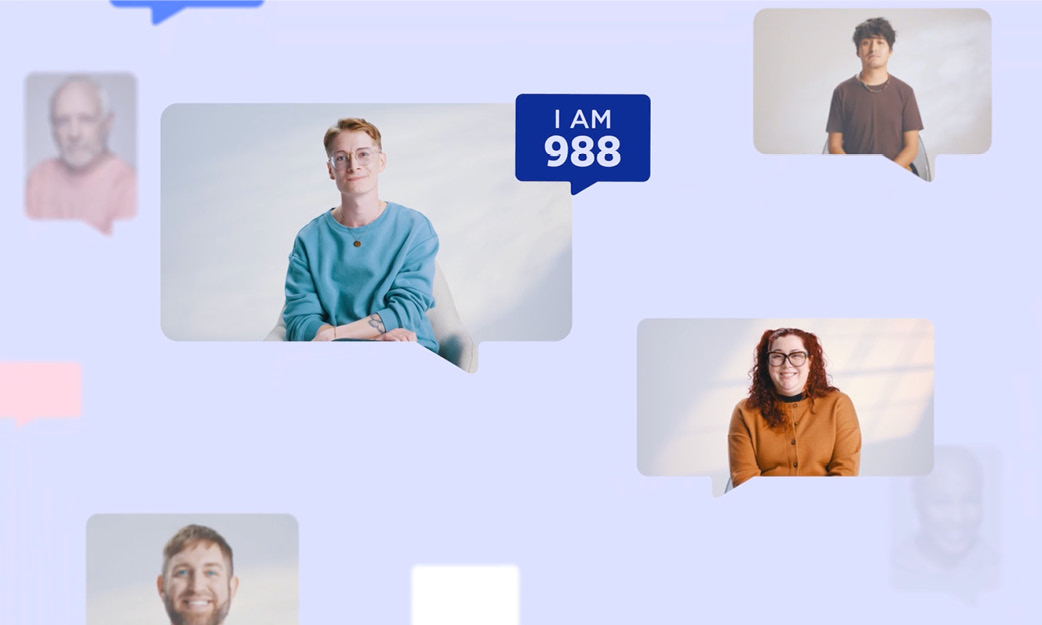
Creative assets balanced empathy and clarity, using real Minnesotan faces and stories to humanize 988. Spots like “Jack” and “Danah” shared firsthand perspectives on reaching out for help, while educational versions highlighted what happens when you call or text.
Adaptive Optimization
Incremental funds prioritized high-performing video platforms (YouTube, Effectv, StackAdapt), maximizing impact without requiring new creative.
The team continuously monitored pacing and geography, pushing additional impressions into rural, high-risk counties identified by the Center for Rural Policy & Development’s 2024 “Suicide Epidemic in Rural Minnesota” report.
Every media choice reinforced the campaign’s accessibility message: help is here, and it’s local.
Awareness leads to action—breaking the stigma
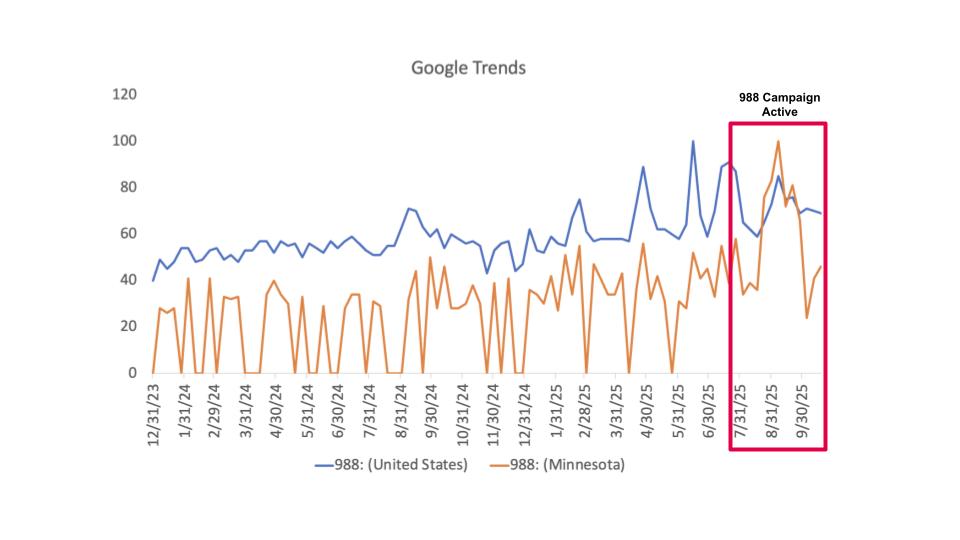
Minnesotans sought out 988 at unprecedented levels during our campaign, showing it inspired real action. Google Trends showed a significant lift in 988 search interest aligned directly with our media, with Minnesota’s interest curve rising sharply during the campaign window and tapering once paid support ended. Because Trends normalizes by region, Minnesota’s spike surpassing the national line indicates Minnesotans were searching closer to their local peak—strong directional proof of awareness and intent driven by our efforts.
This campaign exceeded nearly every benchmark across delivery, efficiency, and engagement while maintaining a sensitive, stigma-free tone around mental health. Here is what we accomplished.
YouTube and CTV performance validated that shorter spots efficiently drove awareness, while thirty-second versions deepened message comprehension. StackAdapt’s HTML5 banners outperformed static GIFs, confirming that subtle motion captured attention.
Beyond metrics, the initiative fostered an atmosphere of openness. Minnesotans saw 988 messages on commutes, heard them during daily listening, and encountered them across trusted media—each touchpoint reinforcing that reaching out is a sign of strength.
The campaign demonstrated how disciplined media strategy, data-informed optimization, and empathetic storytelling can save lives by meeting people where they are—literally and emotionally.