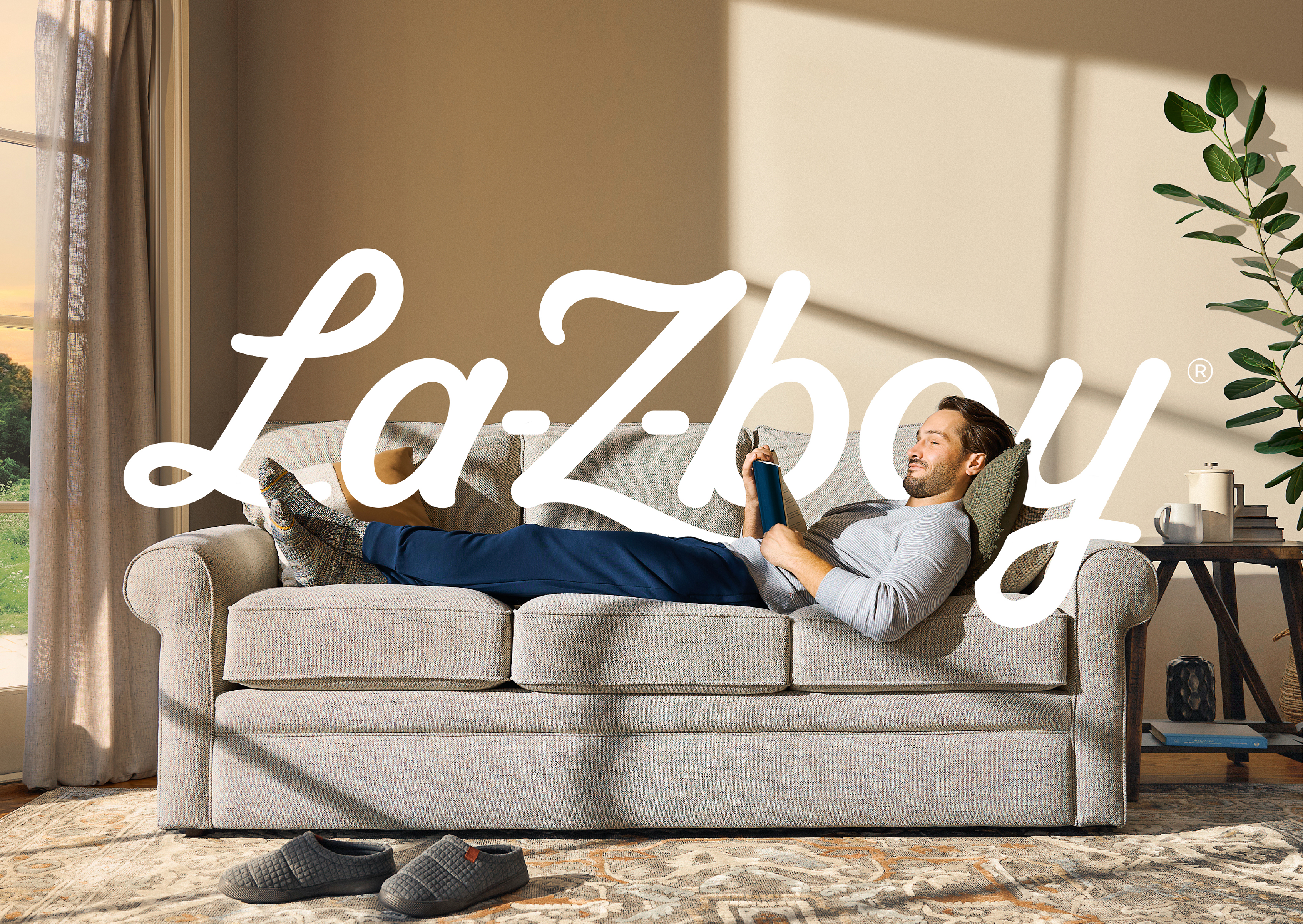
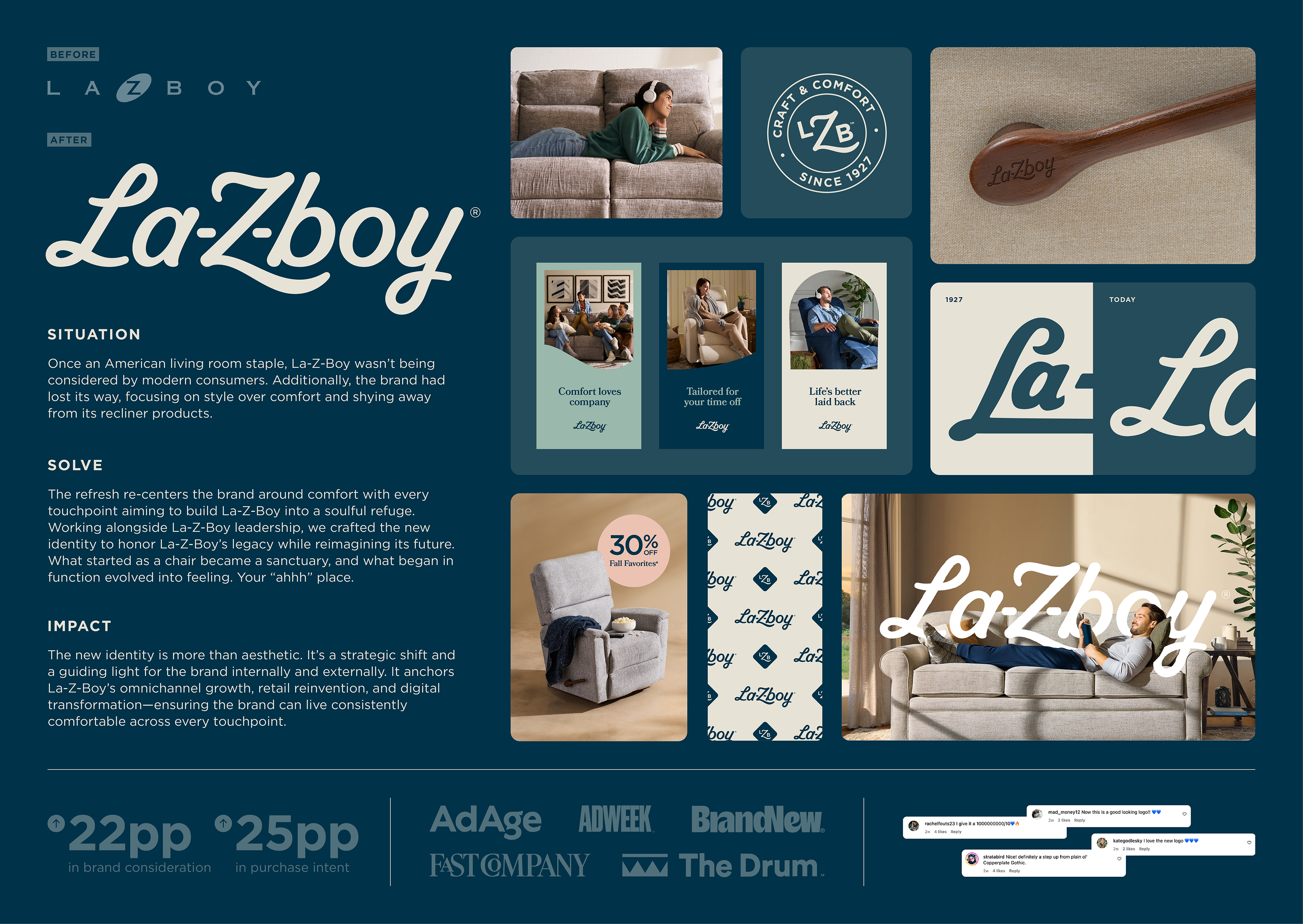
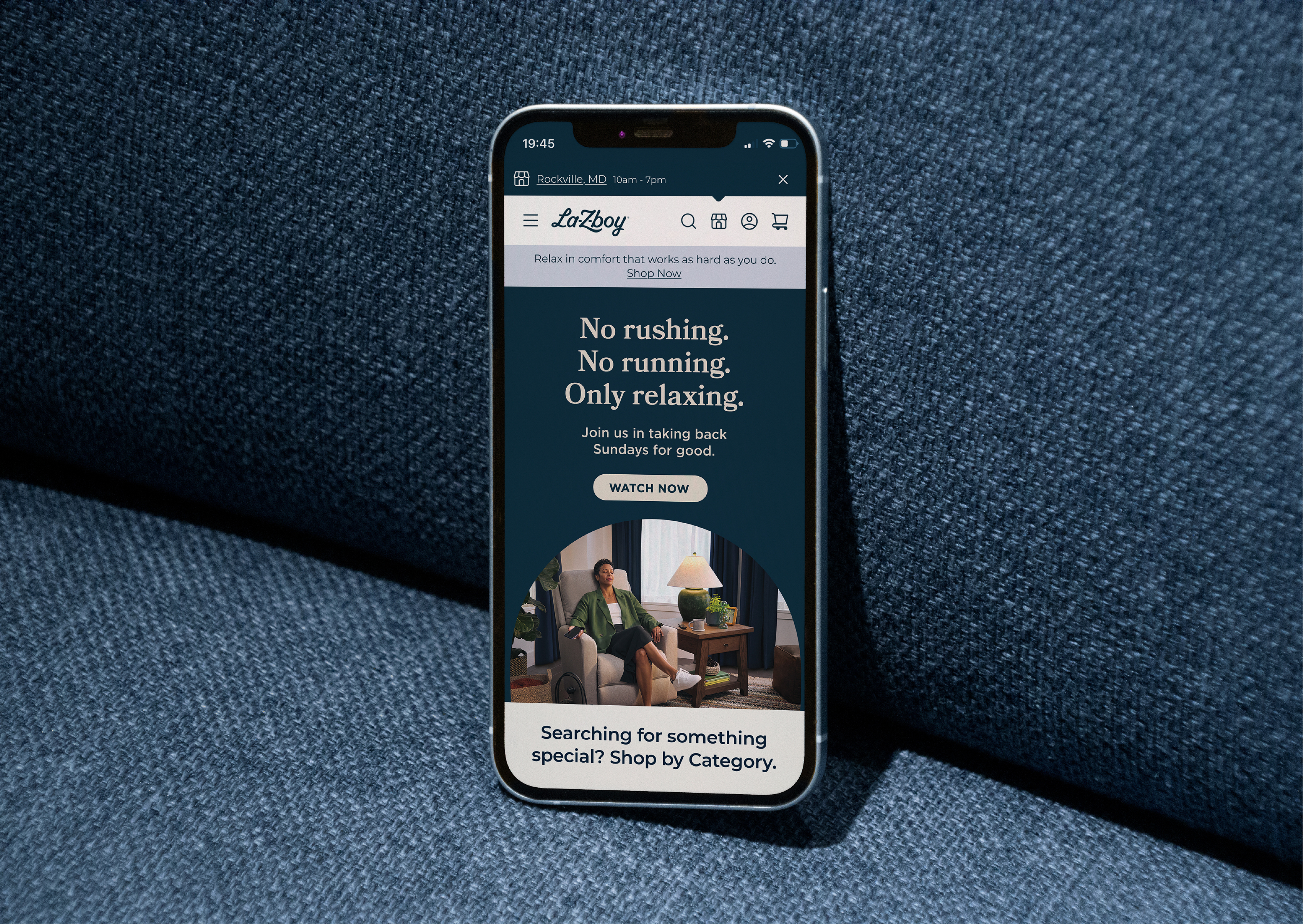
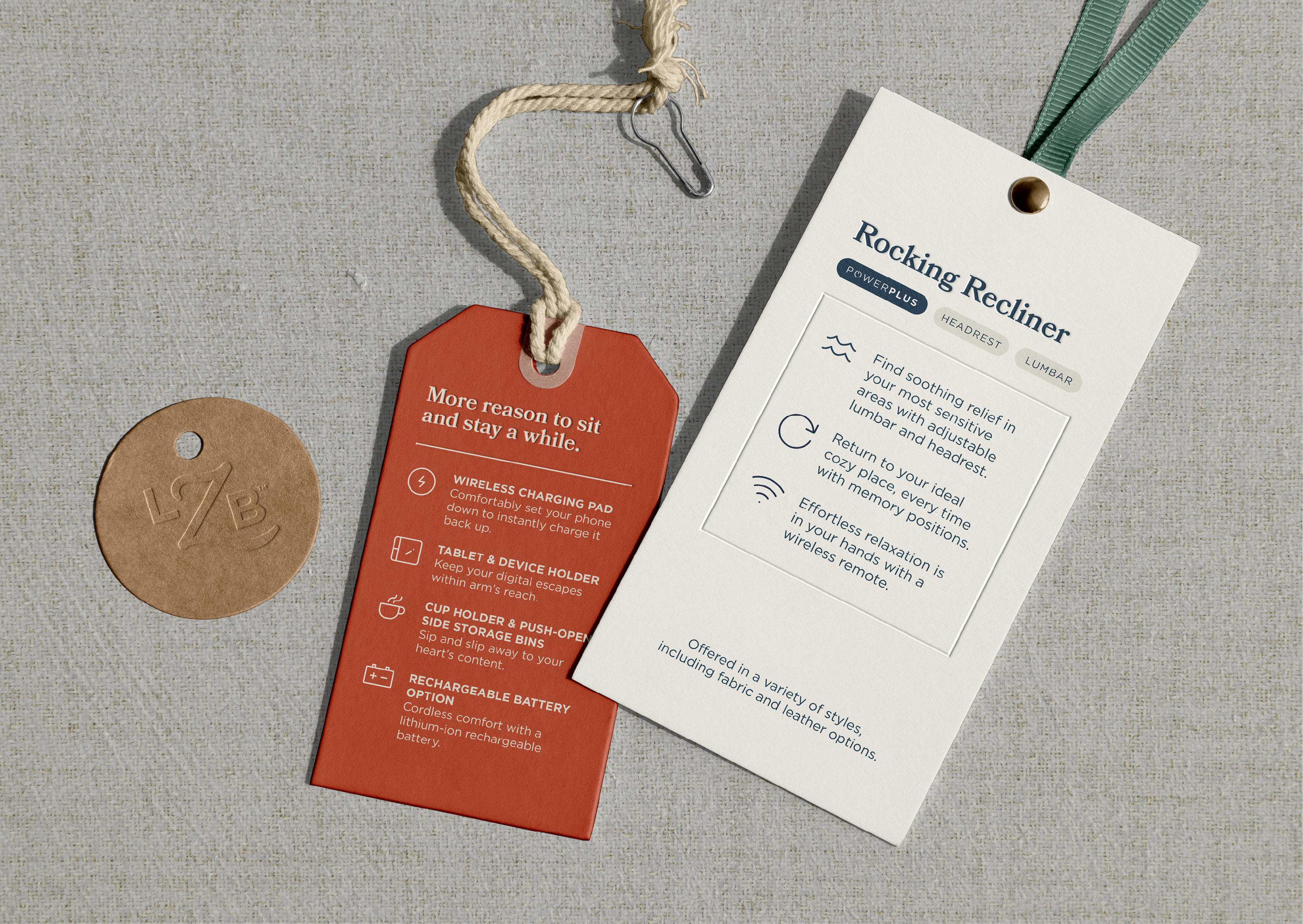
La-Z-Boy has owned comfort for nearly a century. But in culture, comfort had been reduced to a product feature, and the brand to a relic of the past. The idea driving this redesign was simple yet expansive: reclaim comfort as a deeply human, restorative force and build an identity system that doesn’t just communicate comfort, but feels like it.
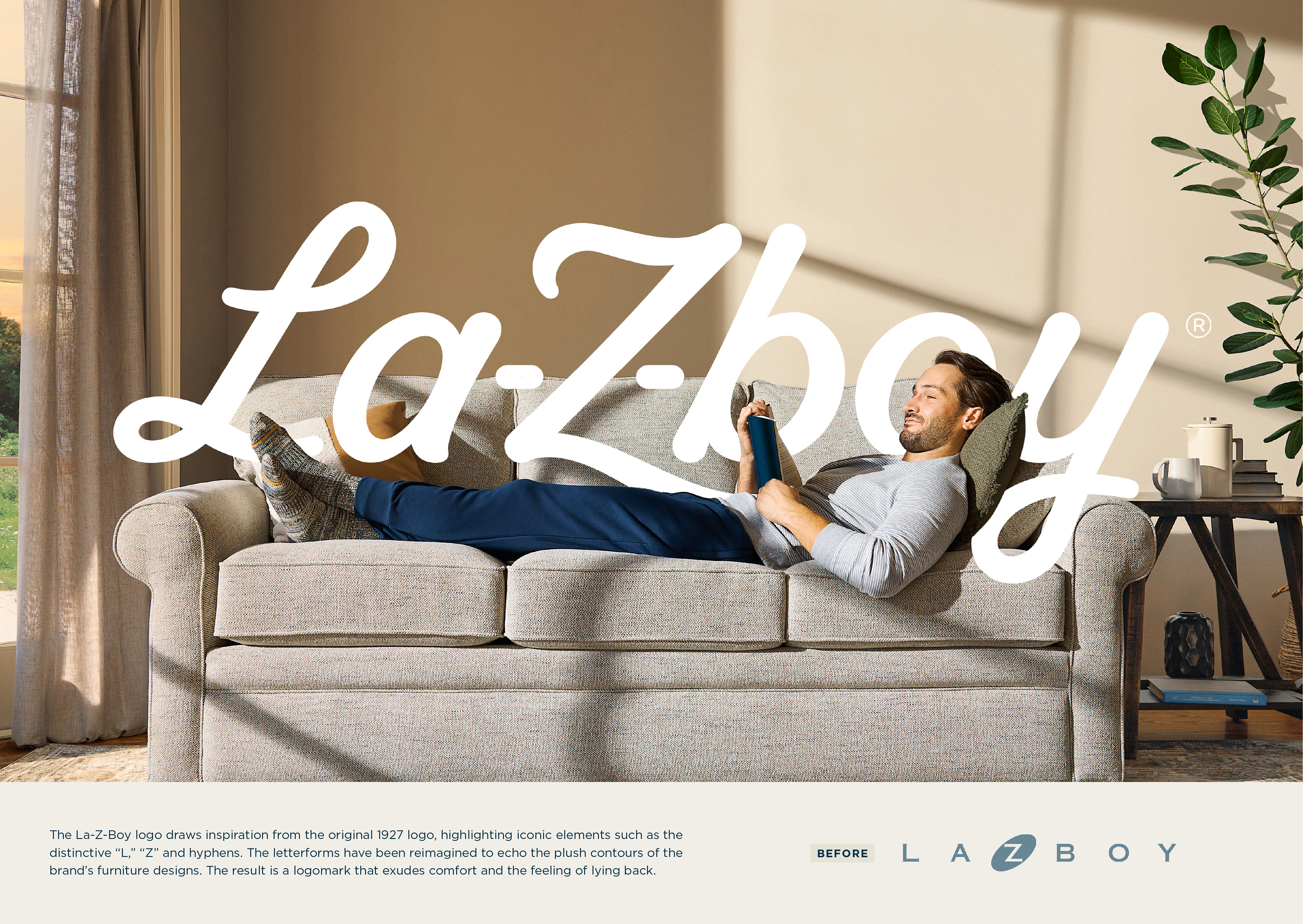
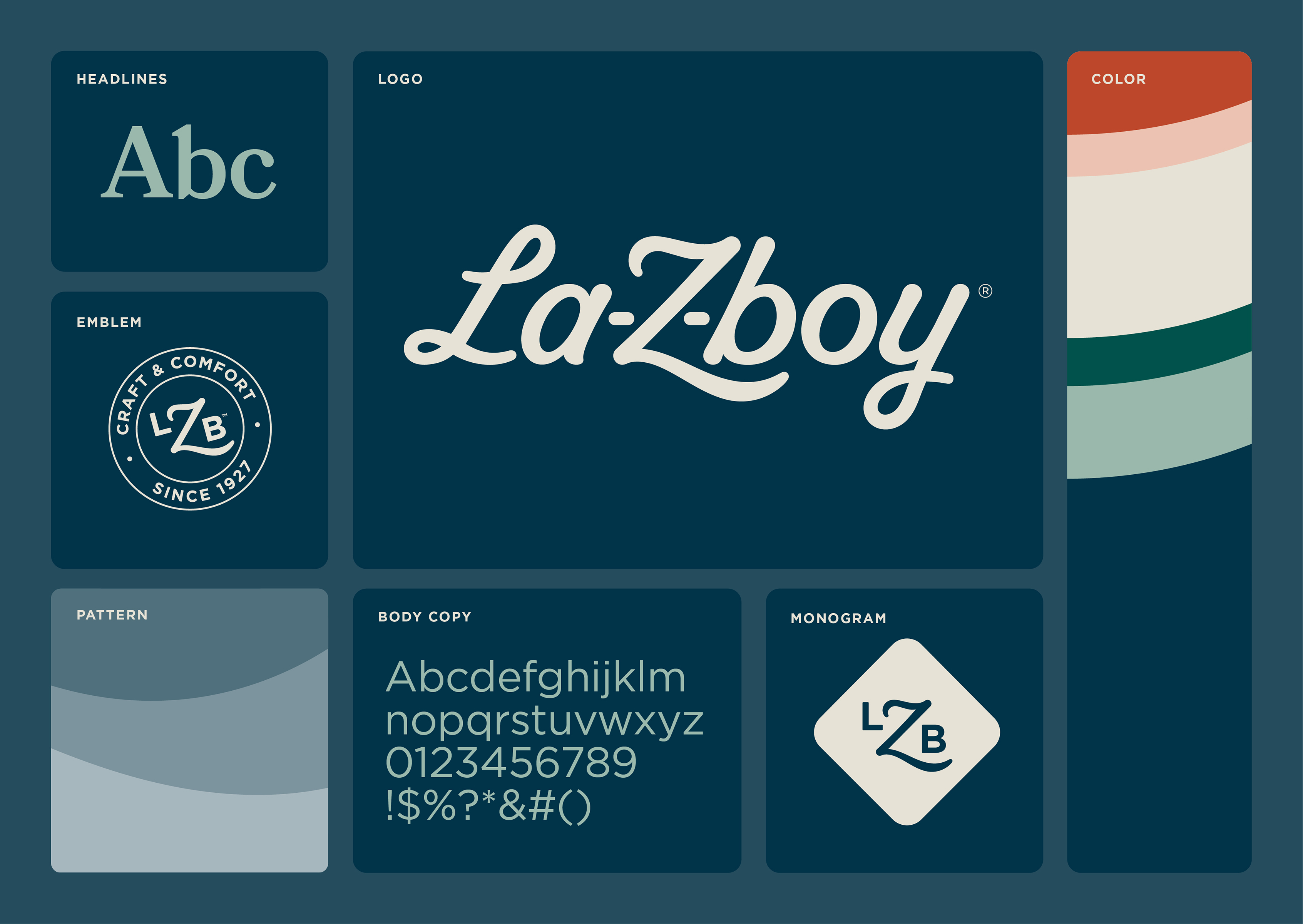
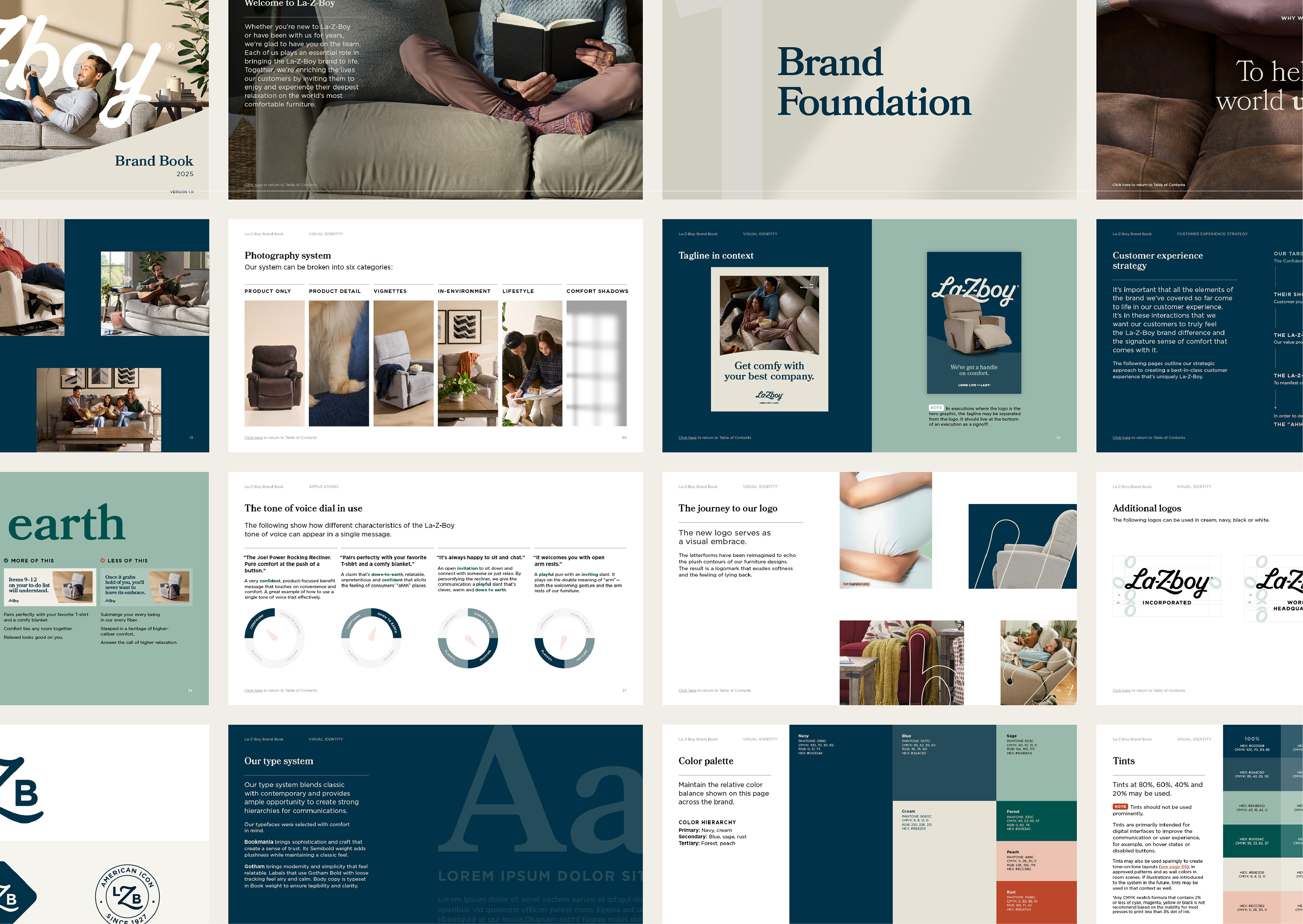
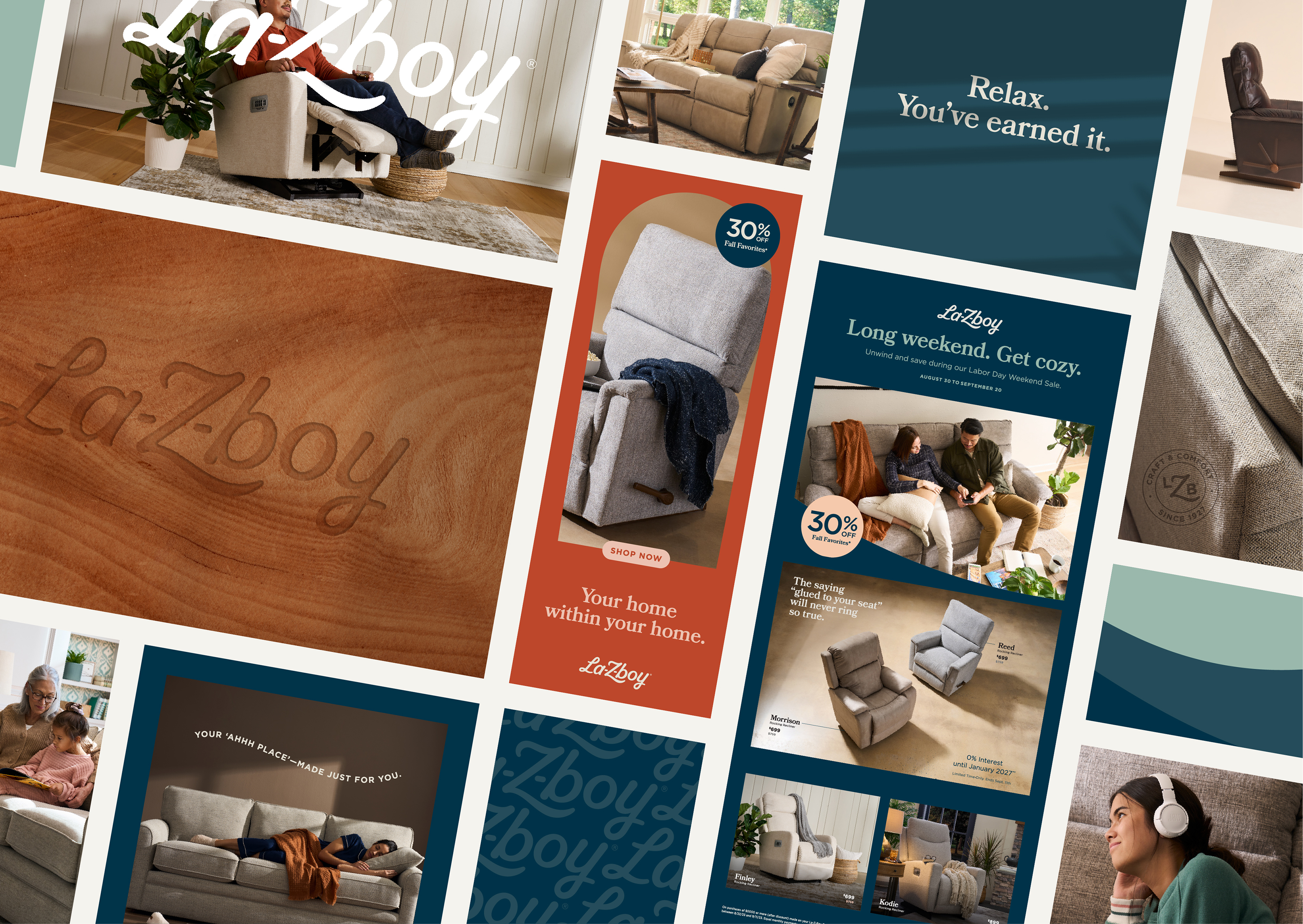
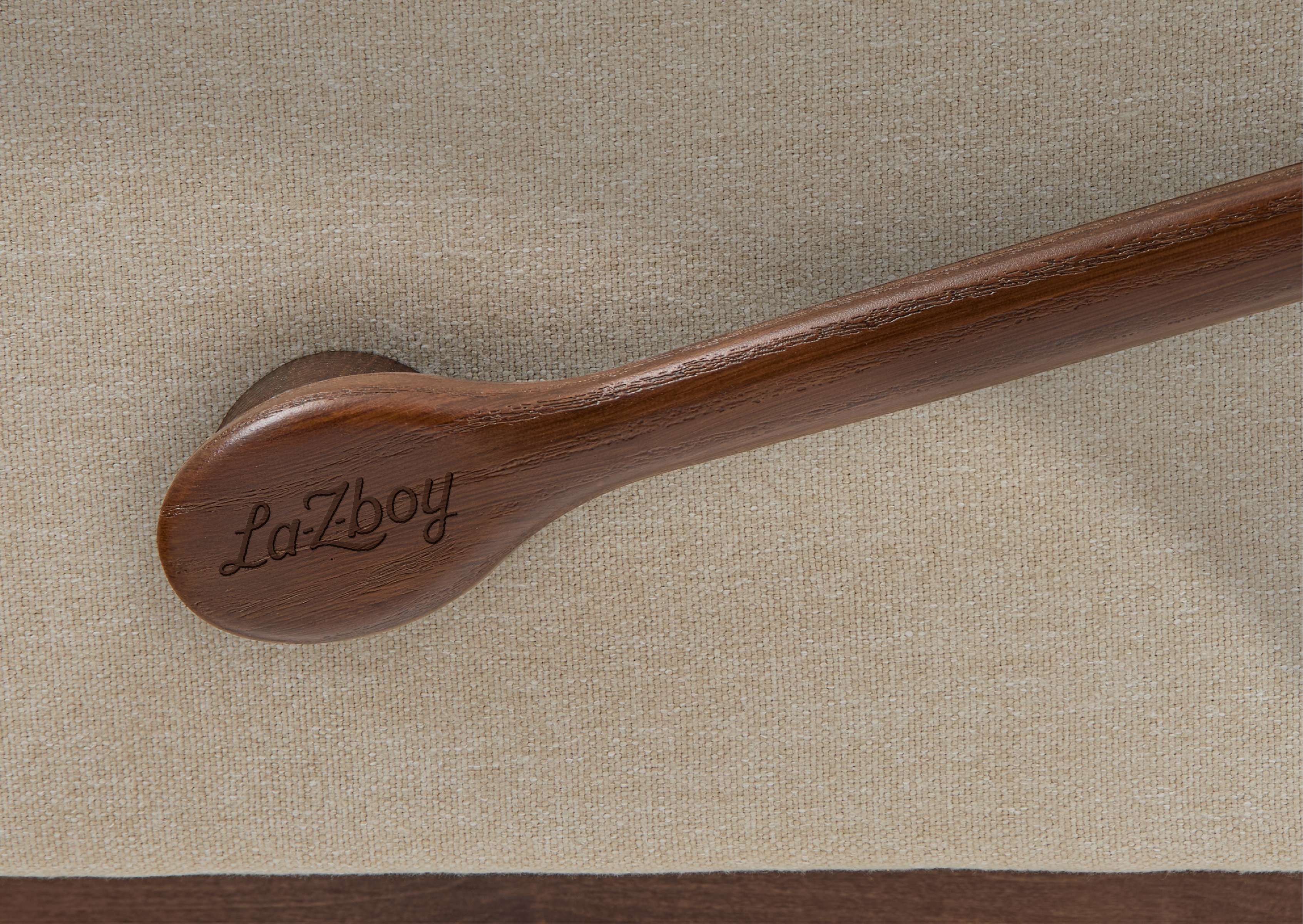
We redefined comfort as the moment of exhale in a world that never slows down, the physical, mental, and emotional reset people crave. That insight became “The Ahhh Place,” a positioning that transformed the recliner from a nostalgic symbol into a modern icon of restoration. Instead of distancing the brand from its heritage, we used it as raw material. The curves, ergonomics, and unmistakable feet-up posture of the furniture inspired the mark, typography, layouts, and spatial language. Every element was designed to soften, support, and invite.
Our goals were threefold:
First, modernize brand perception and reestablish La-Z-Boy as culturally relevant without sacrificing its legacy.
Second, create a cohesive, scalable design system that could unify retail, digital, product, and communications under one emotionally resonant idea.
Third, expand the brand’s meaning beyond a single hero product, positioning La-Z-Boy as the authority on restorative comfort for modern life.
To bring the redesign to life, we had to start by slowing down and rediscovering what comfort actually means in modern life.
We immersed ourselves in how people truly unwind. Not the staged version, but the real one: the long exhale after a hard day, the quiet moment before conversation starts again, the ritual of putting your feet up and letting your shoulders drop. In a culture defined by burnout and constant stimulation, comfort isn’t indulgent. It’s restorative. That insight became the foundation for everything.
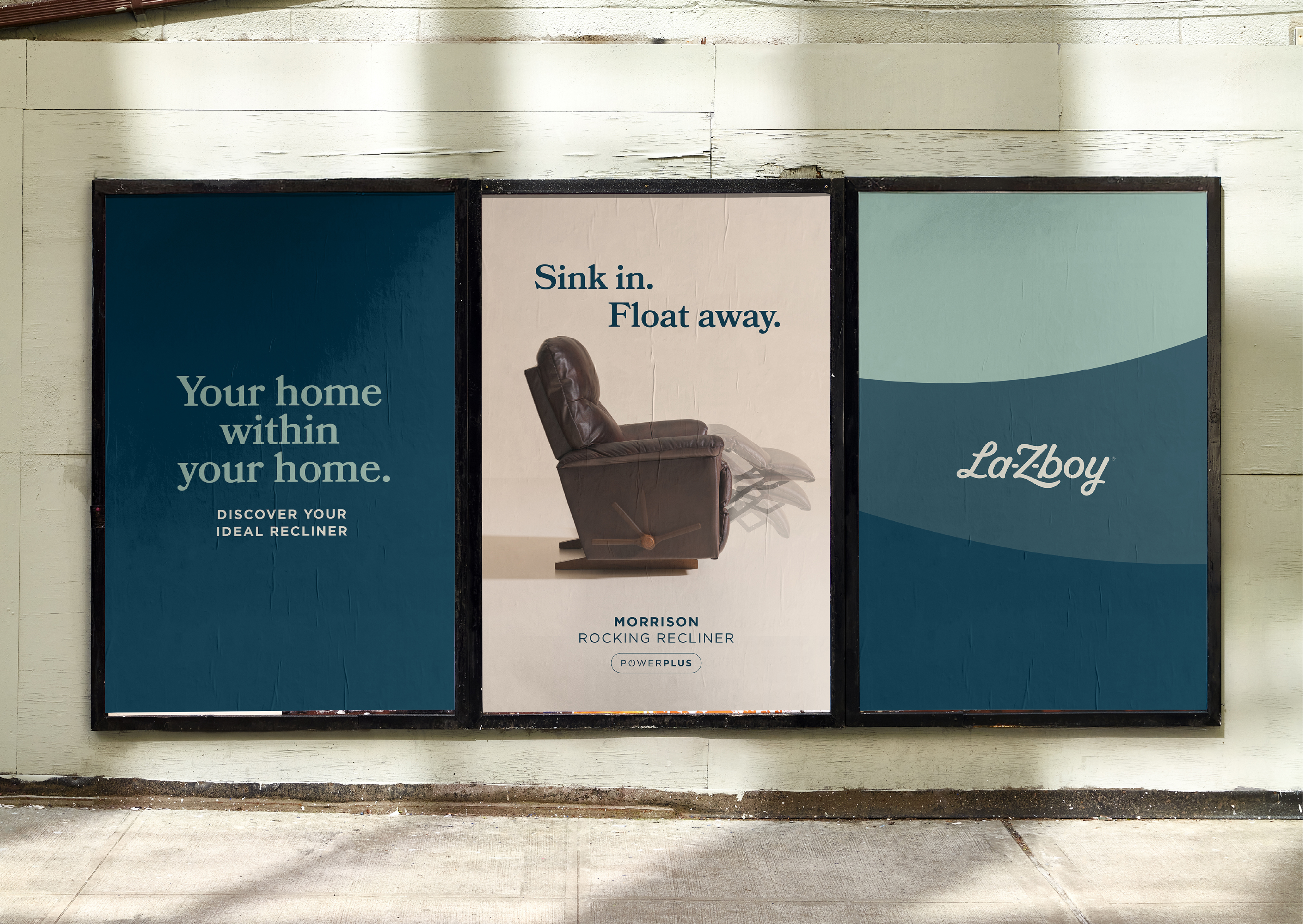
From there, we articulated a simple but powerful idea: the “Ahhh Place.” Not just a chair, but a feeling. A reset. A human moment. Instead of running from the recliner’s legacy, we reclaimed it. The posture, the curves, the unmistakable invitation to relax became the design DNA for the entire identity system. The mark softened. Typography flowed. Layouts curved and opened up. The brand didn’t shout for attention, it welcomed you in.
Bringing it to life meant building a system that could stretch across every touchpoint. Retail environments were redesigned to feel less transactional and more like spaces to linger. Photography captured lived-in moments of restoration and connection. The tone of voice shifted from product-forward selling to empathetic storytelling. And internally, comfort became a shared lens for decision-making, aligning teams around a common purpose instead of just a shared logo.
The biggest challenge was walking the line between heritage and modernity. La-Z-Boy is iconic, but iconography can harden into nostalgia. Rather than reinventing the brand, we rediscovered its core truth and expressed it with clarity and confidence. We chose restraint over noise. Empathy over exaggeration.
What makes this work unique is that it didn’t just redesign how La-Z-Boy looks. It redefined how the brand feels, turning comfort from a claim into a lived, visual, and cultural experience built to carry the company into its next century.
The goal wasn’t simply to refresh La-Z-Boy’s image. It was to restore cultural relevance, strengthen commercial performance, and unify the organization around a clear, modern brand platform. The results showed that shift was real.
In the quarters following the relaunch, La-Z-Boy posted $522 million in Q2 Fiscal 2026 sales, slightly up year over year despite macroeconomic pressure across the furniture category. Retail written sales increased 4%, same-store performance improved quarter to quarter, and 15 net new stores opened over the past year, clear signs of renewed consumer energy and confidence in the in-store experience.
Digitally, the brand gained meaningful momentum. Organic traffic rose 19.5% year over year in the three months after launch. Importantly, growth wasn’t driven solely by branded searches, non-branded queries like “furniture store near me” increased, signaling expanded consideration among new audiences. Share of total traffic climbed from 4% to 6% while competitors leaned more heavily on paid media, demonstrating stronger equity-driven demand.
Operationally, wholesale grew 2% with improved operating margins, adjusted operating margin rose to 7.1%, operating cash flow nearly tripled to $50 million, and the dividend increased 10%—the fifth consecutive year of double-digit growth.
Beyond the numbers, the brand now shows up with clarity and cohesion across retail, digital, and communications. Internally, teams are aligned around a shared purpose.
We consider this a success because the work didn’t just look different, it performed differently. It strengthened both perception and performance, proving that reclaiming a timeless truth can drive modern growth.