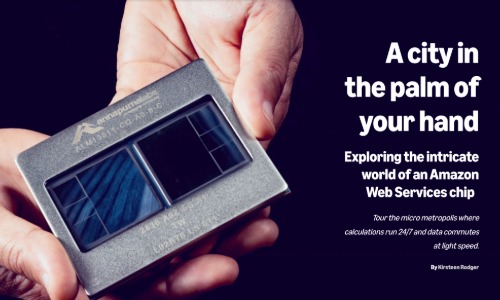
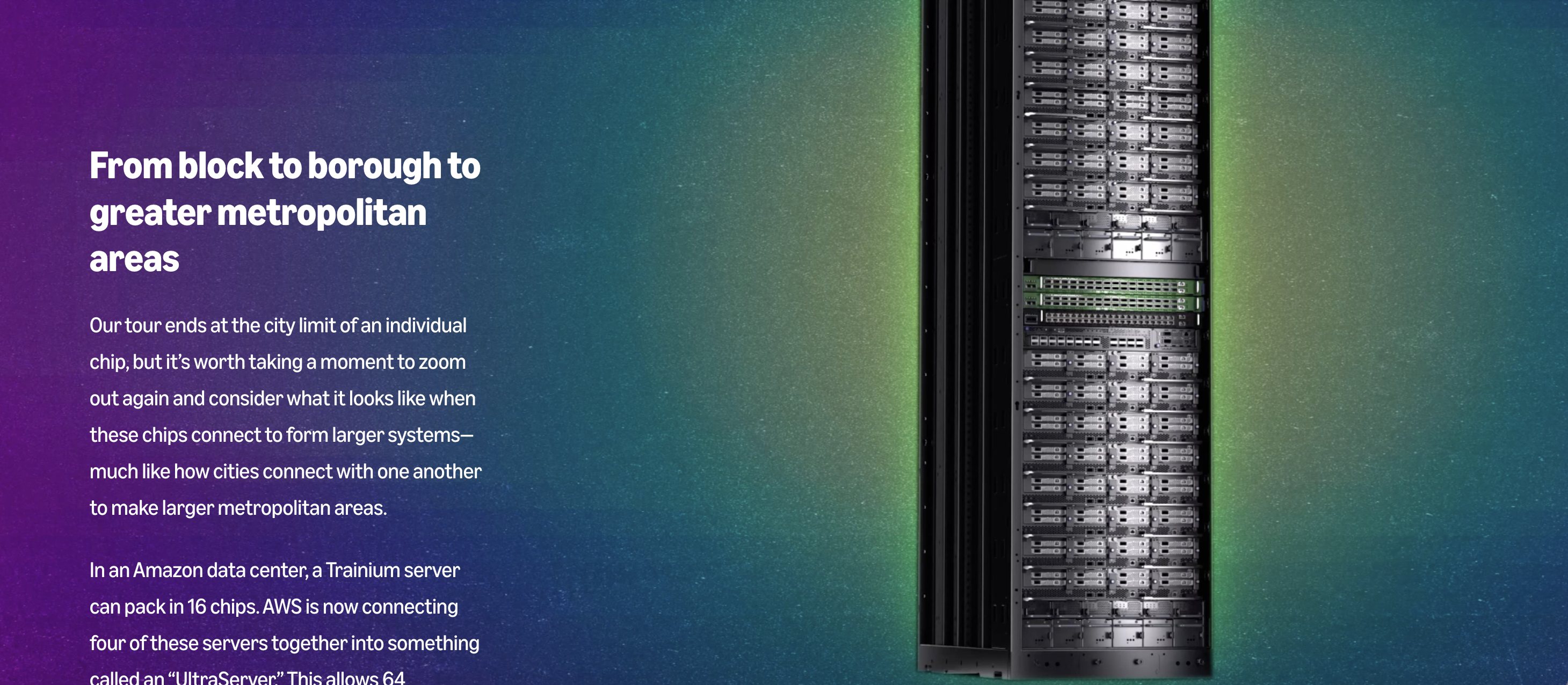
Our objective was two-fold: First, to educate general audience readers about microchip technology that's embedded into their everyday lives and becoming increasingly critical to AI advancement. Second, to position AWS Trainium chips as cutting-edge within the competitive semiconductor landscape. We aimed to demystify highly technical subject matter through an innovative, highly visual storytelling approach—taking readers on a 3D tour of a chip similar to a Zillow home tour. This method would make complex technology accessible and engaging while avoiding industry jargon that typically alienates non-technical audiences. Our specific goals included: creating a visual narrative that could hold readers' attention while conveying technical concepts, establishing memorable metaphors that readers could carry forward, and subtly demonstrating AWS's innovation without resorting to typical corporate messaging. We wanted readers to finish the story with both a genuine understanding of how chips work and an appreciation for what makes Trainium exceptional.
This project represented a significant investment—four months versus our typical one-month timeline, and our first use of Shorthand, a tool offering visual capabilities beyond our CMS. Leadership bought into our belief that going bigger could reach more readers with greater impact.
We kept the team small: one writer, one editor, one designer, one illustrator, and one photographer, enabling tight collaboration. We started by interviewing AWS chip engineers, learning how chips work and how physical design enables their capabilities.
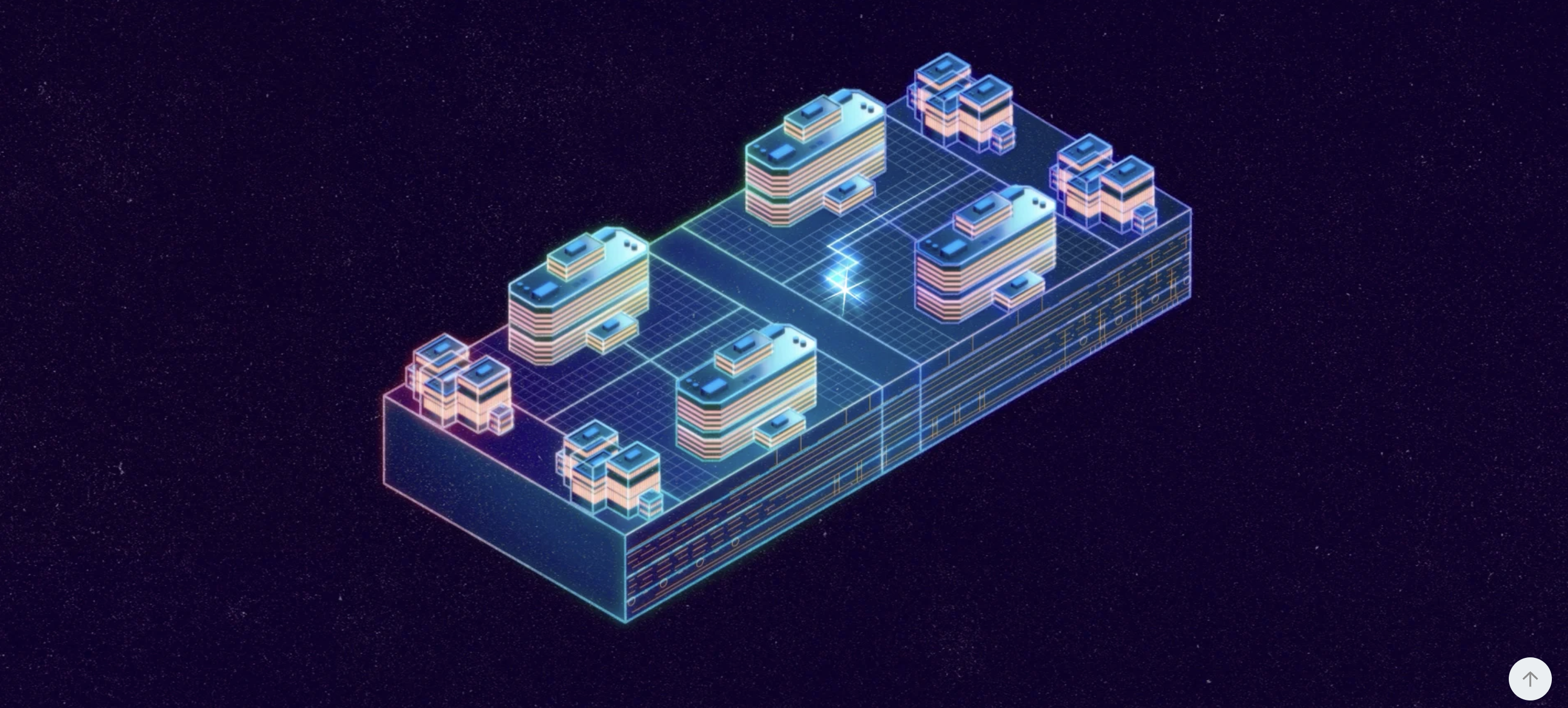
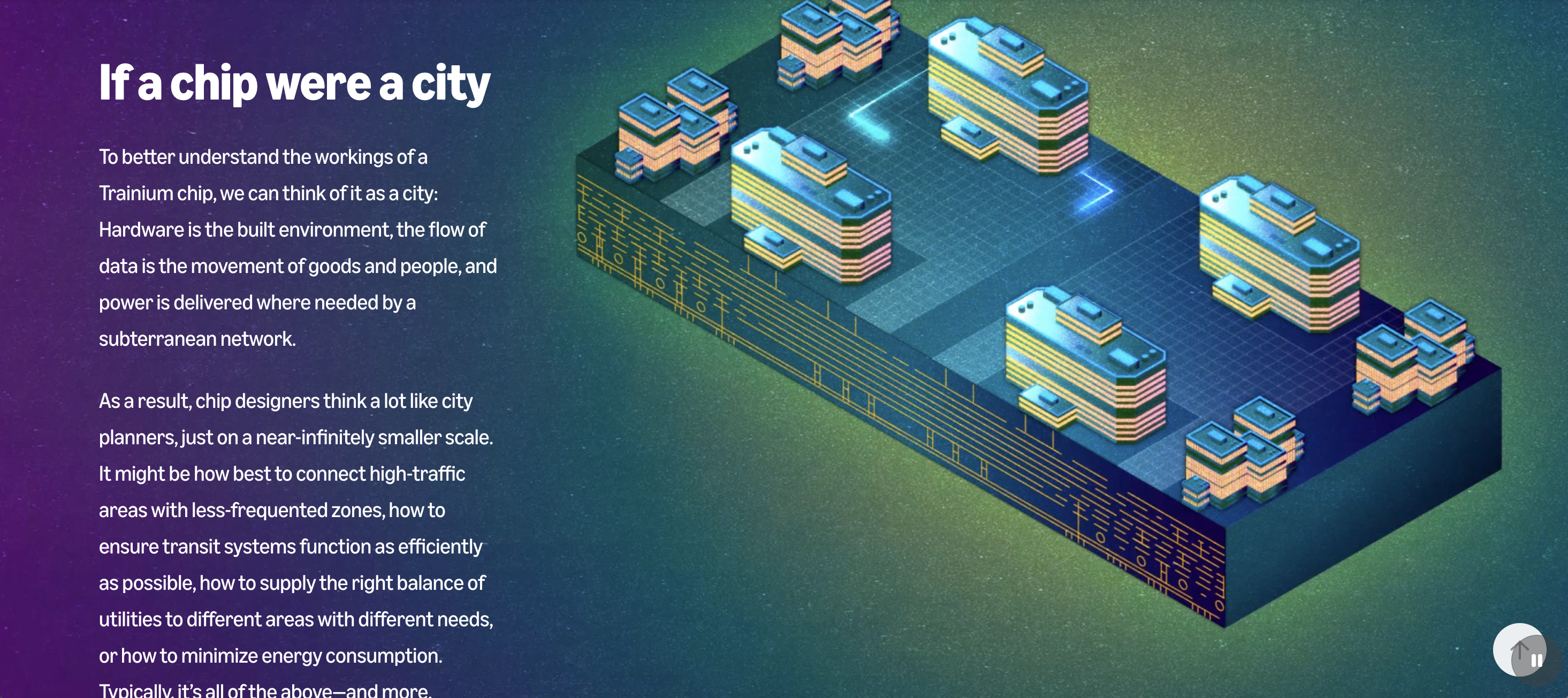
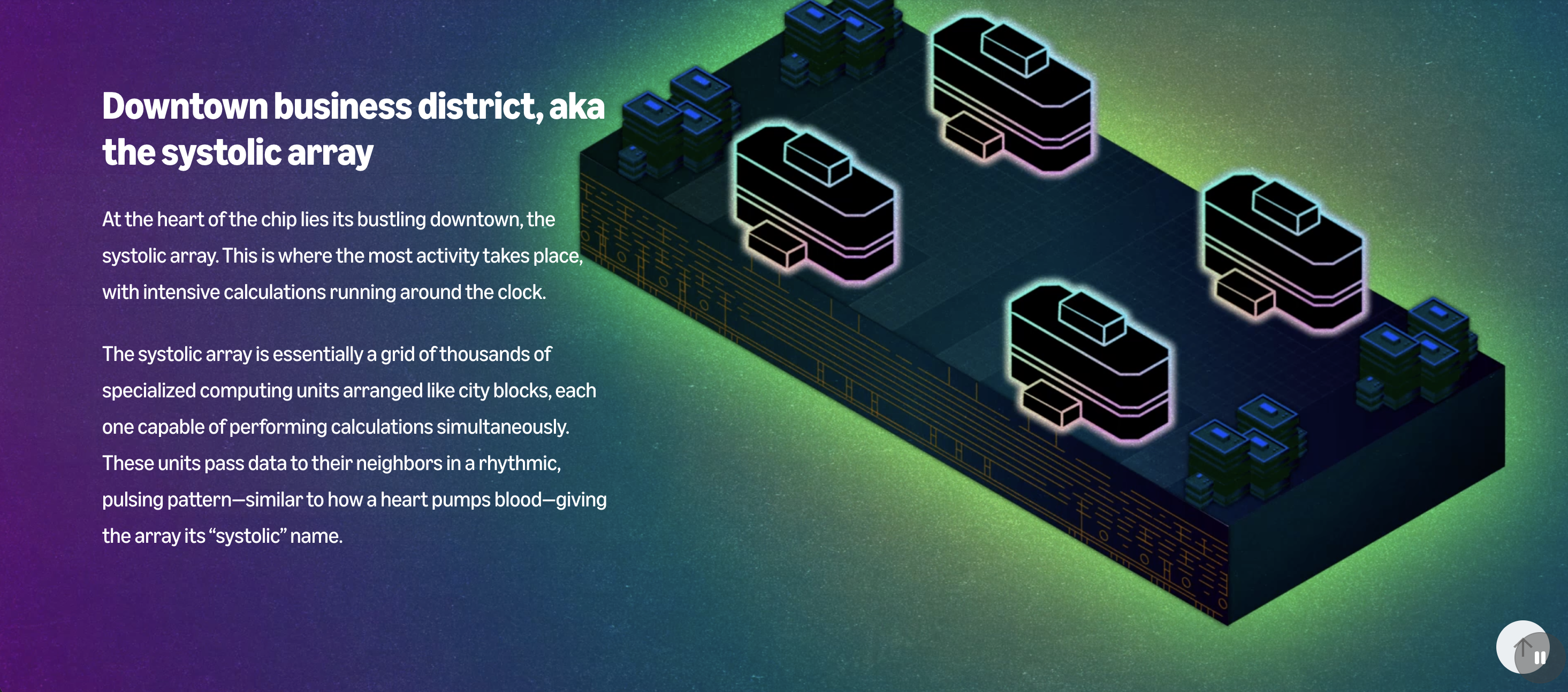
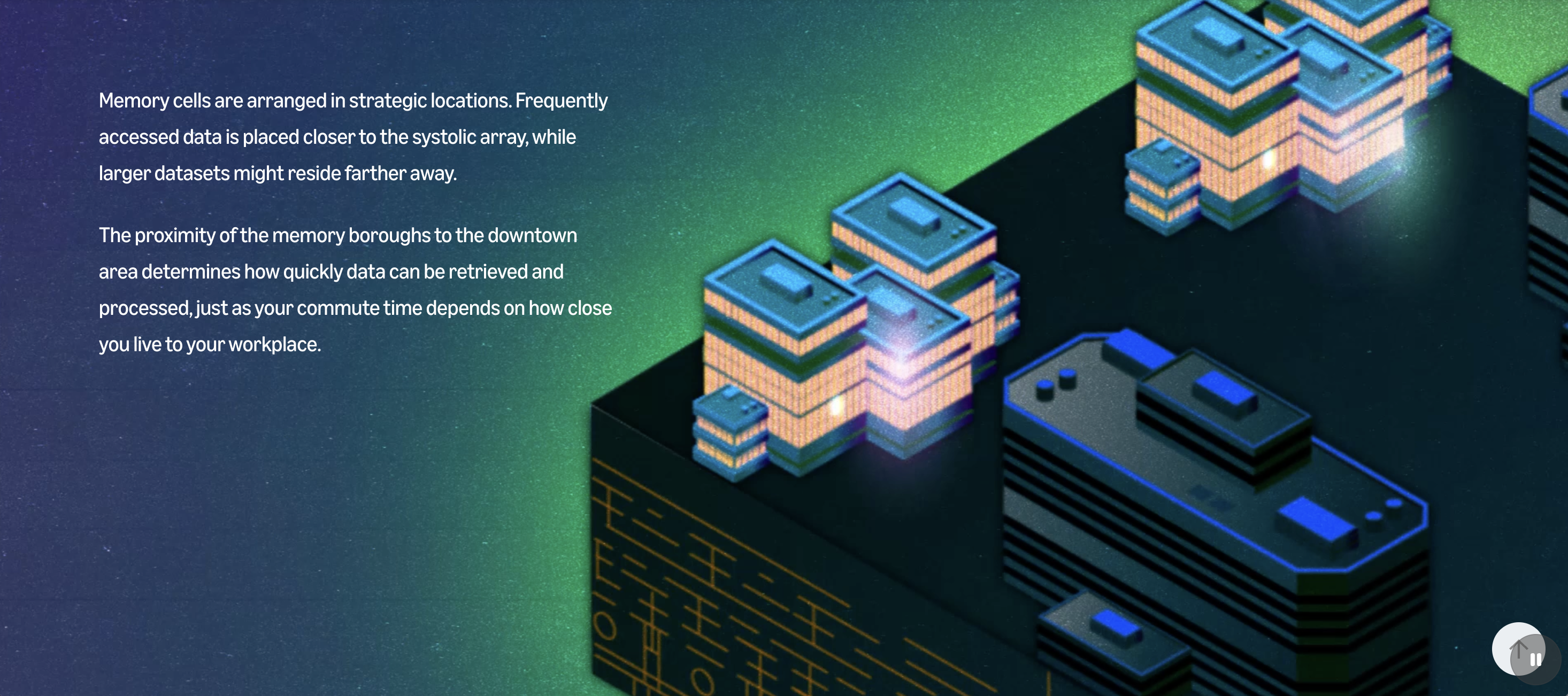
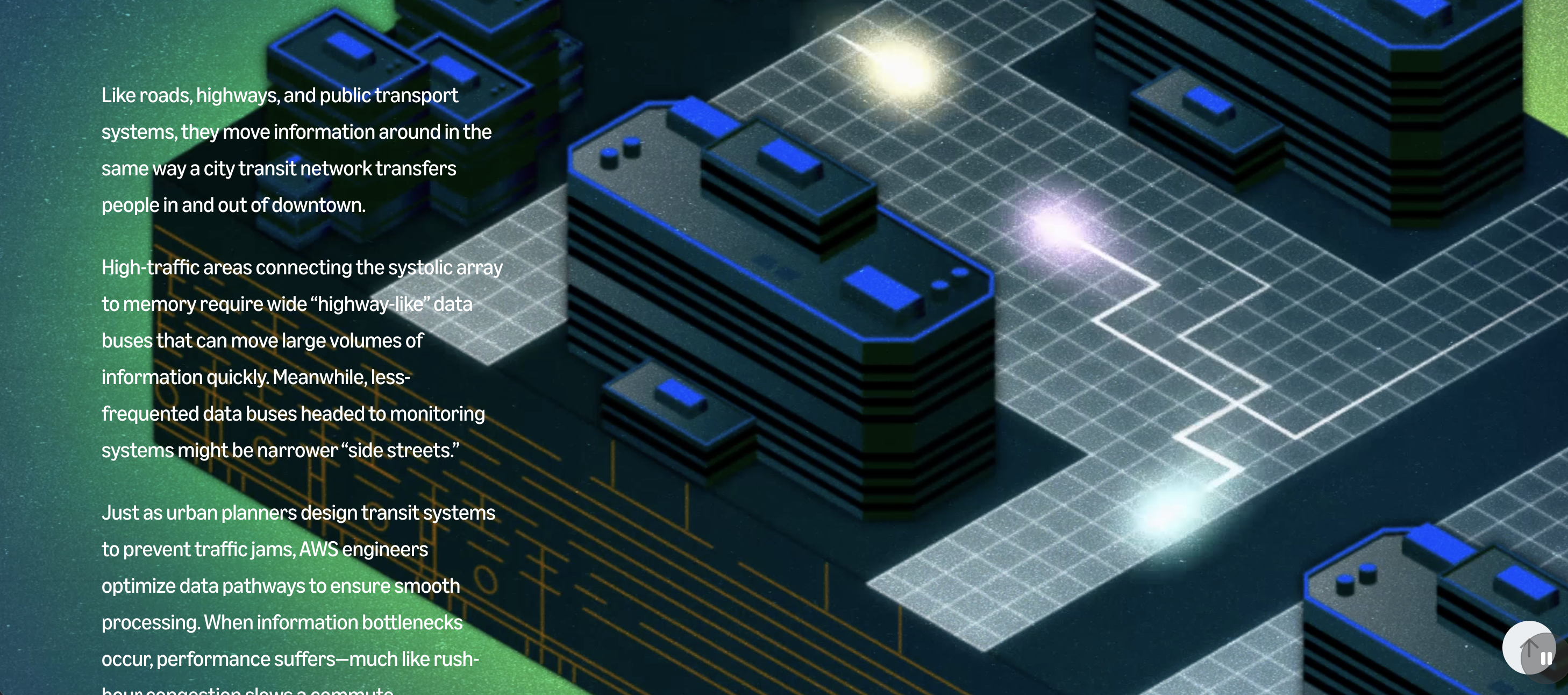
Initially, we struggled translating tech into compelling visuals. An engineer’s note that his architect mother compared chip design to blueprints sparked our initial concept, a Zillow-like 3D home tour of a chip, but we saw the metaphor's limitations. Shifting to "chip as city" clicked immediately: transistors became buildings, data pathways became streets. This gave readers an intuitive framework for understanding chip architecture.
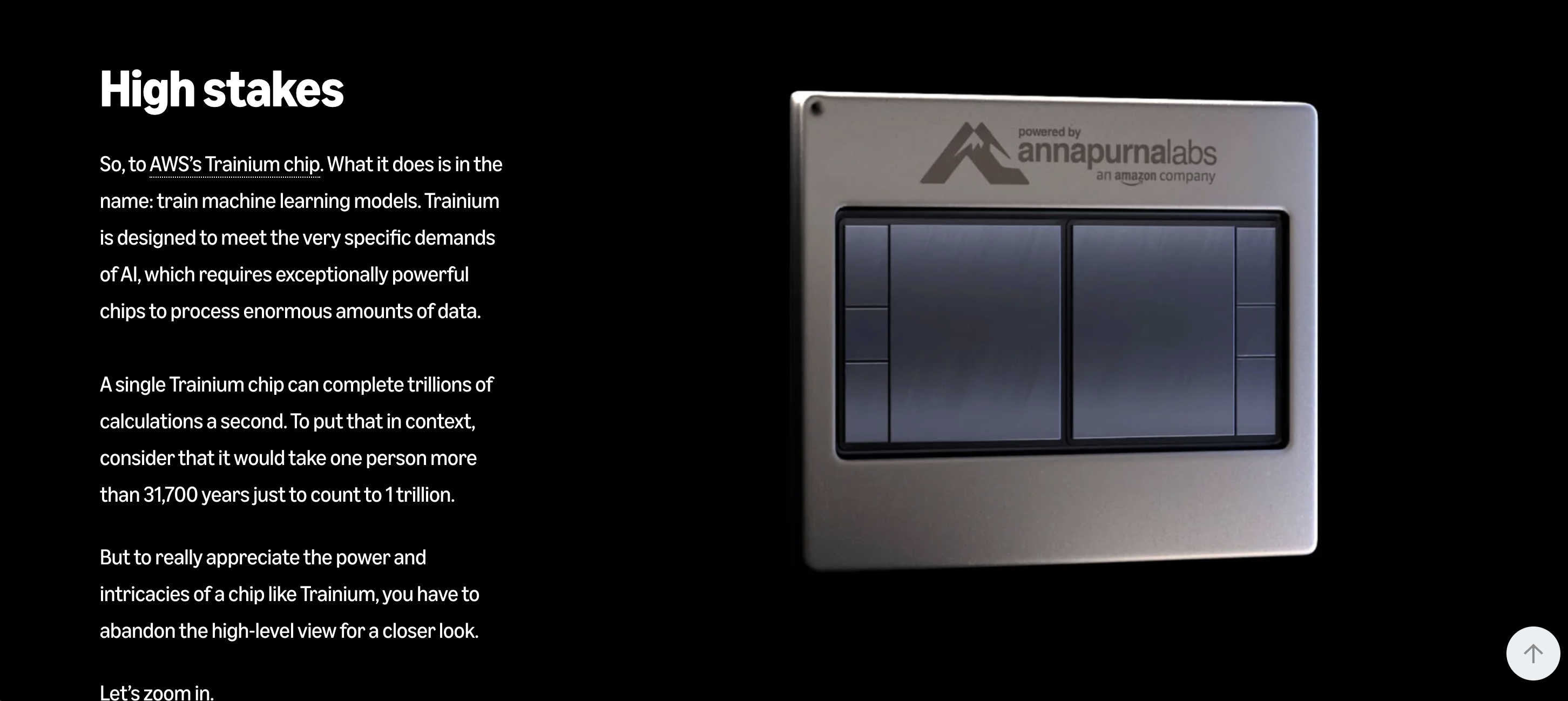
The narrative presented a challenge: giving readers enough context to appreciate the chip tour (the climax) without losing momentum. We tested brief and extensive introductions, landing in the middle. Balancing education with brand messaging required similar experimentation. We landed on one striking comparison: "A single Trainium chip can complete trillions of calculations a second. To put that in context, it would take one person more than 31,700 years just to count to 1 trillion."
Throughout, we partnered with engineers to maintain accuracy, using editorial judgment to determine appropriate depth. We then worked with our illustrator through multiple iterations, refining both visual style and technical precision.
The results validated our approach: time-on-page metrics roughly doubled our typical story performance, and we received enthusiastic responses from thought leaders and tech industry professionals on LinkedIn, who appreciated how we made chip complexity understandable. Most importantly, this project established a replicable template—while each future story of this calibre will have its own visual identity, we've created a scalable framework for executing ambitious, visually-driven narratives.