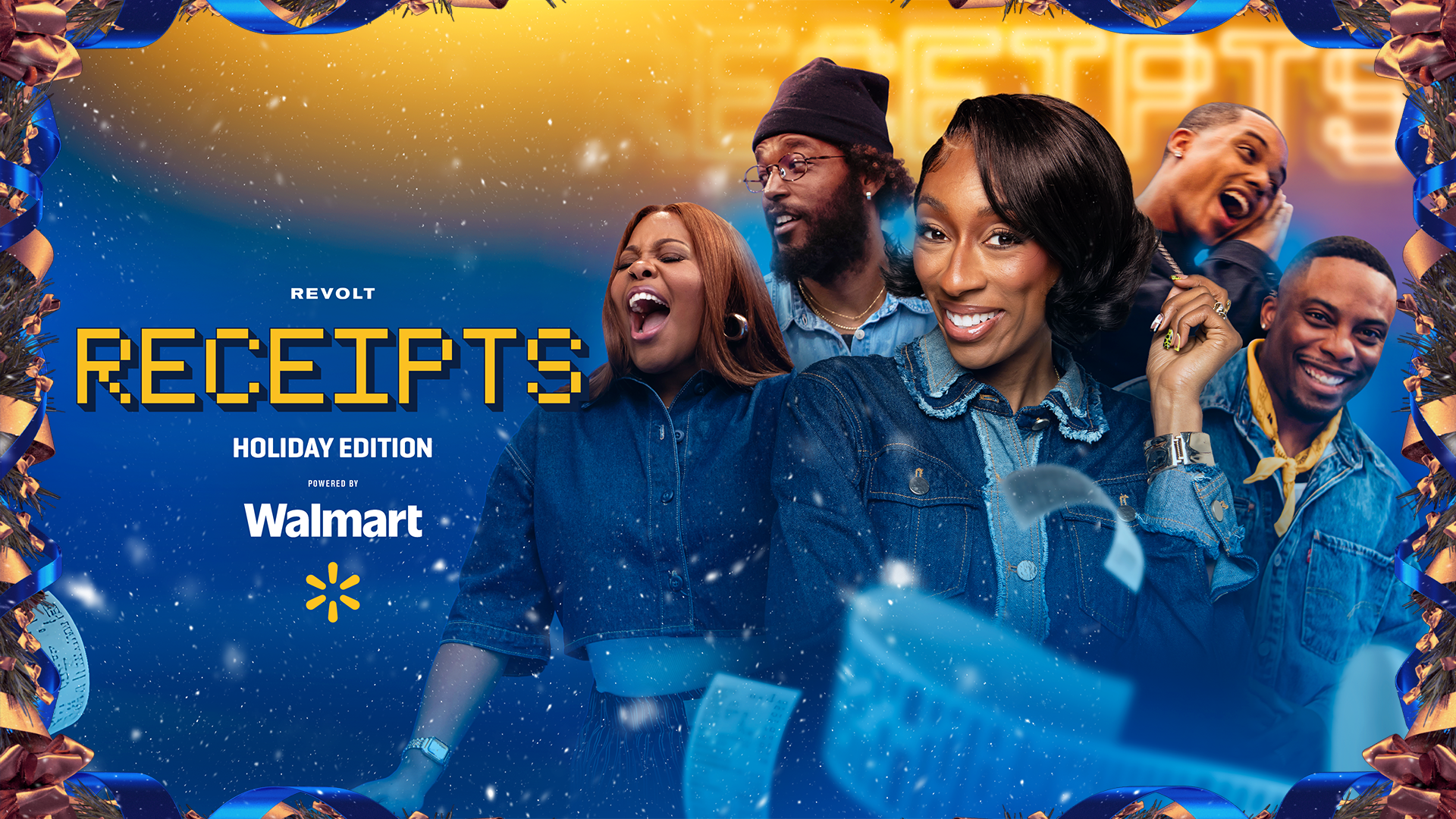
Back for its third season, Receipts powered by Walmart once again set out to bring game show fun, a little star power, and a larger-than-life interactive Walmart shopping receipt, center stage in a high-energy competitive game. Season 3 centered on the Historically Black College and University (HBCU) student experience, highlighting late night study sessions and money-making side hustles. In each episode, competitors went head-to-head, aiming to be the quickest to respond in a series of questions asked by host LaLa Milan, as well as surprise celebrity guests. Episodes culminated in the best competitor being awarded prizes and bragging rights. The ultimate integration? Competitors and viewers being reminded that Walmart is the place to find almost anything they need to support all aspects of their college experience and their side hustles.
Season 3 of Receipts set out to breathe fresh energy and fresh life to the Walmart-branded game show. With the goal of creating stronger alignment between show content and Walmart’s HBCU and Holiday initiatives, decisions were made to lean deeper into authenticity and to evolve from a retail-first show execution to entertainment-first storytelling.
To do so, shifts were made in everything from show format and production team to talent selection and celebrity placement. Show structures moved away from a Supermarket Sweep-style show to one in which contestants met in-studio to battle it out. A new director and creative producers were brought on board to bring a fresh aesthetic to set design and video production, which included employing elevated production techniques found in traditional game shows. Real HBCU students, rather than hired talent, were cast as contestants for each HBCU-focused episode. In those same episodes, celebrities like Terrence J and Lady London played more of a co-star role, making surprise appearances, sharing parts of their own HBCU student journeys, and asking final round questions. Then for the Holiday episodes, celebrities were brought back as contestants and real shopper appearances and stories are what drove those episodes forward.
The new HBCU-centered format focused on student life, both during class and once the classroom lights go off, while celebrity guests during Holiday episodes shared personal holiday memories with viewers. Both elements brought more relatable energy to the show and created a strong cultural resonance with the target audience.
Yet, this new approach also came with some new challenges and a heavier production lift. There was a need to ensure gameplay felt real, momentum kept moving forward, and energy remained high on set. In order to achieve that, the real-people contestants needed extensive, focused coaching and direction to maintain game show excitement on camera and keep the energy high throughout taping.
Another challenge was how to incorporate featured products into gameplay for both HBCU and Holiday episodes. How could we have these products act as business drivers and not just props on set? The answer was to center Holiday episodes on gifting and how Walmart is the place to find all of your gifts for all of your people. And for HBCU student episodes, featured products were chosen to align with the answers and experiences shared by contestants.
Despite the challenges and redirection of this new approach for Season 3, what resulted was a season with a visibly higher production value, that offered both celebrity star-power and relatable moments for viewers.
Receipts Season 3 succeeded by spotlighting different dimensions of the Black experience through culturally resonant, high-energy storytelling. From HBCU student entrepreneurs to diverse holiday shoppers, the series celebrated ambition, individuality, and community in ways that felt authentic and expansive.
Critically, cultural resonance translated into measurable scale. Receipts Season 3 generated 51.2M total views and 65.8M impressions, exceeding all major benchmarks. YouTube + .tv delivered 2.5x its goal, while Social and Editorial both outperformed projections. The series proved that culturally grounded storytelling can drive both emotional connection and tangible performance at scale.
Early traction confirmed the strength of the format. Episode 1 earned a 73% Top-3-Box rating, 6 in 10 viewers reported they are likely to watch future episodes, and 58% expressed interest in another season — clear indicators of sustained relevance and franchise potential.
The campaign also delivered meaningful brand impact. As a result of Season 3, 73% of viewers believe Walmart is uplifting Black brands and nearly 70% felt REVOLT was the right platform for Walmart-sponsored content; reinforcing the authenticity of the integration.