Transit agencies are traditionally known for communicating in a formal, institutional tone. This created an opportunity to approach social media differently by developing a brand voice that feels human, relatable, and culturally aware.
The goal was to make important transit information easier and more enjoyable to engage with by speaking with riders rather than at them. A voice that is playful yet helpful allows service updates, safety reminders, and rider information to feel approachable while still remaining accurate and informative.
Reaching Gen Z and millennial audiences was a key focus, particularly on platforms where conversational, authentic communication is expected. By showing up in a way that feels natural to social media culture, the objective was not just to share information but to build trust, strengthen relationships with riders, and create a digital presence people genuinely enjoy interacting with.
Instagram and TikTok became the primary platforms for delivering this voice, where short-form video, conversational captions, and real-time interaction allow the brand to participate in culture rather than simply broadcast information.
Content blends helpful transit updates with humor, trends, and culturally relevant references that feel native to each platform. Meme formats, relatable scenarios, and timely internet moments are used thoughtfully to keep posts engaging while still delivering useful information for riders.
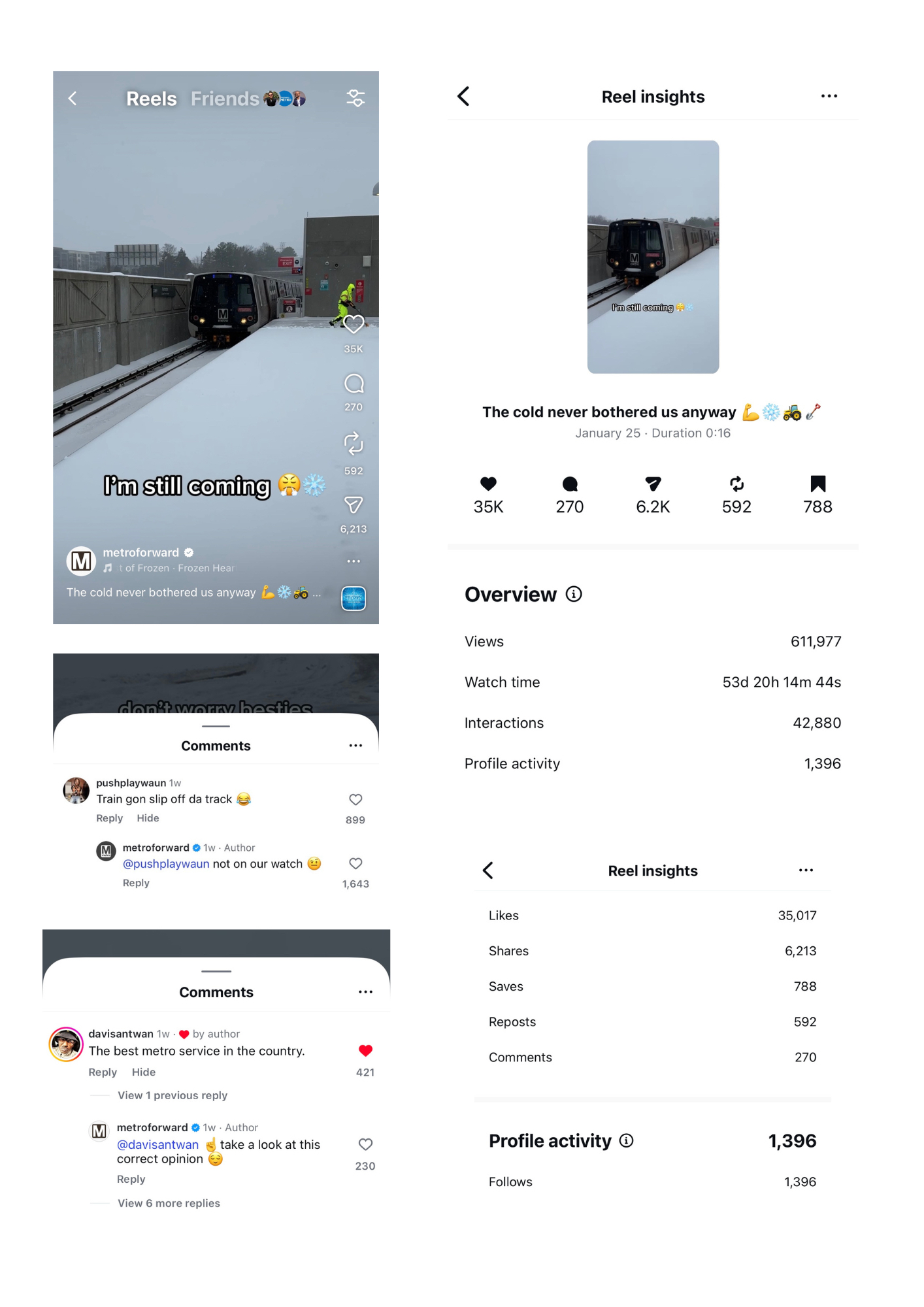
Just as important as the content itself is the conversation that follows. The social team actively engages with riders in the comment section, responding with wit, empathy, and personality while answering questions and clarifying service details. Treating social media as a two-way dialogue transforms routine updates into moments of connection and makes the brand feel approachable and responsive.
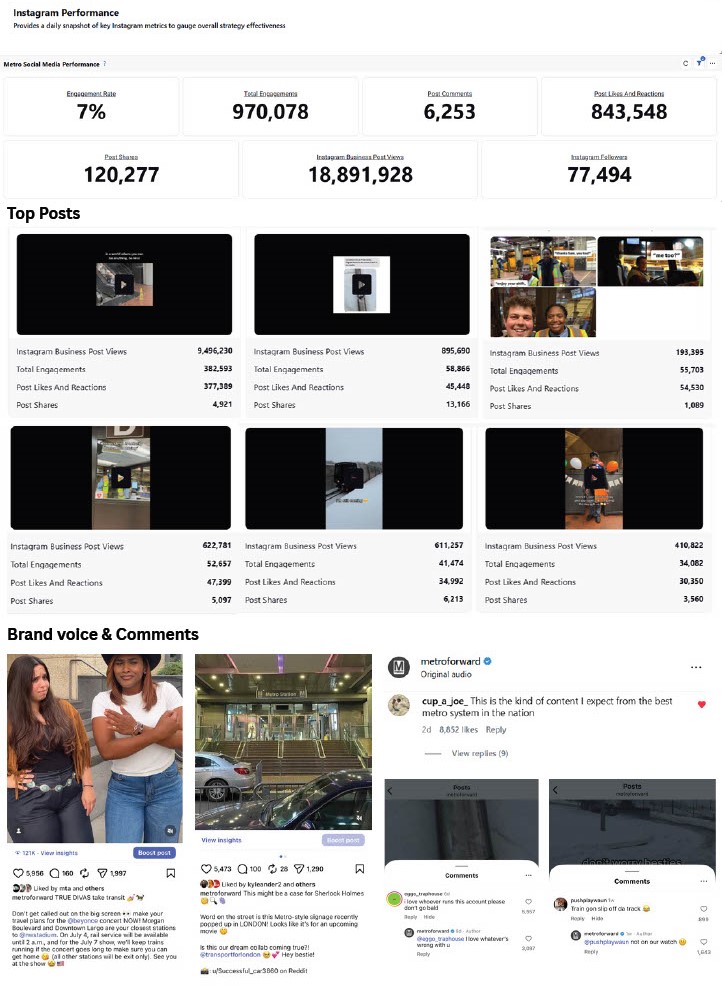
The impact is visible both in performance metrics and in how audiences talk about the account. Across Instagram and TikTok, this approach generated more than 1.4 million engagements and 16,000 comments, with conversations often continuing well beyond the original post.
Comment replies frequently receive 500 to 1,000 or more likes, demonstrating that audiences are not only consuming content but actively participating in the interaction. Riders regularly leave remarks such as “give your social team a raise,” “who runs this account?” and “the social media team is hilarious.”
These reactions highlight something deeper than strong engagement numbers. They show that the voice resonates with audiences and has successfully positioned the brand as approachable, culturally aware, and genuinely connected to the community it serves. By blending public service communication with internet culture, social media has become a space where riders feel informed, entertained, and heard.