After launching Bobbie’s Mother’s Day Campaign (“Mom: The Original Influencer") and proving that real parents drive deeper trust than traditional influencers, Bobbie set out to evolve the campaign into its next chapter.
The objective of the second iteration of The Original Influencers was to double down on authenticity in a culture increasingly dominated by AI-generated content, filters, and performance. Instead of elevating parents through glam or production, Bobbie intentionally stripped the concept back even further.
This chapter aimed to reinforce one core belief: the most powerful influence still happens offline, at home. Parents do not chase followers. They are busy raising the next generation.
Bobbie’s goal was to build sustained brand trust by spotlighting real families using only their own family-shot photos. No professional cameras. No styling. No sets. Just real life as it exists.
From a business standpoint, the campaign sought to extend the momentum of the Mother’s Day breakthrough by owning The Original Influencers as a long-term platform, maximizing Bobbie’s Times Square presence while continuing to differentiate the brand in a crowded, influencer-led category. Timed to a holiday release, the content felt intentionally nostalgic, cozy, and old school – meant to feel like you were watching old family videos.
From a cultural standpoint, the goal was to make a visible statement against artificial storytelling and remind parents that they do not need to perform to be seen, valued, or celebrated – that the small day-to-day, in-between moments are often the most beautiful and worth remembering.
The second iteration of The Original Influencers was designed as a deliberate contrast to both traditional influencer marketing and Bobbie’s own Mother’s Day execution.
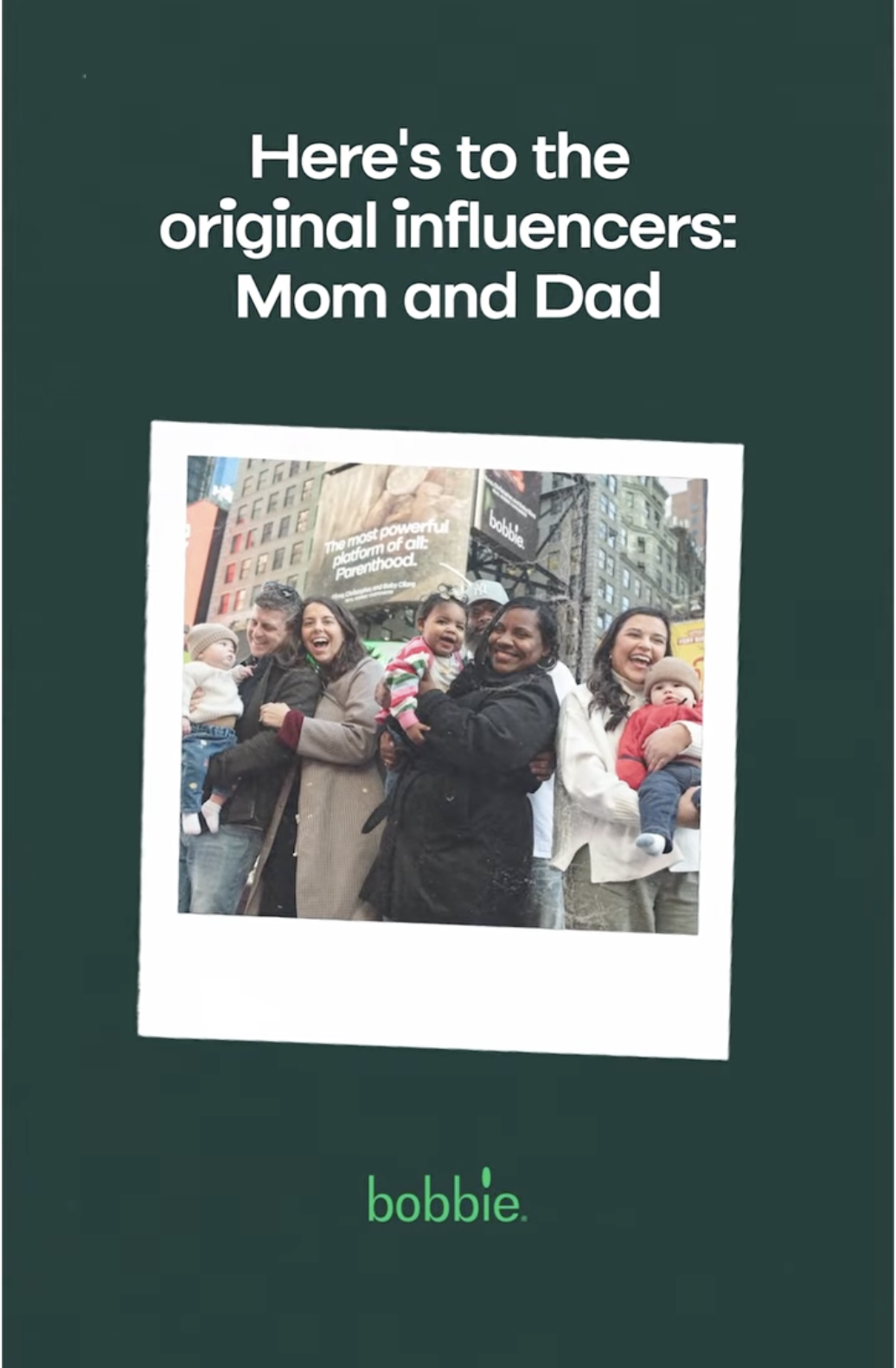
Where the first chapter gave real parents the influencer treatment, this chapter did the opposite. Bobbie selected three real Bobbie families from different parts of the country and asked them to share their home movies and family photos on one of the biggest screens in the world — a Times Square billboard.. There was no brand photoshoot or creative brief, just a simple ask: show us what life looks like right now. Each family was sent a point-and-shoot video camera from Camp Snap to document their everyday moments. A point-and-shoot was essential for this campaign, because we wanted parents to capture their memories the way our parents captured our childhood — focused on living in the moment, not capturing a perfect picture.
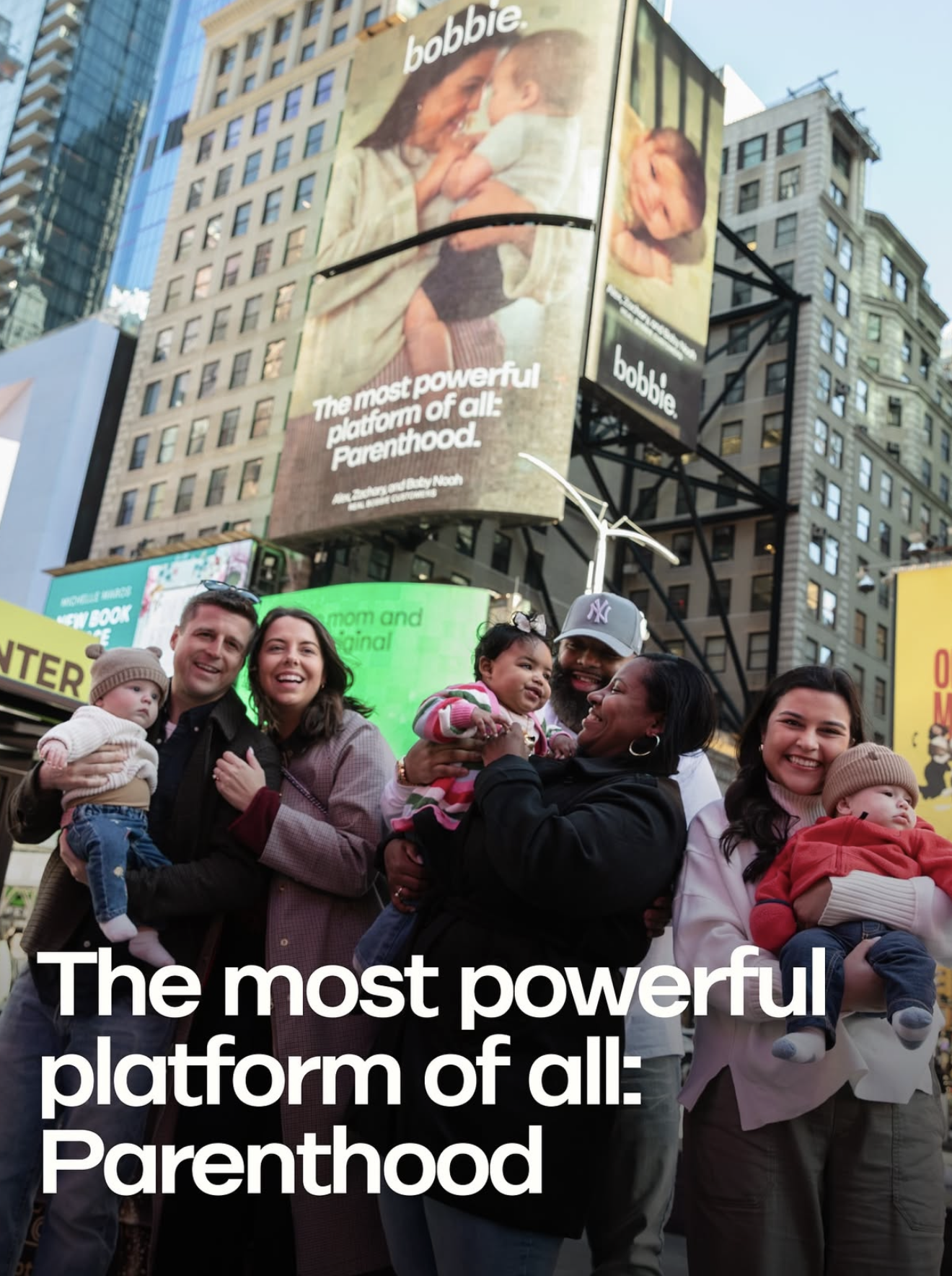
The creative centerpiece was a new Times Square billboard featuring real Bobbie families using their own family-generated photos. By placing these unfiltered moments in one of the most iconic advertising spaces in the world, Bobbie reframed everyday parenthood as cultural influence.
To honor the families behind the images, Bobbie flew each family to New York to experience seeing themselves on the billboard in person. Parents described it as their “Lizzie McGuire moment,” a deeply emotional experience of seeing their real life reflected at scale.
The campaign extended across social, lifecycle, and paid channels. Bobbie captured each family’s reactions, feeding journeys, and perspectives through lo-fi video, Feeding Confessionals, and Instagram takeovers. Much of the content was intentionally shot on camcorder, reinforcing the rejection of polish and perfection.
A key challenge was resisting optimization for traditional creator metrics. Bobbie instead prioritized resonance, trust, and cultural clarity. In a moment when brands are experimenting with AI imagery and synthetic storytelling, Bobbie chose restraint and reality.
This iteration solidified The Original Influencers not as a one-off moment, but as a durable brand platform grounded in real families and real life.
The second chapter of The Original Influencers successfully extended both the momentum and meaning of the campaign.
By showcasing unedited family photos in Times Square, Bobbie deepened its differentiation in a category often driven by idealized imagery and transactional messaging. The billboard sparked organic conversation and emotional engagement precisely because of its simplicity.
Parents responded strongly to seeing real families represented without polish or performance. The in-person reveal moments created highly shareable, emotionally resonant content that fueled social storytelling throughout the November launch window.
The campaign also strengthened Bobbie’s relationship with its community. Families felt seen not as creators, but as caregivers. That trust reinforced Bobbie’s positioning as a brand that values lived experience over algorithms.
By evolving The Original Influencers thoughtfully rather than repeating the original execution, Bobbie demonstrated that customer-led storytelling is not a seasonal tactic, but a long-term strategy for building cultural relevance and brand trust.