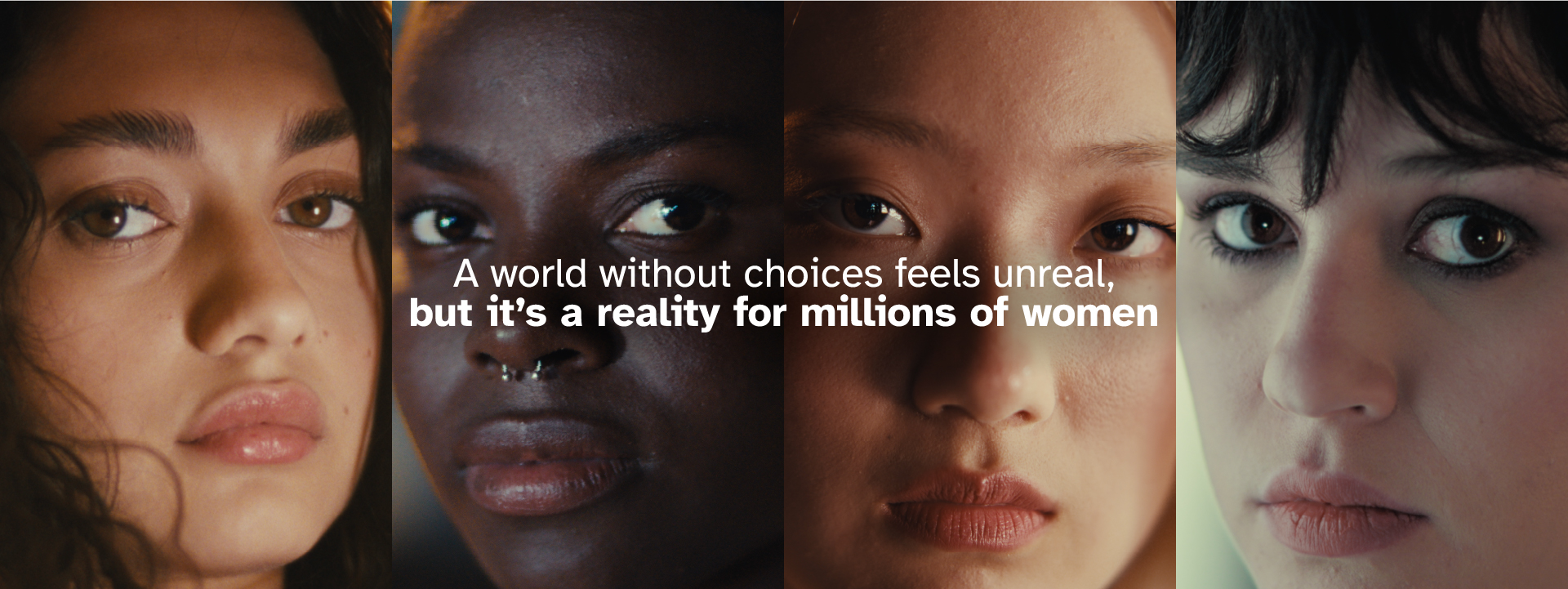
No Choice was created to bring to life the shocking fact that globally 1 in 4 women and girls cannot make fundamental decisions about their lives, their bodies, or their futures. We wanted to make people stop, think, and feel what it’s like for a woman or girl to have no control over her own life.
Around the world, millions of women and girls cannot decide who they marry, when to have children, and are denied the power to exercise their most basic sexual and reproductive health and rights. These are not abstract statistics—they are daily realities. Our objective was to translate this profound injustice into a relatable, thought-provoking film narrative for a digital-first audience, particularly Gen Z and young millennials, who are both highly engaged on social issues and native to platforms like Instagram.
The idea was simple but unsettling: take the everyday choices young people make without thinking—swiping on a dating app, picking what to watch on a streaming service, choosing what to eat, or shopping at the mall—and remove the freedom to choose. By grounding the message in ordinary moments, we aimed to break down a complex global issue into something that feels personal, forcing the viewer to confront just how suffocating having “no choice” really is.
Our goals were clear:
No Choice was designed as a wake-up call—an emotional jolt that transforms a global issue into something you can feel in your own life.
Strategy & Execution
The core challenge was making a distant global human rights crisis resonate with a young audience already overwhelmed by information and issue fatigue. To break through, we knew we had to avoid heavy statistics and abstract messaging — instead telling a universal, visual story that could cut across geography and culture without losing its emotional punch.
We anchored the entire campaign on a single statistic and asked one unsettling question: What if women had no say at all? From there, we built a creative approach that translated the denial of reproductive rights and bodily autonomy into experiences instantly recognizable to young people in their everyday lives.
The Creative Idea
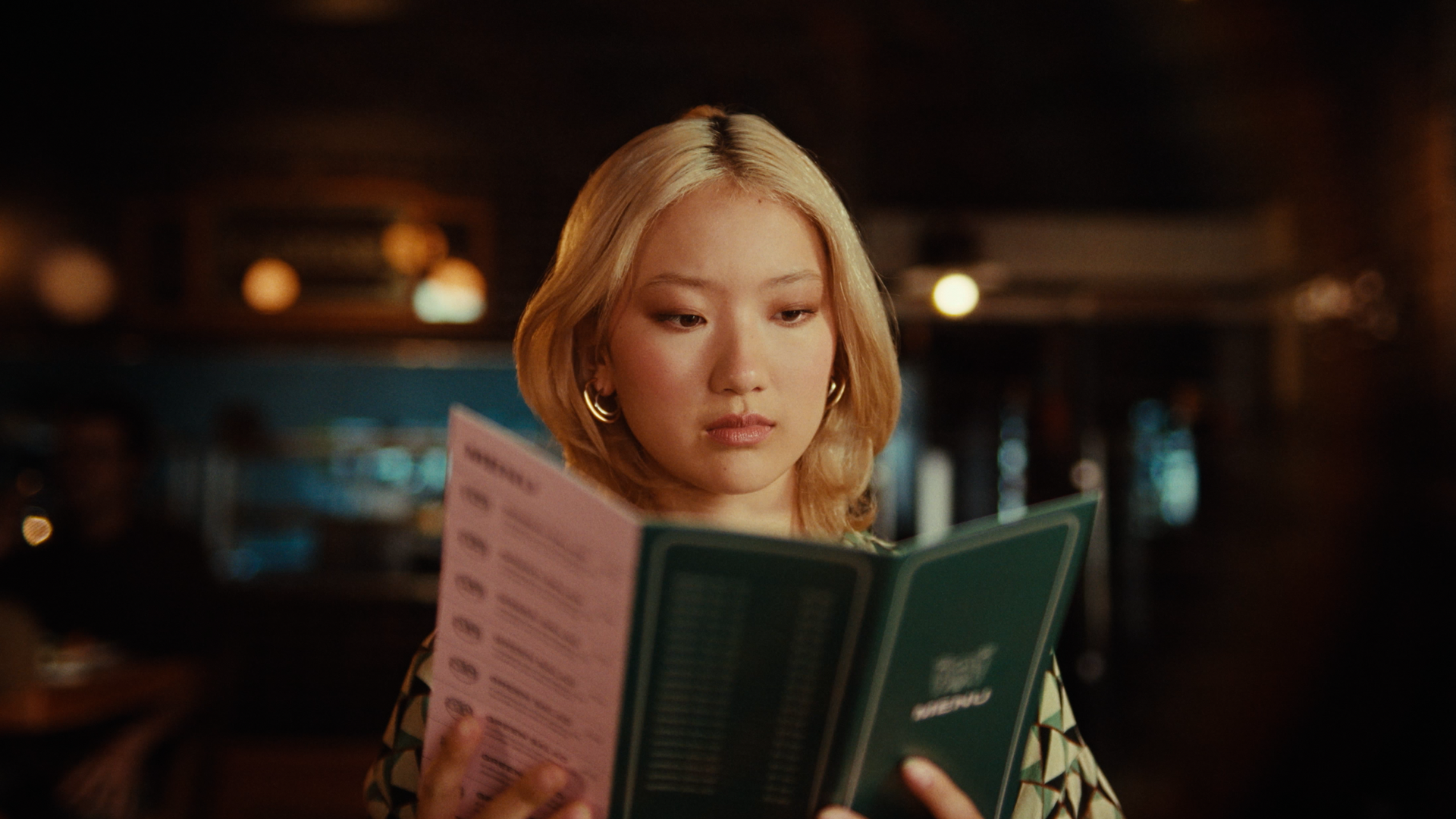
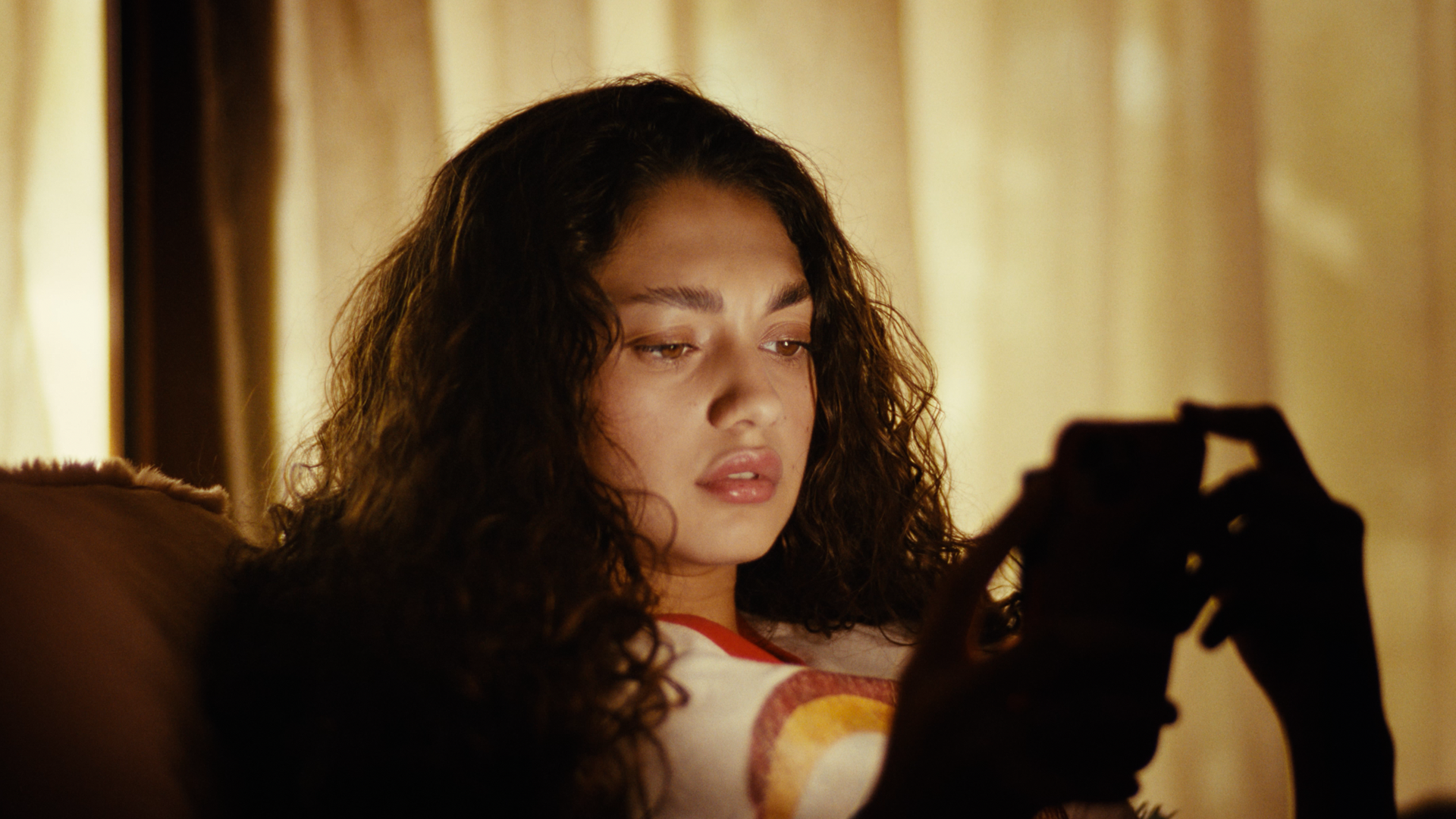
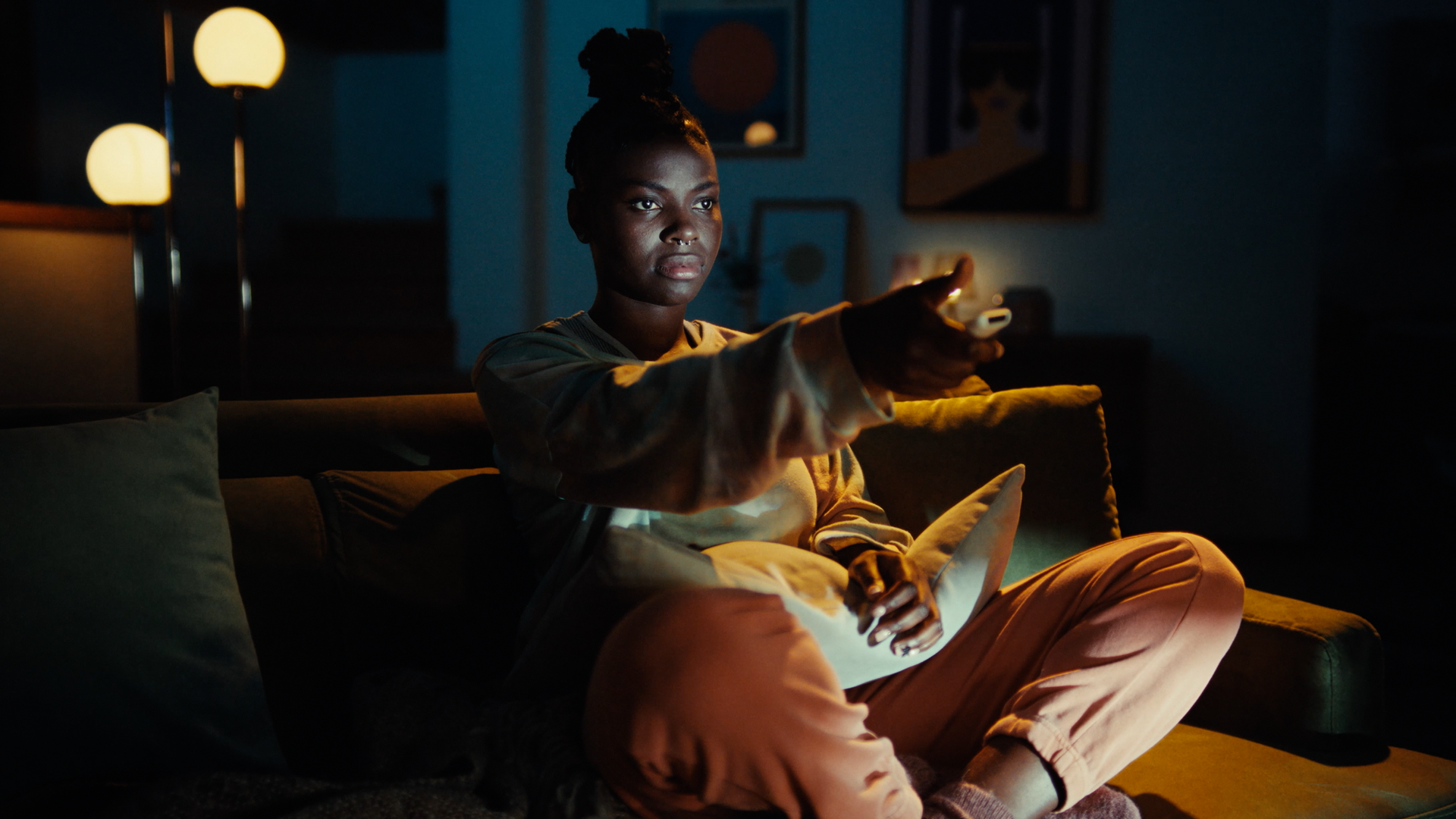
We chose four ordinary scenarios — dating, shopping, eating out, and streaming content — and stripped them of choice. These moments, so routine they're rarely questioned, became powerful metaphors when agency was removed. A dating app you can't swipe. A restaurant menu with a single option. A streaming service that decides for you. By making freedoms disappear in spaces where young people expect total autonomy, we made a global injustice feel immediate and personal. The surreal, dystopian visual language amplified the discomfort without explaining it — trusting the audience to feel the suffocation for themselves.
Distribution & Reach
The campaign launched on World Population Day (11 July 2025) across UNFPA's global website, social media channels, and UN.org, reaching audiences in more than 100 countries. Assets were designed for mobile-first viewing from the outset, with platform-native formats built to maximize shareability across Instagram and other digital channels. Influencers, media outlets, and partner agencies were activated to extend reach organically, deepening conversations around gender equality and women's autonomy.
What Made It Different
Unlike traditional advocacy campaigns, No Choice didn't preach — it provoked. Rather than asking audiences to empathize with a distant reality, it invited them to inhabit it. The surreal visual style paired with digital-native storytelling made the work not just watchable but shareable, giving audiences a reason to pass it on. A strong visual identity tied the campaign together across platforms, while clear calls to action connected awareness to advocacy — turning emotional engagement into real impact.
No Choice set out to make the denial of women's rights feel personal, urgent, and impossible to ignore — and it delivered.
Launched globally on World Population Day (11 July 2025), the campaign quickly became one of UNFPA's most impactful digital campaigns to date. On Instagram alone it reached over 100 million views, with a further 72 million on Facebook and additional traction across X and other platforms. Conversation sparked in more than 100 countries, proving the campaign's ability to cut across cultures, borders, and languages.
The results landed on three levels. In terms of personal impact, the film transformed a global statistic — 1 in 4 women denied autonomy — into something audiences could feel in their own lives. Comments and shares echoed a single realization: "This could be me." On a global scale, No Choice extended well beyond social media, earning prominent placement on UN.org and reaching governments, NGOs, academia, and media worldwide. And in terms of positioning, the campaign's surreal, provocative execution distinguished UNFPA as a daring, innovative voice on gender equality — one willing to use bold storytelling to shift perceptions, not just raise awareness.
By connecting emotional storytelling to real opportunities for advocacy, No Choice helped fuel UNFPA's core mission: ensuring every woman and girl has the power to decide.
Beyond the numbers, its greatest success lies in reframing gender equality not as someone else’s struggle, but as a universal right—and responsibility.