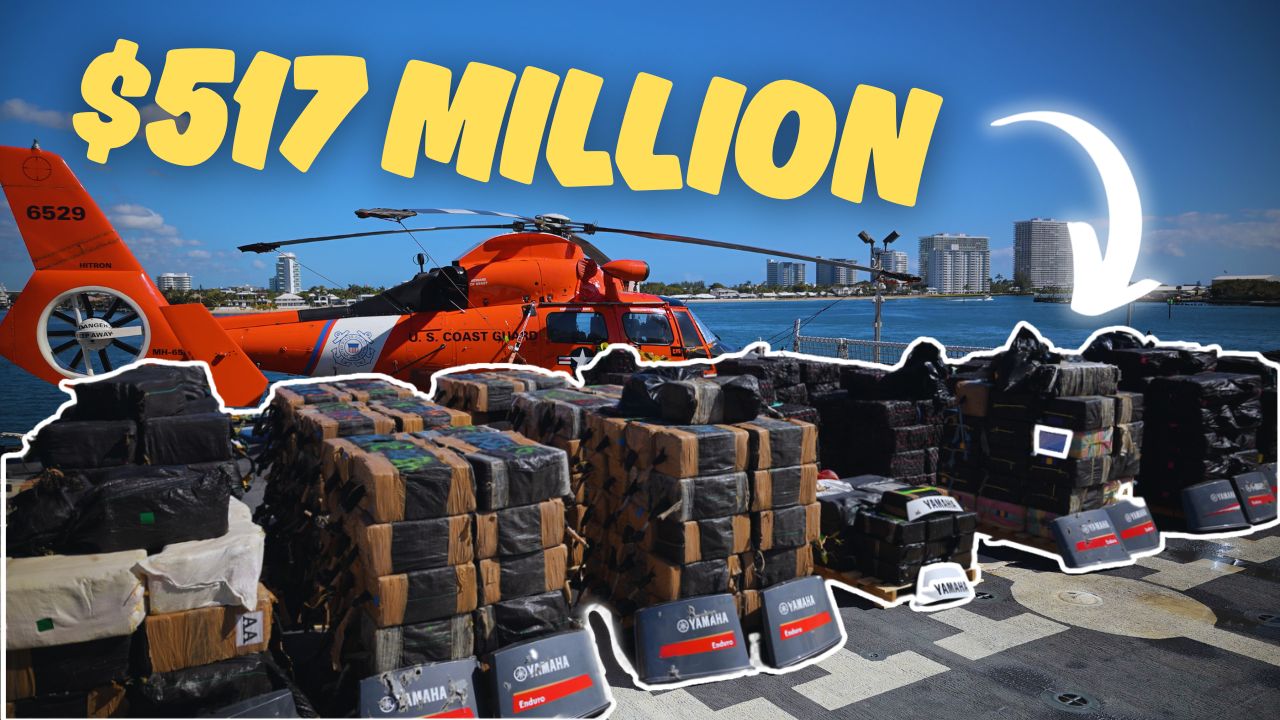

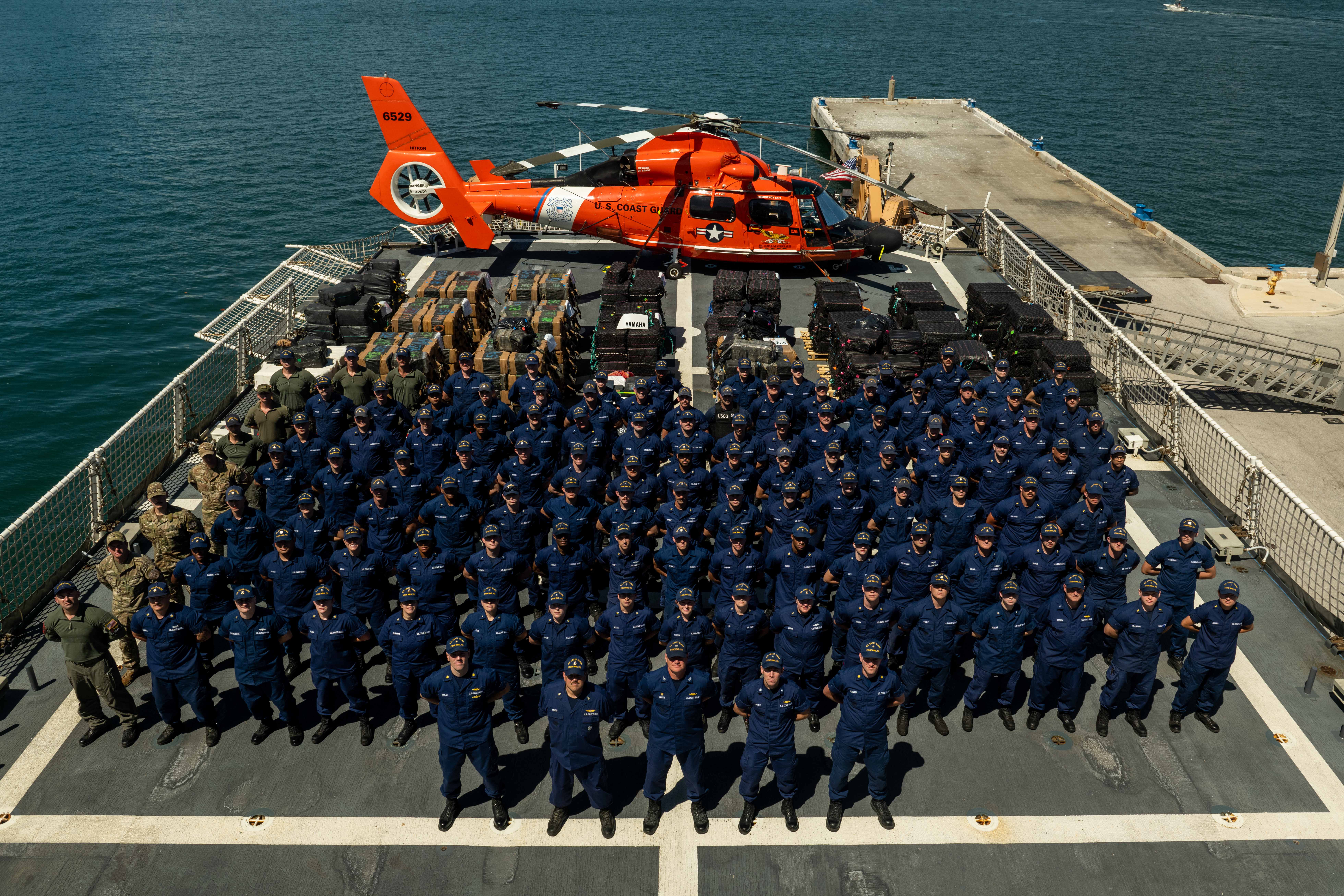
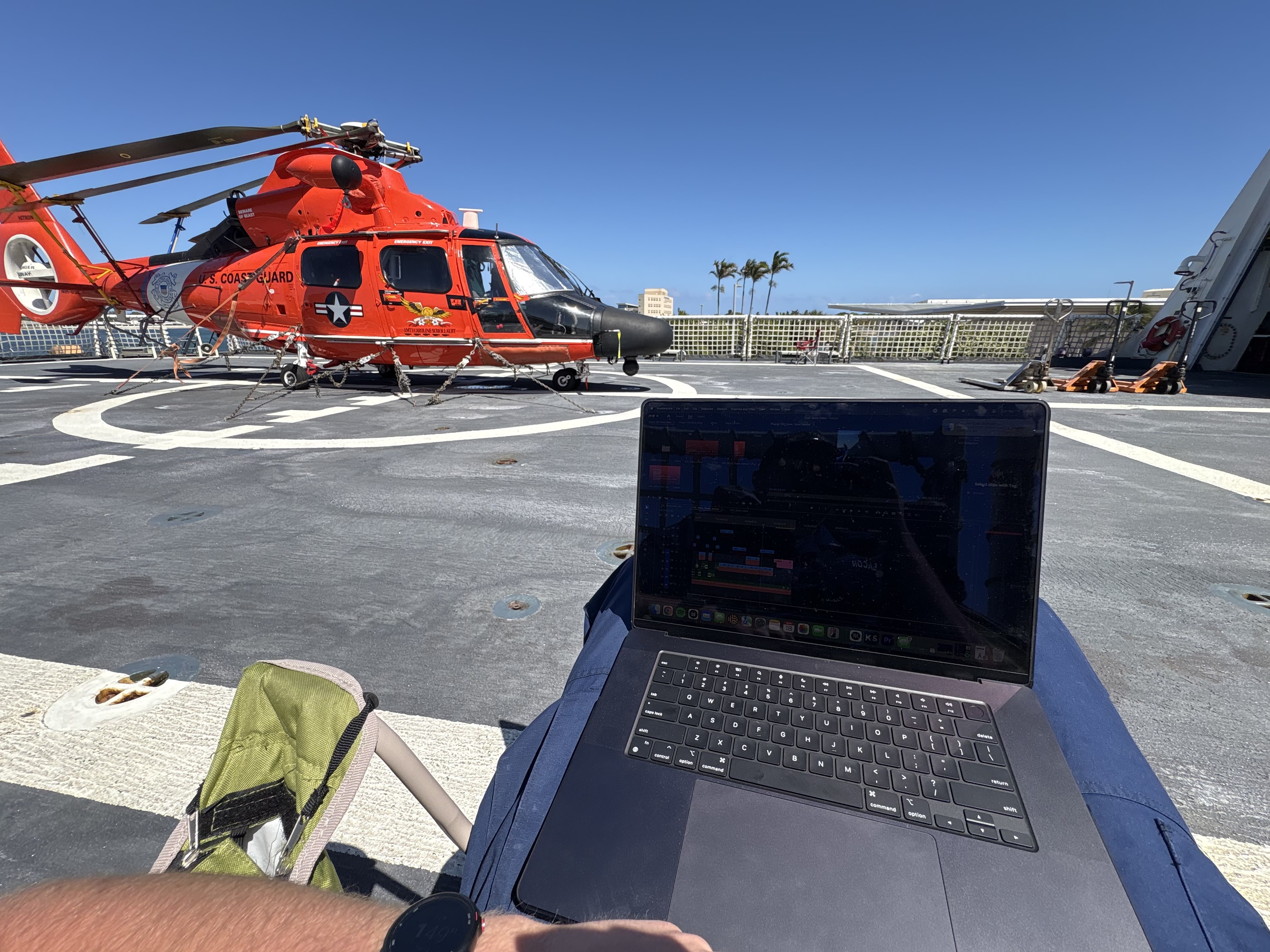
For this project, our objective was to give the public an unprecedented, inside look at Coast Guard counter-narcotics operations and how we use our unique authorities and capabilities to keep drugs off our streets and communities safe. We set out to move beyond a traditional written story with an accompanying clip and instead produce a fully realized, cinematic video that captured the intensity, complexity, and teamwork behind one of the Coast Guard’s largest cocaine seizures.
When we were notified of an upcoming offload in Port Everglades that would include more than 45,000 pounds of cocaine from 14 interdictions in international waters, we saw an opportunity to tell this story in a way the Coast Guard had not done before. As a new Video Production Team with advanced capabilities, our goal was to embed with the crew of Coast Guard Cutter Stone, document dangerous missions conducted far from home, and humanize the men and women executing them.
We aimed to highlight not only the cutter’s achievements but also the joint and interagency nature of the mission, showcasing the coordinated efforts of Coast Guard assets, Helicopter Interdiction Tactical Squadron (HITRON), Pacific Area Tactical Law Enforcement Team (PAC-TACLET), and Joint Interagency Task Force - South (JIATF-S). Ultimately, our objective was to deliver an authentic, high impact video that educated the public about the Coast Guard’s critical role in counter-narcotics operations, demonstrated the value of maritime law enforcement, and celebrated the success of a record setting deployment.
To bring “How the Coast Guard Seizes 45,000lbs of Cocaine at Sea” to life, our Video Production Team embedded with the crew of the U.S. Coast Guard Cutter Stone during a high stakes counter-narcotics deployment. As a relatively new team with expanded capabilities, we set out to use cinematic visual storytelling to show a mission that is usually only seen as statistics in a press release.
Pre-production required extensive coordination with operational commanders, legal advisors, public affairs, and security personnel to ensure we could safely and accurately document sensitive interdiction tactics and law enforcement procedures. We built a flexible filming plan that prioritized operational security first, while still giving us the ability to capture compelling imagery. Because real world operations at sea are unpredictable, we structured our coverage to adapt quickly to changing priorities, sudden mission tasking, and dynamic conditions.
Once underway, we focused on filming real operations as they happened. We captured go fast vessel interdictions, airborne use of force by HITRON aircrews, Unmanned Aircraft Systems’ (UAS) surveillance in action, and the boarding teams preparing for and executing missions. We conducted focused interviews with key personnel, including the commanding officer, a HITRON precision marksman, and a boarding officer, to highlight the human element behind the seizures and the sacrifices involved in being away from home for extended periods.
Filming at sea presented significant challenges. Weather changed rapidly, deck space was tight, and we had to remain unobtrusive during live evolutions. We relied on lightweight, rugged camera systems, pre planned shooting positions, and constant communication with the crew to stay safe and out of the way while still obtaining high quality footage. Building trust with the cutter’s crew was essential. That trust allowed us to be present for authentic, unscripted moments of preparation, execution, and relief.
In post-production, we blended high energy visuals, operational footage, and interviews into a clear, engaging narrative that walked viewers through the full scope of the mission. We used music, natural sound, and operational audio to convey the urgency, danger, and tempo of counter-narcotics operations. Graphics and titles helped explain the geography, partners, and scale of the seizures, while the story emphasized the joint and interagency nature of the effort, including the roles of HITRON, PAC TACLET, and JIATF-S.
What makes this work unique is the level of access and the way we used it. By going underway with the Stone and documenting real interdictions and the record-breaking offload, we created an immersive, mission wide perspective that the public rarely sees. As a new team, we were able to move beyond a traditional news style product and deliver a fully produced, cinematic video that both informs and inspires, honoring the professionalism of the crews who defend our maritime approaches and keep illicit drugs off our streets.
The final product met and exceeded our objectives by giving viewers a genuine inside look at a complex counter-narcotics deployment and clearly illustrating the scale, risk, and teamwork behind seizing more than 45,000 pounds of narcotics.
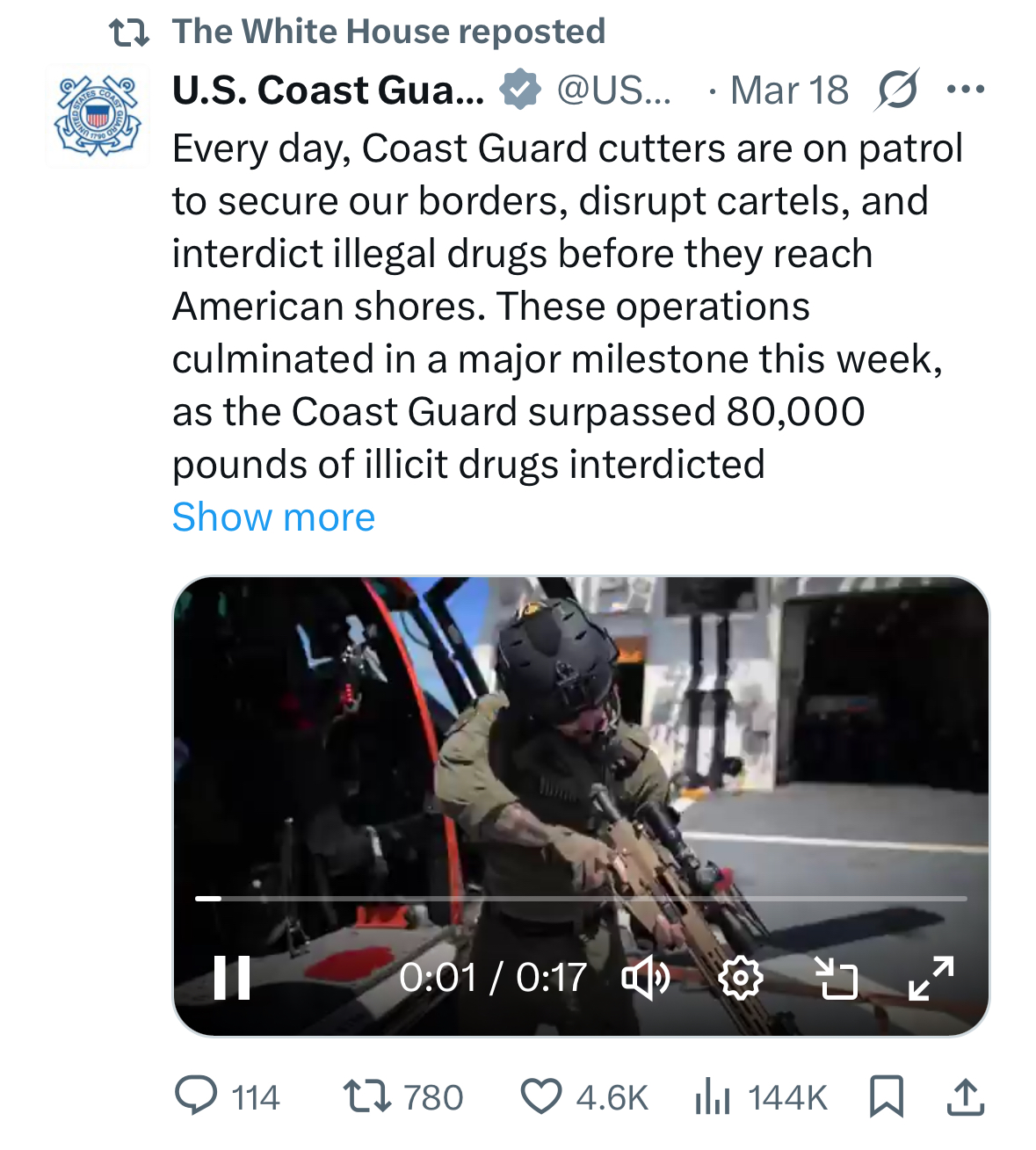
The video was widely distributed across Coast Guard and Department of Homeland Security platforms and shared by partner units involved in the operation. It generated strong engagement and positive feedback from both internal and external audiences, including operational units, leadership, and members of the public. Viewers consistently highlighted the cinematic quality, clear storytelling, and authentic portrayal of the crew’s work.
By integrating real interdiction footage, interviews, and explanations of joint operations with HITRON, PAC TACLET, and JIATF-S, the video successfully educated the public on how these missions are conducted and why they matter. It moved beyond statistics to show the human and operational effort behind every seizure.
We consider this effort a success because it advanced the Coast Guard’s strategic messaging, showcased a new level of visual storytelling capability, and reinforced trust and support for the service’s role in protecting our communities from transnational crime.
The analytics for this video totaled more than 830k impressions, 5k shares, and 48k engagements across Facebook, Instagram, Twitter, and YouTube.