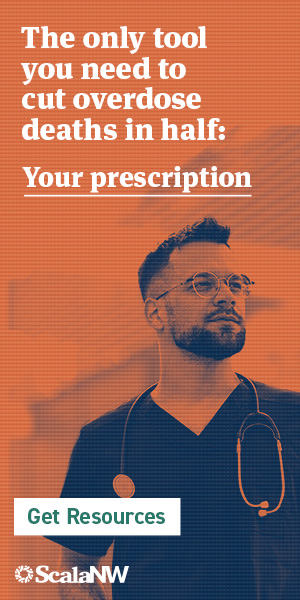
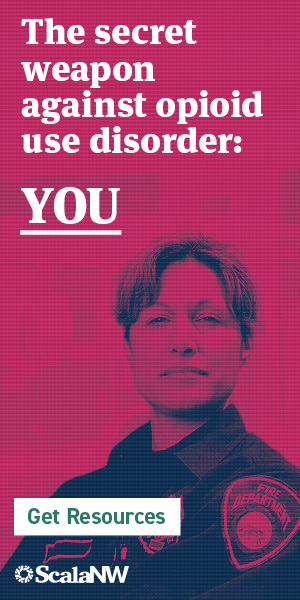
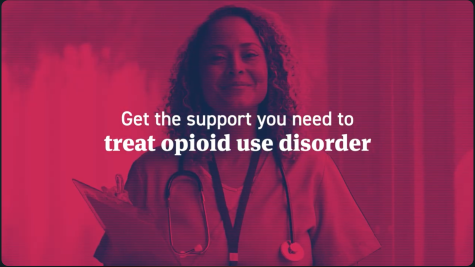
Washington State continues to face a devastating opioid crisis, yet one of the most effective tools for preventing overdose deaths remains significantly underutilized. Medications for opioid use disorder (MOUD), including buprenorphine and methadone, have been shown to reduce mortality among people with opioid use disorder (OUD) by more than 50%. Despite their proven effectiveness, fewer than 20% of eligible patients receive these life-saving medications.
To address this gap, the Washington State Health Care Authority (HCA) partnered with C+C to better understand why many health care providers remain hesitant to discuss or prescribe MOUD. Research revealed that persistent misconceptions, stigma surrounding OUD, and uncertainty about prescribing practices were creating barriers to adoption.
The idea driving this work was simple but powerful: expanding access to MOUD begins with equipping health care providers with the knowledge, confidence, and tools to incorporate these treatments into routine patient care. By normalizing MOUD as a standard, evidence-based treatment option, the campaign sought to help providers move beyond stigma and engage patients in informed, compassionate conversations about recovery.
The campaign established three primary objectives:
Increase awareness and understanding of MOUD among Washington health care providers.
Address common misconceptions and reduce stigma associated with treating OUD through medication.
Increase provider confidence in discussing MOUD with patients using a shared decision-making approach.
Ultimately, the campaign aimed to improve the quality of care for people with OUD and help save lives by mainstreaming evidence-based medications as a critical component of treatment and recovery.
We brought the campaign to life by grounding every strategic and creative decision in provider research, which revealed three critical barriers: (1) many providers and first responders saw MOUD as risky, unfamiliar or outside their role; (2) they had limited knowledge, training and awareness of available support and resources; and (3) stigma persisted around both patients with OUD and the providers who treat them.
Rather than simply telling providers that MOUD works, we built the campaign around a deeper, audience-centered motivational insight: providers and first responders choose high-stakes work because they want to act when it matters most. Their professional pride is rooted in their ability to step up, make informed decisions, and deliver care that can change – or save – a life.
That insight shaped the campaign platform: “Care is your commitment. MOUD delivers that care when it counts.” The campaign reframed MOUD as both a point of professional pride and a professional duty, positioning it not as a specialized intervention reserved for addiction experts, but as a core component of patient care. By underscoring that caring for patients with OUD is no different than treating any other serious illness, the campaign challenged stigma, normalized MOUD as an evidence-based standard of care and empowered providers to see OUD treatment as part of their professional responsibility.
The campaign helped providers think differently (“treating OUD is my responsibility”), feel differently (empowered to act) and behave differently (initiating lifesaving MOUD conversations with patients). Educational content addressed misconceptions and introduced a shared decision-making framework to help providers initiate informed, patient-centered conversations. All campaign materials directed audiences to ScalaNW.org/MOUD, where providers could access clinical guidance, patient conversation tools and support resources.
A central challenge was reaching health care providers and first responders in the first place. These audiences are among the most difficult to engage: they operate in demanding environments, face constant information overload, and have little time to seek out additional training. To maximize reach and efficiency, we developed a targeted, integrated outreach strategy that met providers where they already spend time professionally.
The statewide campaign combined paid media on LinkedIn, YouTube and provider-specific platforms including Medscape, Sermo and Health Union; owned media through Washington State Health Care Authority and Washington State Department of Health channels; earned media, including op-eds in the state’s two largest newspapers authored by a provider and first responder; promotion through professional associations and partner communications channels; and conference sponsorships and outreach. By leveraging trusted professional networks and industry-specific channels, the campaign efficiently reached providers where they were already seeking information.
What made the work unique was its balance of evidence and identity. Rather than relying solely on clinical facts, the campaign connected MOUD to providers’ sense of professional purpose and responsibility. It translated a complex public health intervention into a message of commitment, compassion and action, helping providers see MOUD not as an added burden, but as a lifesaving extension of the care they are already dedicated to delivering.
The campaign successfully advanced its core objectives of increasing MOUD awareness, reducing barriers to engagement, and building confidence among providers and first responders to initiate lifesaving conversations about OUD.
Despite targeting one of the most difficult-to-reach audiences in public health, the campaign generated more than 11 million impressions, nearly 90,000 clicks to the campaign landing page and more than 1,000 downloads of campaign materials. These results demonstrate strong engagement with educational resources and practical tools designed to support MOUD conversations and treatment decisions.
Evaluation findings also showed positive movement on key attitudinal and behavioral indicators. MOUD familiarity was high, with 60% of providers and 88% of first responders reporting they were somewhat or very familiar with MOUD. More importantly, 32% of providers and 78% of first responders reported feeling more confident discussing MOUD than they did a year ago, directly aligning with the campaign’s goal of increasing comfort and readiness to engage patients in treatment conversations.
The campaign’s impact is particularly significant because these audiences regularly interact with people experiencing OUD. More than half of providers (54%) reported caring for people with OUD frequently or very frequently, while 88% of first responders reported frequent interactions with this population. Every increase in confidence and willingness to discuss MOUD creates additional opportunities to connect patients with evidence-based treatment.
The campaign was a success because it delivered trusted resources at scale, generated meaningful engagement and strengthened the confidence needed to normalize and expand access to lifesaving MOUD care across Washington State.