City of Hope wanted to break through the clutter of traditional healthcare advertising by creating something people would discover rather than simply be served.
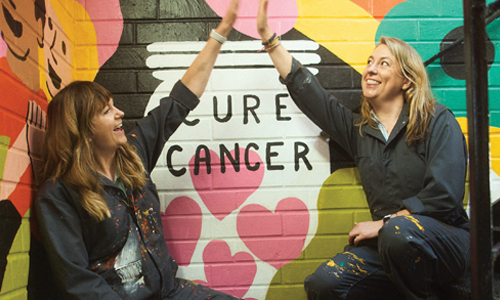
Hope Is a Rising Tide transformed a four-story parking structure at the iconic Lido Marina Village in Newport Beach, California into an unexpected public art experience celebrating humanity, resilience and hope.
Our goal was to build awareness and engagement by creating something worth finding, experiencing and sharing—turning an everyday destination into a powerful expression of City of Hope’s purpose while generating impact across earned, organic and paid media.
Instead of buying another traditional media placement, we turned the environment itself into the medium.
With approximately 1 million annual visitors, Lido Marina Village offered a highly visible but unexpected canvas: its four-story parking structure. Reveille partnered with 11 Southern California muralists to transform it into Hope Is a Rising Tide, celebrating patients, survivors, caregivers and researchers through public art.
The experience was designed to be discovered organically as people shopped, dined and explored Lido—turning a space people normally pass through into something worth stopping for.
Coordinating 11 artists within a busy, functioning property required careful planning while maintaining a cohesive experience. Paid, organic and earned media then extended the installation far beyond its physical location, transforming an overlooked piece of infrastructure into a highly visible expression of City of Hope’s brand.
Hope Is a Rising Tide demonstrated the power of creating an experience people genuinely wanted to discover and share.
With just $3,000 in paid social spend, the campaign generated 200,000+ impressions, 1,200+ engagements and a 3.8% CTR—three times benchmark. Nearly 8,000 people visited the campaign landing page.
Earned media expanded the impact dramatically, generating 88.8 million+ impressions and $1.6 million+ in estimated advertising value.
By turning a parking structure into public art, City of Hope transformed a relatively lean media investment into an experience that reached millions—proving that sometimes the most powerful advertising doesn’t look like advertising at all.