Millions of people living with major depressive disorder are being treated, but not necessarily getting better. Lingering symptoms can continue to affect relationships, work, daily responsibilities and quality of life—yet many minimize those struggles with a familiar, conversation-ending phrase: “I’m fine.”
Johnson & Johnson and agency partner Inizio Evoke Comms set out to understand what was hidden behind that response. Through a global survey of people living with depression and healthcare providers in seven countries, the team uncovered a powerful insight: for many, “fine” is not a sign of well-being, but a coping mechanism that can mask ongoing symptoms, lower treatment expectations and keep people from advocating for more from their care.
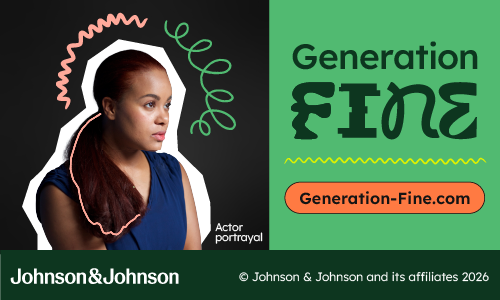
Generation Fine was created to challenge that reflex and turn it into action. The campaign aims to redefine what “fine” means in depression care by helping people recognize when lingering symptoms deserve attention, encouraging higher expectations for treatment and giving people language and resources to have more productive discussions with healthcare providers.
Designed for adults living with depression, especially Millennial and Gen Z audiences who often seek health information through content creators, digital communities and social platforms, the campaign also engaged caregivers, healthcare professionals, advocates and broader mental health communities.
At its core, Generation Fine set out to transform a universal phrase into a powerful prompt for self-advocacy, encouraging people to move beyond “just okay” and reinforcing a simple belief: “fine” should not be the finish line in depression care.
Generation Fine was designed as a social-first, integrated campaign that could meet people in the places where mental health conversations are already happening—across social feeds, creator communities, advocacy spaces, earned media and digital health resources. The goal was to build more than an awareness campaign: a connected ecosystem that moved audiences from recognition to reflection to action.
The key challenge was translating a complex healthcare issue into content that felt emotionally accessible, culturally relevant and credible. Depression care can be difficult to discuss in simple terms, and educational content can sometimes feel too clinical or distant. To do that, Johnson & Johnson and Inizio Evoke Comms developed a creative platform that felt native to the way people communicate online while maintaining the trust, accuracy and responsibility required in healthcare.
The campaign used vibrant branding, expressive typography, meme-inspired content, creator-led storytelling, patient experiences and a manifesto video to create an immediate sense of recognition. Each element was built to feel relatable and shareable, helping people see their own experiences reflected in the work while connecting them to a larger message about expecting more from depression care.
Every channel served a specific purpose in the audience journey. Social and creator content sparked relevance and conversation. Earned media expanded reach and credibility across consumer, healthcare, lifestyle, sports, broadcast and trade outlets. Advocacy and expert voices, including Mental Health America, healthcare professionals and patient advocates, grounded the campaign in trusted perspectives. Sponsored editorial partnerships, including TheSkimm, translated the campaign message into approachable, everyday language for audiences seeking practical health information.
The dedicated campaign website served as the action hub, connecting visitors to patient stories, educational resources, expert perspectives and CRM-enabled engagement. The experience was designed to help people better understand lingering depression symptoms and prepare for more productive conversations with their healthcare providers. Beyond digital, the campaign extended through advocacy resources, conference activations and community engagement opportunities, reinforcing the message across moments of education, connection and support.
What made Generation Fine unique was the way it fused cultural fluency with healthcare credibility. The campaign did not rely on a single hero asset or one-way message. It created a flexible platform where creators, advocates, experts, patients and media each played a distinct role in advancing the conversation. By designing every touchpoint to be both emotionally resonant and action-oriented, Generation Fine transformed a familiar phrase into a scalable movement for higher expectations in depression care.
Within its first three months, the campaign generated 197 million+ earned media impressions and secured 65+ placements across consumer, healthcare, lifestyle, sports, local broadcast and trade outlets. Coverage achieved 100% positive sentiment and 100% key message pull-through, demonstrating that the campaign not only reached broad audiences but also consistently reinforced its central message: “fine” should not be the finish line.
The campaign also proved the power of authentic, voice-led storytelling. Psychiatrist Dr. Jessi Gold brought the conversation to mainstream audiences through People, while former NFL player Kyle Long extended reach into sports and lifestyle media through Yahoo! Sports and USA Today (media strategy/outreach for Kyle led by Fleishman Hillard in partnership with Inizio Evoke Comms). Creator content generated 9.57 million+ views and 454K+ clicks, with engagement rates 3–5x higher than platform benchmarks—evidence that the campaign’s emotional insight resonated with digitally engaged audiences and motivated further learning.
Most importantly, Generation Fine converted attention into action. The campaign drove an estimated 405K+ visits to Generation-Fine.com, exceeding industry benchmarks by 23x and campaign KPIs by up to 38x. Nearly 19% of users engaged with resources designed to support more productive treatment conversations, including patient stories, educational tools and HCP discussion resources.
Beyond launch metrics, Generation Fine established a scalable engagement platform for Johnson & Johnson—one that continues to expand through advocacy partnerships, creator content, digital resources and community activations. The campaign transformed “I’m fine” from a passive response into a measurable movement for higher expectations in depression care.