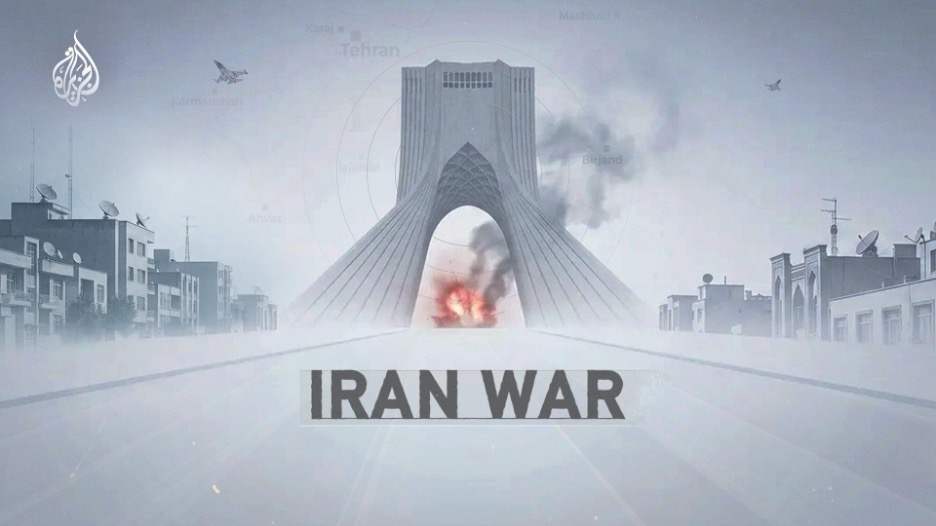
On 28 February 2026, the United States and Israel launched military operations against Iran, triggering a rapidly expanding conflict involving multiple fronts, countries and actors across the Middle East.
Al Jazeera’s digital newsroom responded with a 24/7, multi-platform operation that combined breaking news, live coverage, field reporting, explainers, investigations, open-source intelligence, satellite imagery, data visualization, interviews and human-interest storytelling.
Although the campaign’s performance was measured from 28 February to 4 May 2026, the coverage itself remains ongoing as developments continue to evolve.
The operation brought together Al Jazeera’s main news platforms across Facebook, Instagram, X, TikTok and YouTube, alongside regional platforms including Al Jazeera Iran, Al Jazeera Palestine, Al Jazeera Lebanon, Al Jazeera Iraq and Al Jazeera Gulf, as well as Al Jazeera Mubasher and specialized platforms.
The result was not simply a continuous stream of war updates, but a coordinated editorial system designed to answer four fundamental questions throughout the conflict:
What happened? Where did it happen? How do we know? And what does it mean?
When the U.S. and Israel launched military operations against Iran on 28 February 2026, Al Jazeera's digital newsroom didn't start from zero, preparation had begun roughly a month earlier. Anticipating escalation, we built a bank of explainer content organized into three editorial series: Roots (historical context of the U.S.-Iran conflict), Background (the mechanisms driving the war, from missile capabilities to uranium enrichment), and Profiles (the key figures shaping events). This meant that when the war broke out, we had the editorial infrastructure ready to explain it immediately rather than scrambling to catch up.
Execution centered on a five-step editorial pipeline: breaking news → raw field material → rapid vertical explainers → context (maps, carousels, infographics) → deeper analysis with correspondents and experts. This layered model let a single event travel from a 30-second "Urgent Briefing" to a full studio discussion with military and political specialists, meeting audiences wherever their attention span landed.
Key features included digital-first correspondent briefings — under two minutes, filmed specifically for social platforms rather than repurposed TV segments — from Iran, Lebanon, Iraq, the Gulf and Palestine. Our open-source intelligence unit, "Radar," tracked maritime traffic through the Strait of Hormuz, monitored aviation activity, compared satellite imagery before and after strikes, and verified suspect content circulating online. The operation spanned Al Jazeera's main platforms (Facebook, Instagram, X, TikTok, YouTube) alongside regional outlets — Al Jazeera Iran, Lebanon, Palestine, Iraq and Gulf — each tailoring coverage to how the war affected their audience specifically, from displacement in southern Lebanon to oil export disruptions in Iraq.
Challenges were significant. The conflict spanned multiple countries and dimensions simultaneously — military, humanitarian, economic, political — demanding constant movement between speed and depth. An internet blackout inside Iran cut off conventional access, forcing heavier reliance on open-source intelligence, satellite imagery, and maritime/aviation data to fill the gap. A flood of old footage, out-of-context material, and AI-generated content made verification a core editorial function rather than a side task. Correspondents worked in active conflict zones under real physical risk. And all of this had to run alongside coverage of Palestine, Lebanon, the Russia-Ukraine war and the 2026 FIFA World Cup — a genuinely simultaneous, multi-front information operation.
What made it unique was treating the war as a complex information environment rather than a stream of breaking-news alerts. Investigations like the mapping of 75 targeted security sites, or tracking 202 vessel voyages through Hormuz, turned satellite data and shipping movements into journalistic evidence, not just illustration. Verification became a visible, central pillar of the coverage rather than a background check. And by running dedicated regional platforms, the war was told not only through Washington, Tehran and Tel Aviv, but through its consequences for Lebanese families, Iraqi traders, and Gulf communities — connecting the battlefield to daily life across the region.
Between 28 February and 4 May 2026, Al Jazeera’s digital platforms generated 61 billion views and 960.4 million interactions.
The impact of the coverage went beyond delivering breaking news. It helped audiences navigate a war in which information itself became part of the battlefield.
Digital investigations using satellite imagery and open-source material helped establish the scale and location of damage that could not always be independently understood through conventional footage.
Verification efforts helped identify misleading photographs, old videos, manipulated material and AI-generated content circulating during the conflict.
The coverage also connected military developments to their consequences for ordinary people:
war → displacement → energy → shipping → economy → daily life.
Most importantly, the operation changed the question the audience was being asked to consider.
Instead of simply: Who attacked whom?
The coverage repeatedly asked: What happened? Where did it happen? How do we know? What changed afterward? And what does it mean for people and the region?