Climate and environmental journalism are being hollowed out around the world. And as the space for reasoned dialogue on climate change shrinks, climate action is rapidly disappearing from political agendas. Ironically, this is happening as climate impacts become undeniable in our bodies and in our wallets, and when action is not only more possible but more profitable than ever.
That gap presents an opportunity. When we combine new angles that connect climate change to the things we hold dear, with new formats that correspond to how people consume content, Dialogue Earth finds that our reporting can break out of its silo and equip new communities with the information they need to take action on climate.
Our coverage of extreme heat, developed as part of the CATCH project at the Boston University School of Public Health, has been one clear entry point for new audiences from local communities adapting to heat to learn how global heating is affecting their health and lives, and to share solutions and leadership from Global South cities.
We wanted to inject coverage of extreme heat adaptation into the conversation surrounding the FIFA Men’s Football World Cup. Dialogue Earth aimed to use the world’s most watched sport event as an opening to show football fans how heat was reshaping the sport, and to invite them to take action.
We saw the FIFA Men's Football World Cup as an opportunity to reach audiences who would not normally engage with climate reporting. Instead of covering the tournament itself, we explored how rising temperatures are already changing grassroots football in Paraguay, connecting a global sporting event to the everyday experiences of local communities.
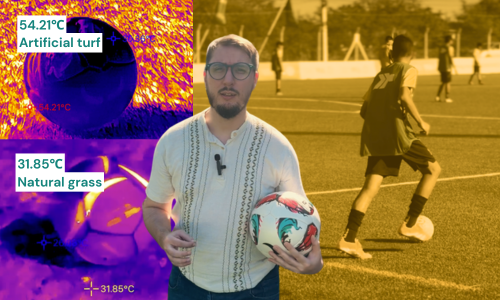
We commissioned a reported article from investigative journalist Maximiliano Manzoni exploring how extreme heat is affecting children and youth football teams in Paraguay, and how football clubs can adapt. In addition to that, we worked with Maximiliano, and his team at Consenso to develop a vertical video series on the same topic.
One persistent challenge we face when reporting extreme heat, especially on social media, is finding ways to represent it visually. In the media, extreme heat is often represented using either positive images, for example beaches or swimming, or stereotypical images of thermometers or the sun. At best, these representations limit how people understand and imagine heat risk and heat solutions, and at worst, could lead to serious harm by minimising the health impact of extreme heat.
We decided to use thermal camera imagery to make extreme heat visible. That gave us an instantly understandable way to zoom into how heat was affecting player’s bodies, and a way to visualise potential solutions, showing the impact different factors, for example artificial turf or natural grass, had on pitch surface and body temperatures.
One of the challenges of climate communication is ensuring audiences understand their agency. Our focus on local pitches in Paraguay helped encourage individuals to consider their own local communities and contexts. And we provided pathways for local action, describing how communities could advocate for solutions such as more heat resilient pitches, better early warning systems for high temperatures, and shifting playing hours into the cooler nighttime.
The videos were recorded in Spanish, and translated into English, Portuguese, and Chinese, and posted on Instagram, YouTube, and RedNote.
The debate around FIFA's introduction of hydration breaks—and widespread media coverage describing it as "the hottest World Cup"—created an opportunity for our reporting to reach audiences beyond traditional climate journalism.
On our own social media accounts, the videos were viewed around 17,000 times, and drove interest in our heat coverage and a boost in following to our accounts. But the videos spread far beyond our own channels.
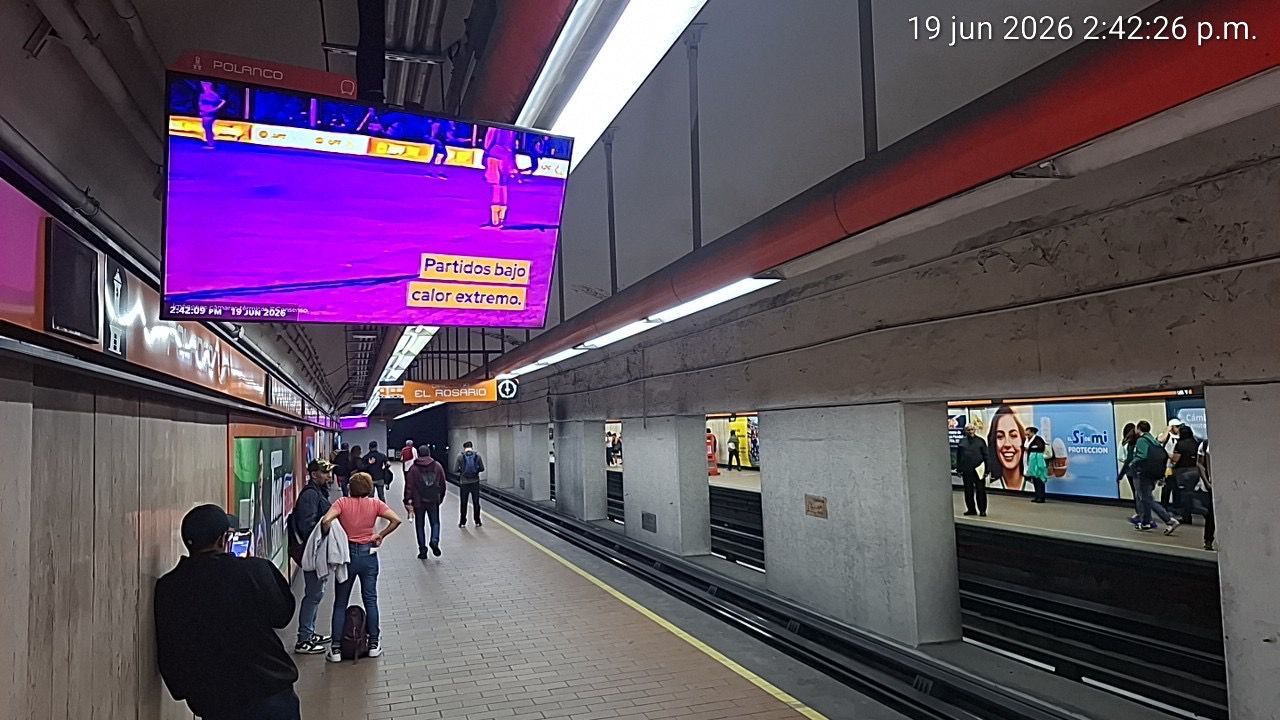
Our coverage was picked up by UN Climate Change, who reached out to Maxi and used the video throughout their own campaign on how heat is changing football. UN Climate Change’s secretary Simon Stiell used our footage in a LinkedIn post, and across their branded social media content. In addition to that, UN Climate Change played our footage on screens in seventy of Mexico City’s metro stations as the World Cup was ongoing, to the millions of commuters and visitors in the city.
This project demonstrated how journalism can travel far beyond its original audience when stories are designed for multiple formats and partnerships. What began as research developed through Boston University's CATCH project became reporting from grassroots football pitches in Paraguay, was produced by our newsroom in London, and ultimately reached millions of people in Mexico City during the World Cup.