In many professional environments, failure remains one of the last workplace taboos. Leaders are expected to project confidence, expertise, and success, often leaving little room for honest conversations about mistakes, setbacks, or vulnerability.
At the same time, growing awareness around workplace mental health, burnout, and psychological safety has created demand for a different kind of leadership—one rooted in empathy, humility, and authenticity rather than perfection.
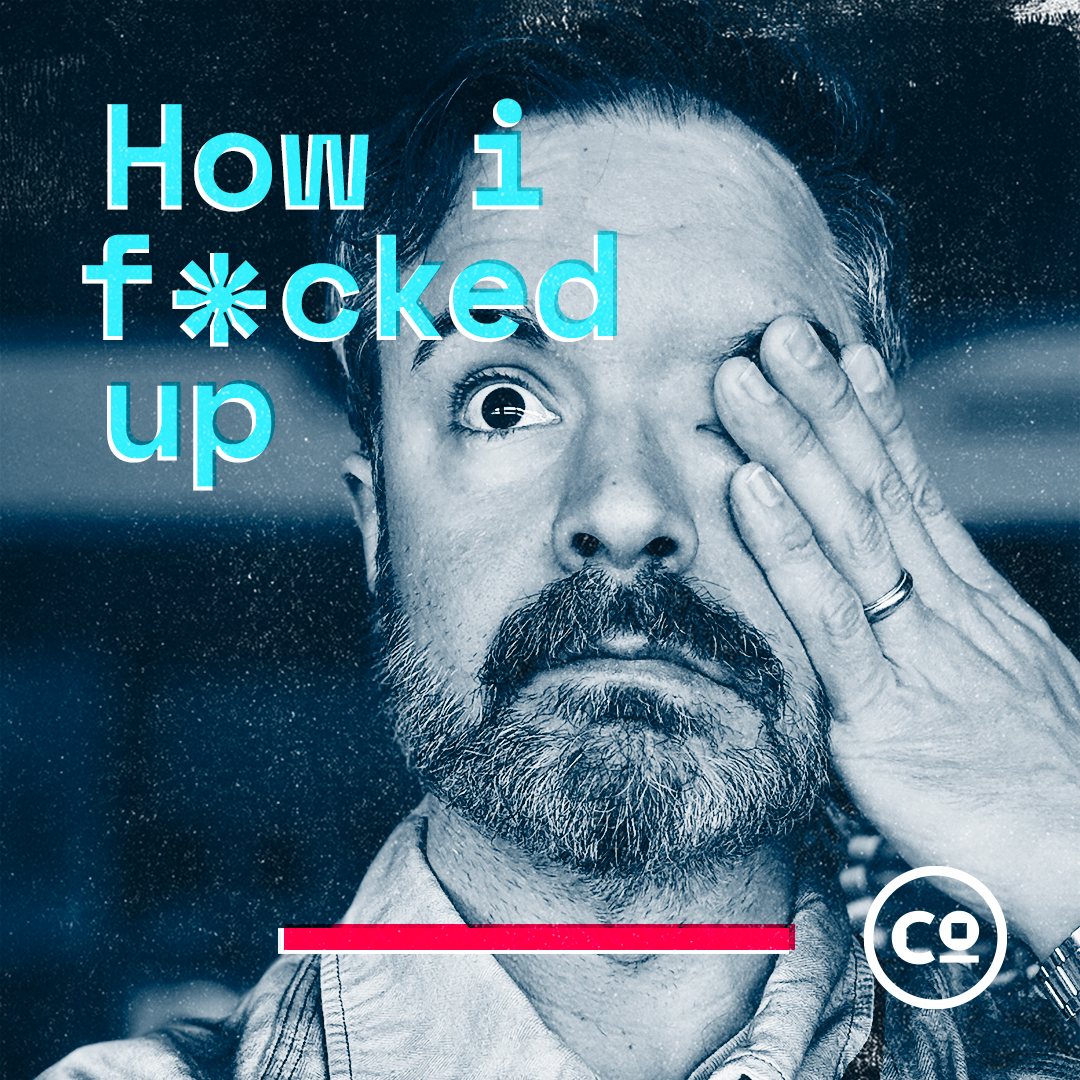
Copacino Fujikado created How I F*cked Up to challenge the culture of professional posturing and demonstrate the value of learning openly from failure. The podcast is built around a simple but powerful belief: sharing mistakes can be just as impactful as celebrating successes.
Through candid conversations with leaders across marketing, business, and creative industries, the series aimed to create a platform where listeners could gain practical lessons, build resilience, and recognize that setbacks are a universal part of growth.
The objectives were to:
Rather than producing a traditional business podcast focused on success stories, How I F*cked Up intentionally centered the conversations most leaders avoid.
Each episode features Copacino Fujikado Executive Creative Director Andrew Gall in an unscripted discussion with a business, marketing, or creative leader willing to share a defining professional mistake. Guests range from senior marketers and agency executives to entrepreneurs, coaches, and industry leaders from around the world.
The format was designed to foster honesty rather than performance. Conversations were recorded in a relaxed environment that encouraged guests to speak openly about moments of failure, uncertainty, and self-doubt. Rather than rushing toward lessons learned, episodes explored the emotional realities of setbacks—the embarrassment, frustration, and vulnerability that often accompany them.
One of the greatest challenges was convincing accomplished leaders to publicly discuss failures that many would typically prefer to keep private. The team addressed this by building trust with guests, emphasizing the podcast's educational mission, and modeling vulnerability throughout the series.
The storytelling approach transformed individual experiences into broader lessons about resilience, leadership, accountability, and growth. By focusing on the human side of professional life, the podcast created space for conversations that are often missing from workplaces and industry conferences.
Distribution relied primarily on organic sharing, professional networks, and audience advocacy, allowing the show to grow through genuine engagement rather than paid promotion. This helped foster a community of listeners who connected with the mission and shared the content because of its relevance and value.
How I F*cked Up demonstrated that conversations about failure can resonate deeply across industries, cultures, and geographies.
According to Libsyn, one of the world's largest podcast hosting platforms, a podcast episode that receives more than 124 downloads within 30 days performs better than 50% of podcasts globally. By its third episode, How I F*cked Up had already surpassed that benchmark.
Since launch, the series has attracted more than 5,000 listeners across 56 countries, demonstrating a global appetite for more honest conversations about leadership and professional growth.
More importantly, the podcast succeeded in creating a platform where accomplished professionals could openly discuss failure in a way that educates, reassures, and inspires others. By elevating vulnerability as a leadership strength rather than a weakness, the series helped challenge traditional notions of success and encouraged audiences to view mistakes as opportunities for learning and growth.
In a professional culture that often rewards perfection, How I F*cked Up proved that honesty can be a powerful force for connection, resilience, and positive change.