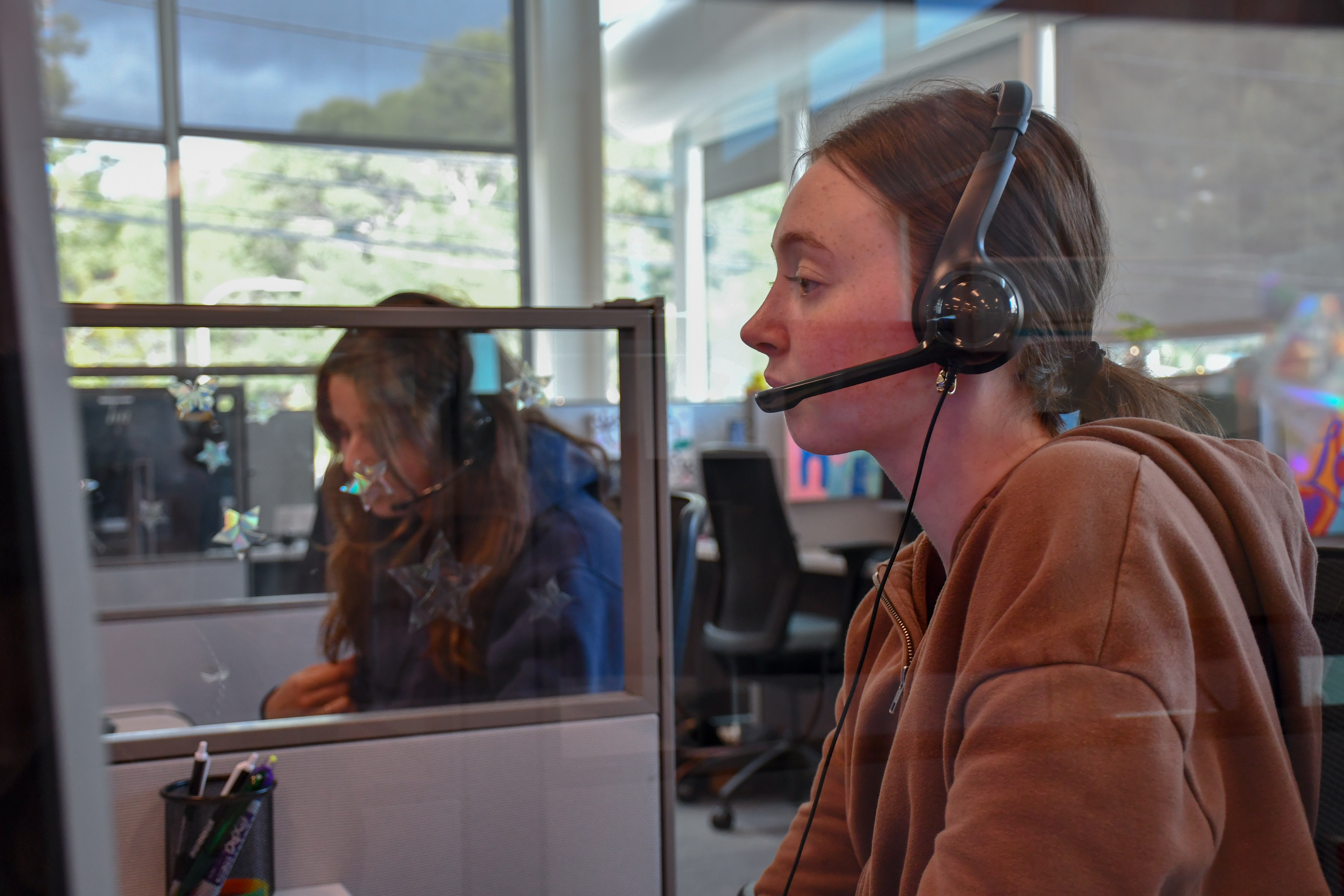
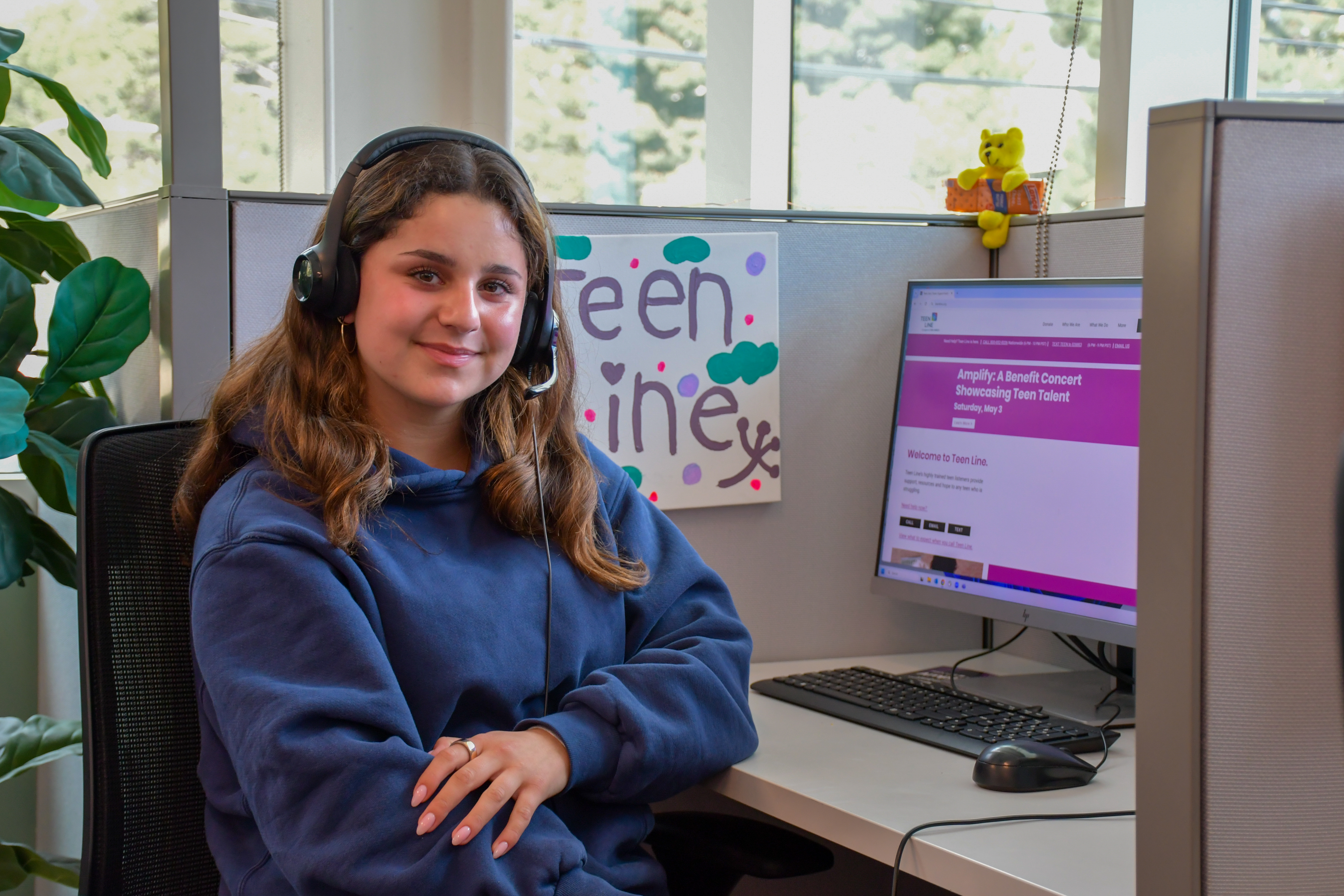
Teen Line is the nation's oldest peer-to-peer crisis and support hotline. Trained teen volunteers meet young people by phone call, text, or email, offering something no adult-staffed hotline can replicate: someone who's living through the struggles of being a teen in real time.
Nearly 40% of U.S. high schoolers report persistent sadness or hopelessness (CDC, 2023), and Pew Research (2025) found teens are far more likely to say they'd feel very comfortable talking to a friend about their mental health (48%), even more so than a therapist (31%). Layer on the pressures unique to this generation — climate anxiety, an uncertain AI-driven future, the nonstop churn of social media — and it's no wonder so many teens feel like nobody else quite gets it.
Teen Line was built on the simple idea that sometimes the most powerful support is shared experience. Every Teen Listener trains for months under mental health professionals before taking a single call, pairing real empathy with real skill.
Teen Line’s objective is to expand free, confidential peer support to every teen who needs it, wherever they are – even hearing from teens in 92 countries beyond the U.S.
Teen Line is never meant to replace therapy or professional care, but is rather built to sit alongside it and catch teens in the moments between appointments, or before they've found the words to ask for help at all.
Teen Line fills a critical gap in the youth mental health crisis by meeting teens where they already are: increasingly, that means text. This model is built on the understanding that adolescents are more likely to open up to a peer than to an adult, and offering phone, text, and email options removes barriers to seeking help, particularly for young people who may feel more comfortable texting than speaking on the phone.
Each Teen Listener completes more than 100+ hours of intensive training covering active listening, suicide prevention, crisis de-escalation, empathy, cultural humility, identity, relationships, substance use, and other challenges facing today's youth. Before independently responding to conversations, volunteers participate in observation and supervised practice alongside mental health professionals who remain on hand during every shift, ensuring no Teen Listener handles a conversation alone.
Headquartered in Los Angeles, Teen Line's reach extends far beyond it. Today, approximately 70% of conversations come from outside California, and Teen Line also hears from young people in dozens of countries worldwide, underscoring a universal need for accessible peer support.
Beyond crisis support, Teen Line invests heavily in prevention through education and outreach. The organization partners with schools and youth-serving organizations to provide presentations, mental health education, and resources that encourage early intervention and help normalize conversations about emotional well-being.
In 2022, Teen Line joined Didi Hirsch Mental Health Services, becoming part of one of the nation's leading suicide prevention organizations. This partnership expanded Teen Line's training infrastructure, clinical supervision, volunteer development, and capacity to reach more young people while preserving the peer-to-peer model that has defined the program since 1980.
For more than four decades, Teen Line has continued to evolve alongside young people's changing communication habits, while remaining grounded in a simple yet powerful idea: sometimes the person who can make the greatest difference is a peer willing to listen without judgment.
Teen Line has grown from a pioneering youth hotline into one of the nation's longest-running peer support programs. The program offers teens in crisis a safe space to talk with a trained peer by phone, text, or email.
In 2025, Teen Line answered 9,591 contacts from young people: 57% via text, 28% via phone, and 16% via email. Text volume grew 38%, more than in any other channel, reflecting teens' increasingly preferred way to reach out. While 89% of contacts came from the United States, Teen Line also heard from youth in 92 other countries. More than one-quarter of users were age 13 or younger.
Teens reach out about anxiety, depression, loneliness, family conflict, identity, relationships, school pressures, and suicidal thoughts, and they often share experiences they have yet to disclose to anyone else. The results speak for themselves: 98% of help-seeking youth found their conversation helpful, and the same share said they would recommend Teen Line to a friend.
Teen Line also develops the next generation of mental health advocates as Teen Listeners leave the program with advanced communication, leadership, and crisis response skills that result in their ability to strengthen their schools, communities, and future careers. Teen Line continues to demonstrate that one compassionate conversation can change, and sometimes even save, a life by combining evidence-informed peer support with professional clinical supervision.