In the wake of the COVID-19 pandemic, safety and economic issues have remained top of mind for Asian American and Pacific Islander (AAPI) communities, particularly those in major metropolitan areas. Nowhere is this clearer than in Seattle’s Chinatown-International District (CID), where residents and small businesses have grappled with safety challenges–from vandalism to open-air drug use–that have driven a decline in foot traffic.
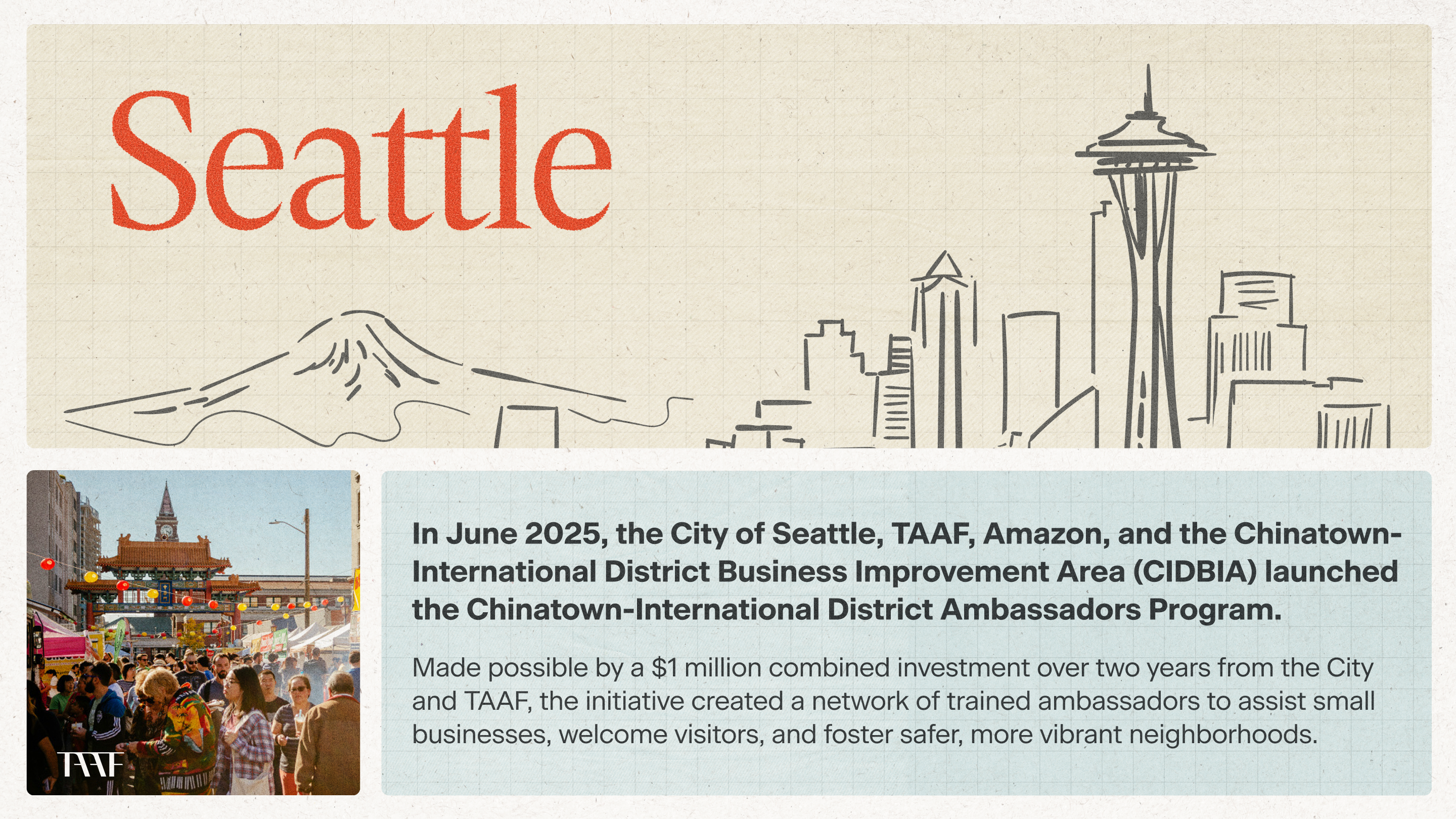
In 2025, The Asian American Foundation (TAAF) unveiled “TAAF Cities,” an initiative designed to strengthen safety and economic opportunity in cities with significant AAPI populations. We chose Seattle, a major cultural and economic hub with some of the oldest and most vibrant AAPI communities on the West Coast, as our starting point. And in June 2025, we joined with the City of Seattle, Amazon, and the Chinatown-International District Business Improvement Area (CIDBIA) to launch a $1+ million Chinatown-International District Ambassadors Program.
Our goals included:
1. Improving neighborhood safety and supporting economic revitalization in the CID through cross-sector collaboration.
2. Training safety ambassadors to assist small businesses, welcome visitors, and foster safety across Japantown, Chinatown, and Little Saigon.
3. Building renewed trust among CID residents and small businesses through public-private coalitions across government, business, and the community.
TAAF leveraged its impact flywheel model to help bring the safety ambassador program to life over the course of two years: research, convene, pilot, and scale.
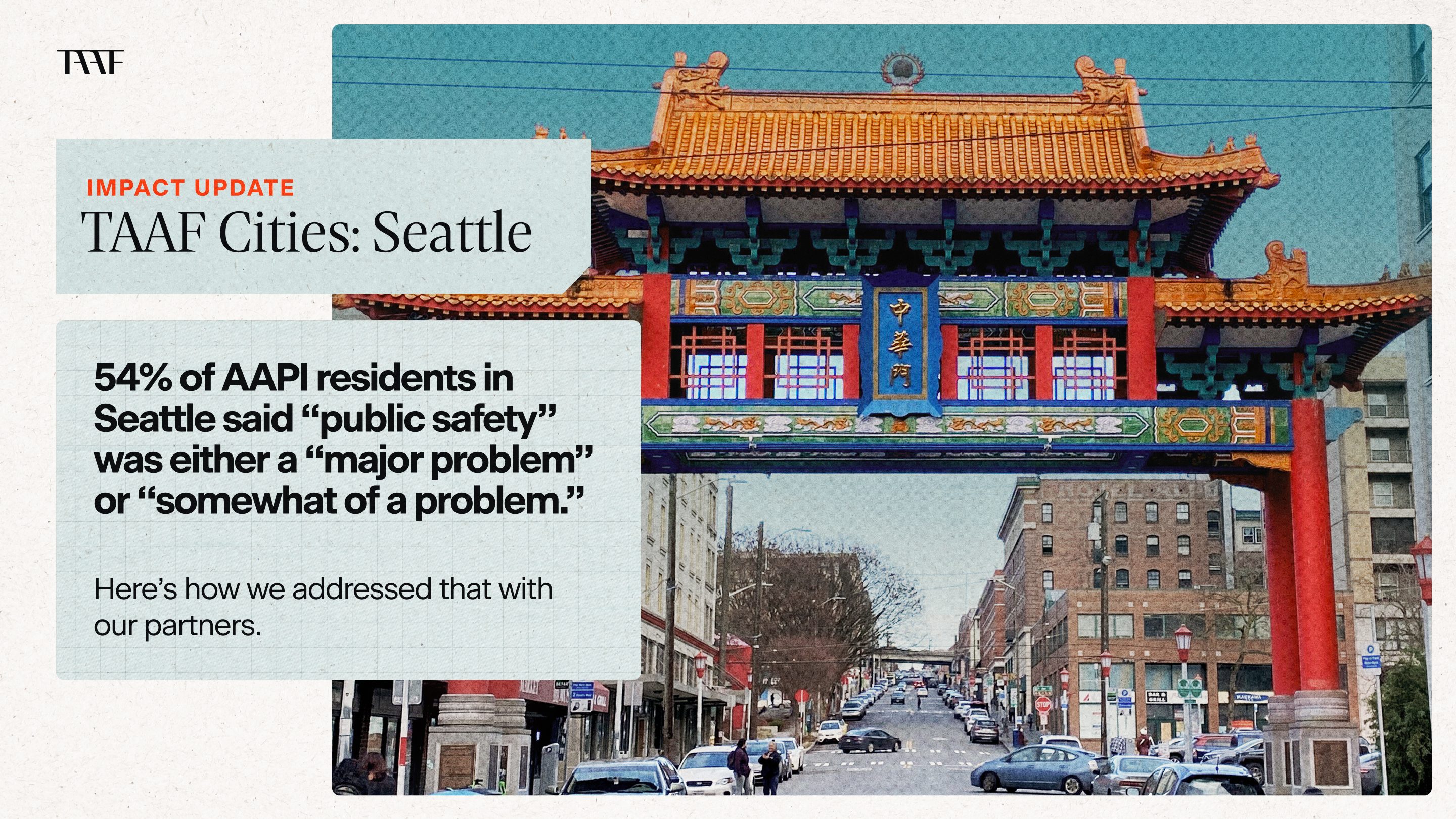
Research: In 2024, TAAF conducted a survey of 1,000 AAPI adults in the Seattle metro area and found that public safety was one of the most critical issues affecting AAPI residents in the city.
Convene: We met with partners across Seattle, including the City of Seattle, Amazon, and the Chinatown-International District Business Improvement Area (CIDBIA), to discuss the findings and areas of collaboration.
Pilot solutions: In June 2025, we collectively launched the Chinatown-International District Safety Ambassadors Program, establishing a trained network of neighborhood ambassadors serving Seattle's Japantown, Chinatown, and Little Saigon and conducting surveys to measure the impact of the pilot. The program was catalyzed by a $1 million combined investment over two years from the City of Seattle and TAAF and is being run by the CIDBIA.
Scale programs: After an initial rollout, the CIDBIA doubled the number of ambassadors ahead of the 2026 FIFA World Cup, and the program was expanded to include more language-accessible ambassadors, thanks to a new commitment from the City of Seattle in early 2026. TAAF also used the experience to support other safety ambassador programs in New York City and the Bay Area.
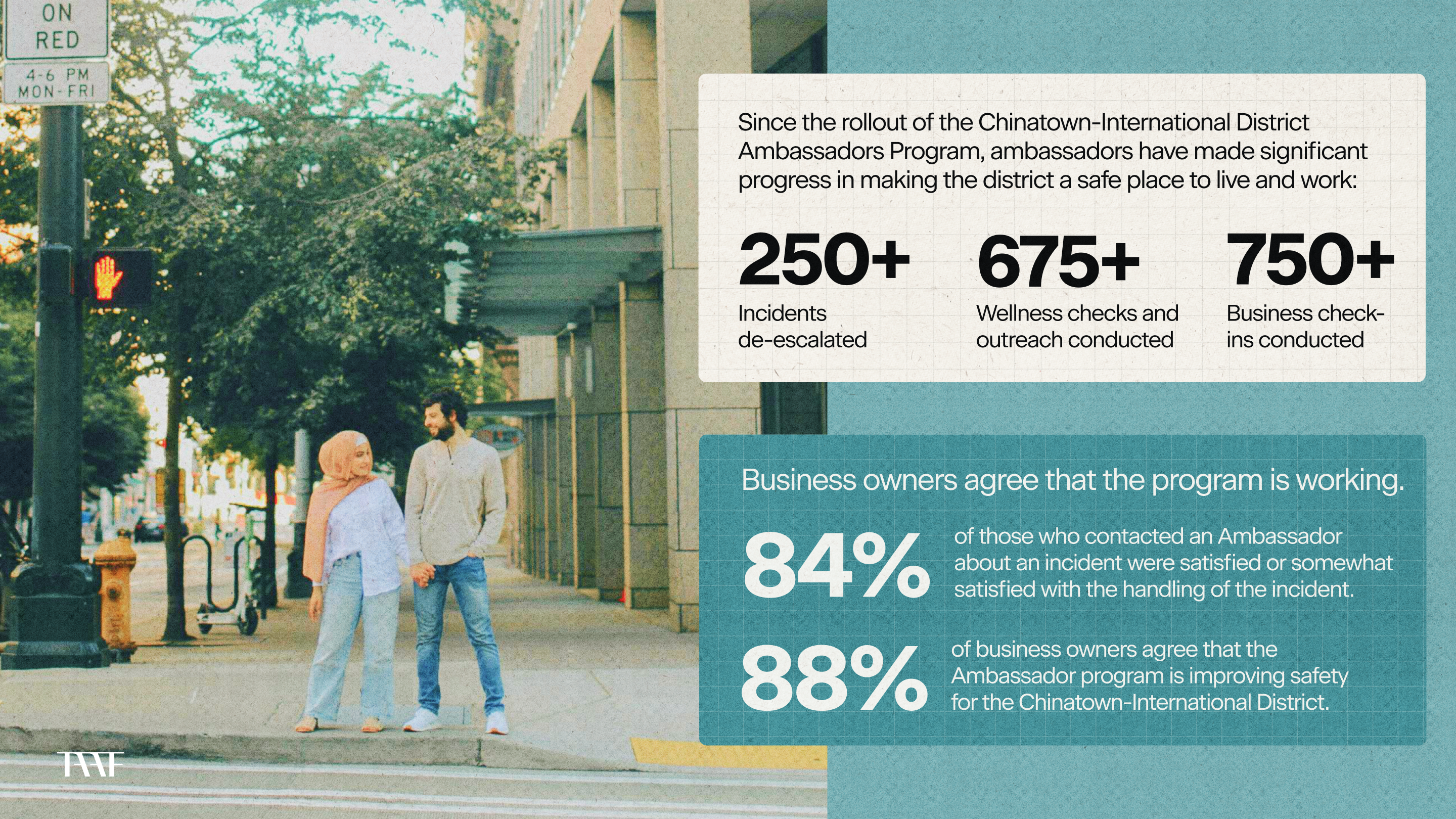
According to a survey of business owners in Seattle’s Chinatown International District conducted in September 2025, 84% of those who had contacted an Ambassador about an incident were satisfied with the handling of the incident, and 88% agreed that the Safety Ambassador program is improving safety for the district.
Between the program’s June 2025 launch and December 2025, the Chinatown International District Safety Ambassador Program saw:
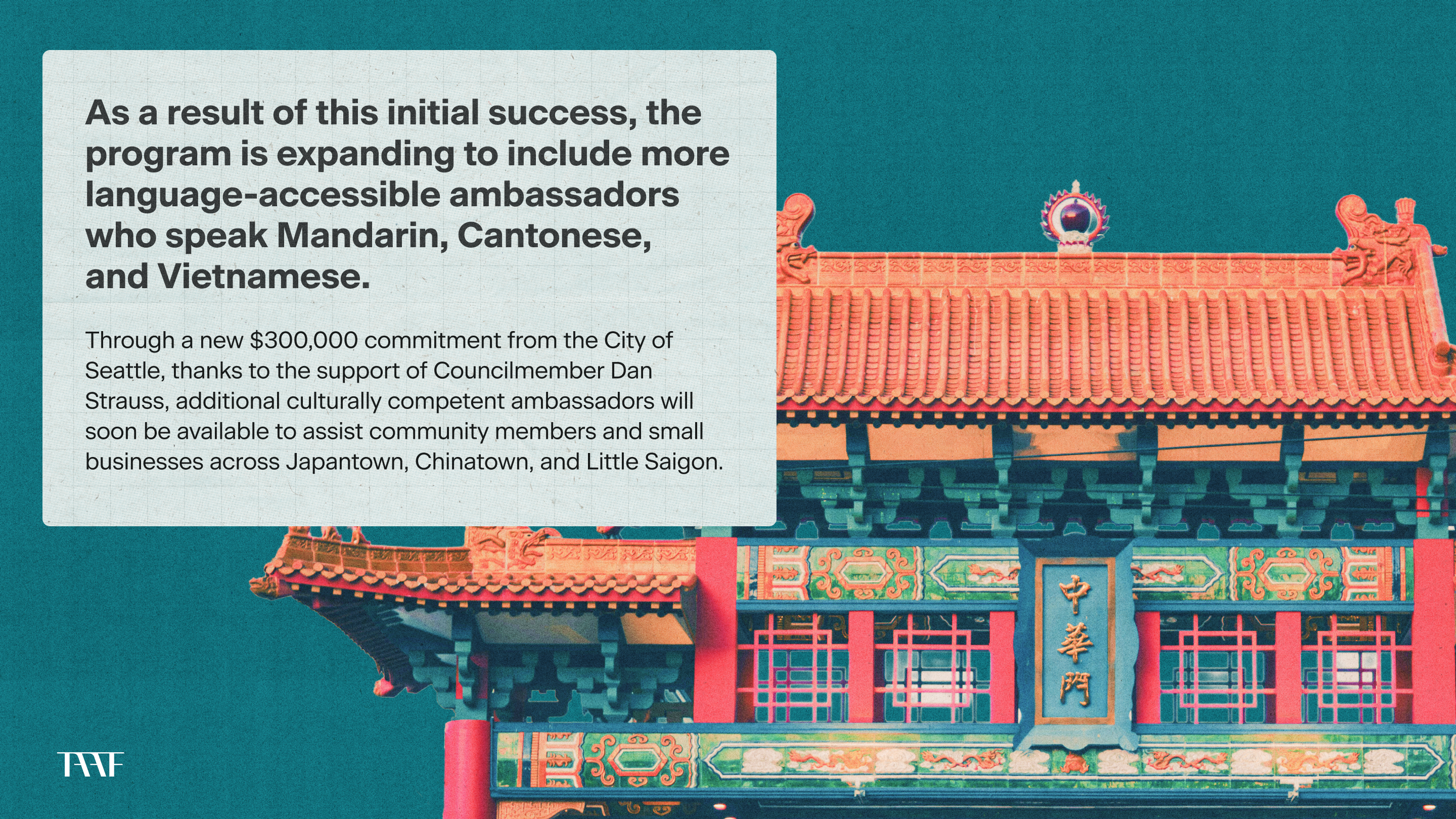
Following the initial success of the program, a new $300,000 commitment was announced by the City of Seattle in early 2026 to grow the program to include more culturally competent, language-accessible Ambassadors. The program now has nine in-house ambassadors including those who speak Mandarin, Cantonese, and Vietnamese.
WHAT SMALL BUSINESSES ARE SAYING:
“To know that there's dedicated folks in the neighborhood that are here and if called, will come, has put some ease in the back of people's mind that there are resources available.” – Hood Famous
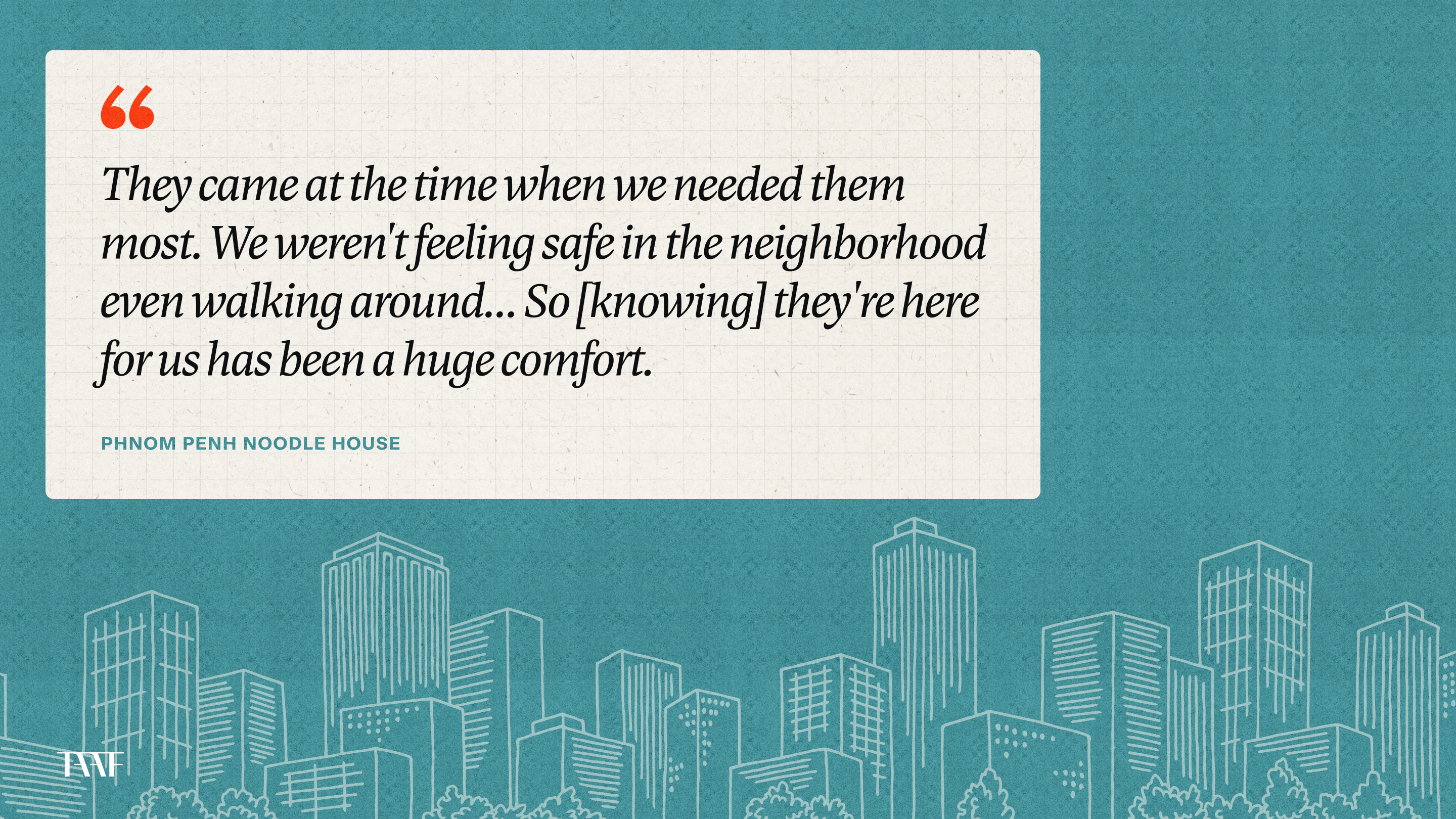
“They came at the time when we needed them most. We weren't feeling safe in the neighborhood...having that immediate resource...we just know they're here for us, it has been a huge comfort.” – Phnom Penh Noodle House
“It gives safety for not only the customer, [but] for employees and for myself. Safety means customers feel comfortable when they come to the business that they love.” – Chu Minh Tofu