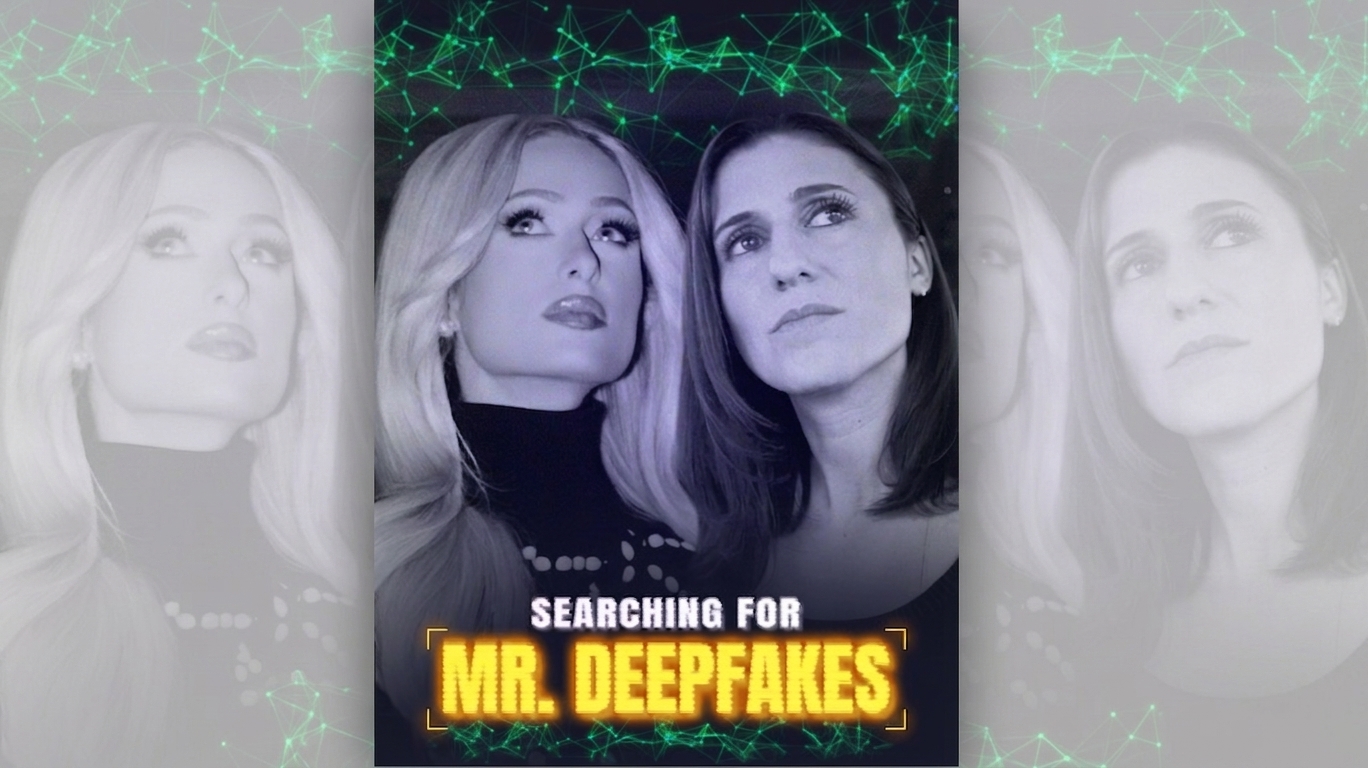
Searching for Mr. Deepfakes, launched exclusively on Paris Hilton’s TikTok, was created in response to a rapidly escalating form of technology-enabled sexual abuse disproportionately targeting women and girls. An estimated 96% of deepfakes online are sexually explicit, and 99% of those depict women and girls without their consent. Non-consensual deepfake videos have been viewed nearly 4 billion times.
For Paris Hilton and 11:11 Media, the issue is deeply personal. Paris has experienced the proliferation of non-consensual explicit deepfakes herself, giving her firsthand understanding of the violation victims experience and how difficult it can be to regain control once content spreads online.
Our objective was to make an often hidden and misunderstood form of sexual exploitation impossible to ignore. We set out to expose the ecosystem behind Mr. Deepfakes, one of the world’s largest explicit deepfake platforms, while centering the human impact of the abuse and building urgency for stronger accountability and policy protections.
We also wanted to challenge the traditional model of investigative journalism. Rather than asking audiences to seek out a documentary or long-form investigation, we brought deeply reported journalism directly into the social feeds where millions of people already consume information.
Ultimately, Searching for Mr. Deepfakes was designed to move audiences from awareness to action: giving those impacted access to resources, helping the public understand the real-world consequences of AI-enabled sexual abuse, and demonstrating how storytelling can help drive accountability and change.
The foundation of Searching for Mr. Deepfakes was an investigation that took more than three years to report and produce. Led by award-winning journalist Laurie Segall and her team at Mostly Human Media, the project brought together journalists, white-hat hackers, investigators, victims, filmmakers, and cultural voices to uncover the identity and operation behind “Mr. Deepfakes,” an anonymous operator connected to one of the largest deepfake abuse platforms online that at its peak drew 17 million monthly visitors and hundreds of thousands of users who participated in a system that normalized the creation and consumption of non-consensual sexual imagery.
The reporting approached the story from multiple angles: tracing the people and technology behind the platform, investigating how its ecosystem operated, working with experts to understand the rapidly evolving technology, and speaking with survivors about the human consequences of this abuse.
One of the biggest challenges was the subject itself. The people behind these platforms intentionally operate anonymously, the technology, and the legal and regulatory framework was evolving rapidly.
The next challenge was how to translate years of complex investigative reporting into a format that could be both compelling and accessible without reducing the seriousness of the subject.
TikTok was not simply a distribution channel; it was central to the strategy. We brought investigative journalism directly into the digital environment where younger audiences increasingly discover and consume information, and where AI-enabled abuse can itself spread.
The storytelling was paired with a dedicated resource hub, BeyondMrDeepfakes.com, creating a pathway from viewing to action for people who had experienced non-consensual intimate imagery or wanted to learn how to protect themselves. In addition, 11:11 Media and Paris Hilton connected the storytelling to ongoing advocacy around protections for victims of non-consensual deepfakes, creating a model where investigative journalism, cultural awareness, and social impact reinforce one another.
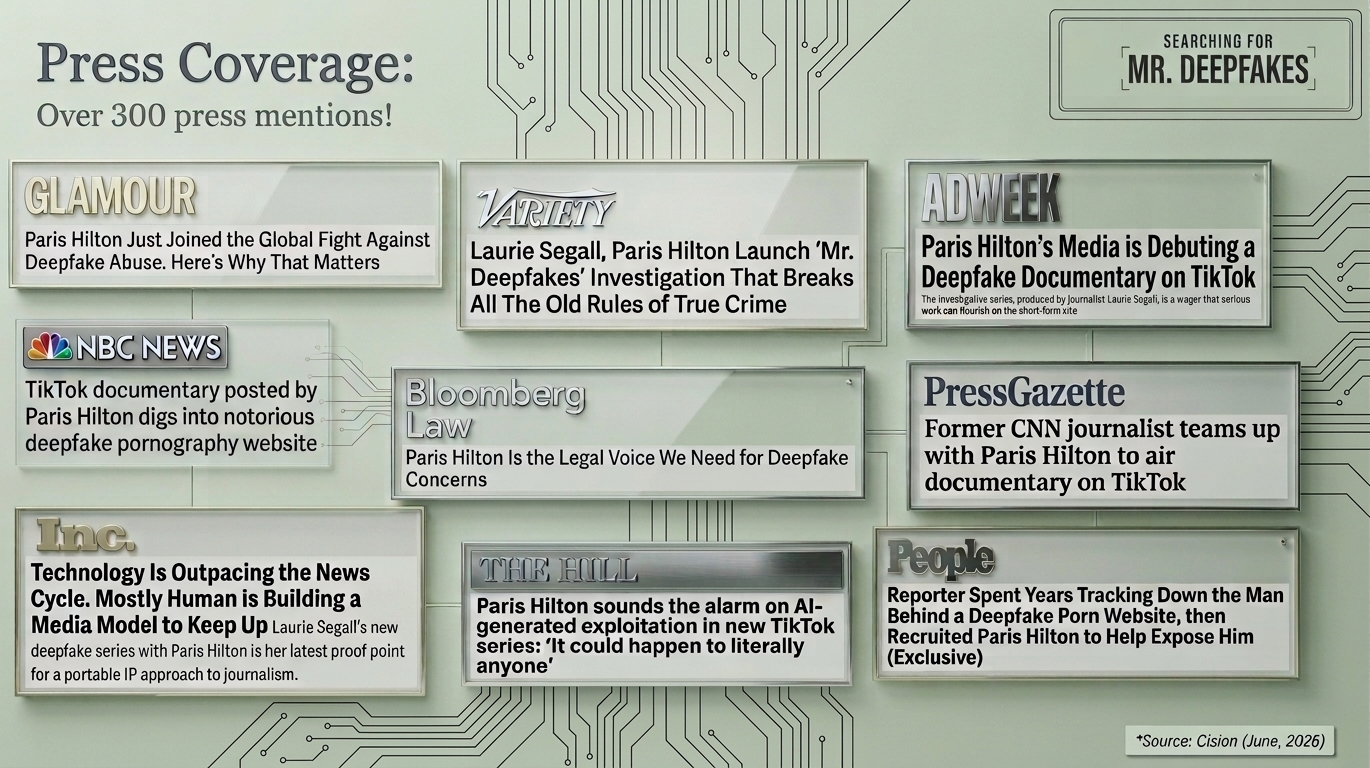
Within its first week on Paris Hilton’s TikTok, Searching for Mr. Deepfakes amassed more than 26 million views, with thousands clicking through to our resource site, BeyondMrDeepfakes.com, which gives people resources if this happens to them. The series generated over 300 press mentions and over $20 million in earned media value, achieving our goal of bringing the topic into mainstream media.
The active investigation also coincided with extraordinary real-world accountability: the platform at the center of the reporting was ultimately taken offline. A month after Searching for Mr. Deepfakes premiered, Paris supported U.S. law enforcement in seizing another major explicit deepfake website CFAKE.com, showing that momentum is actively happening to address this issue.
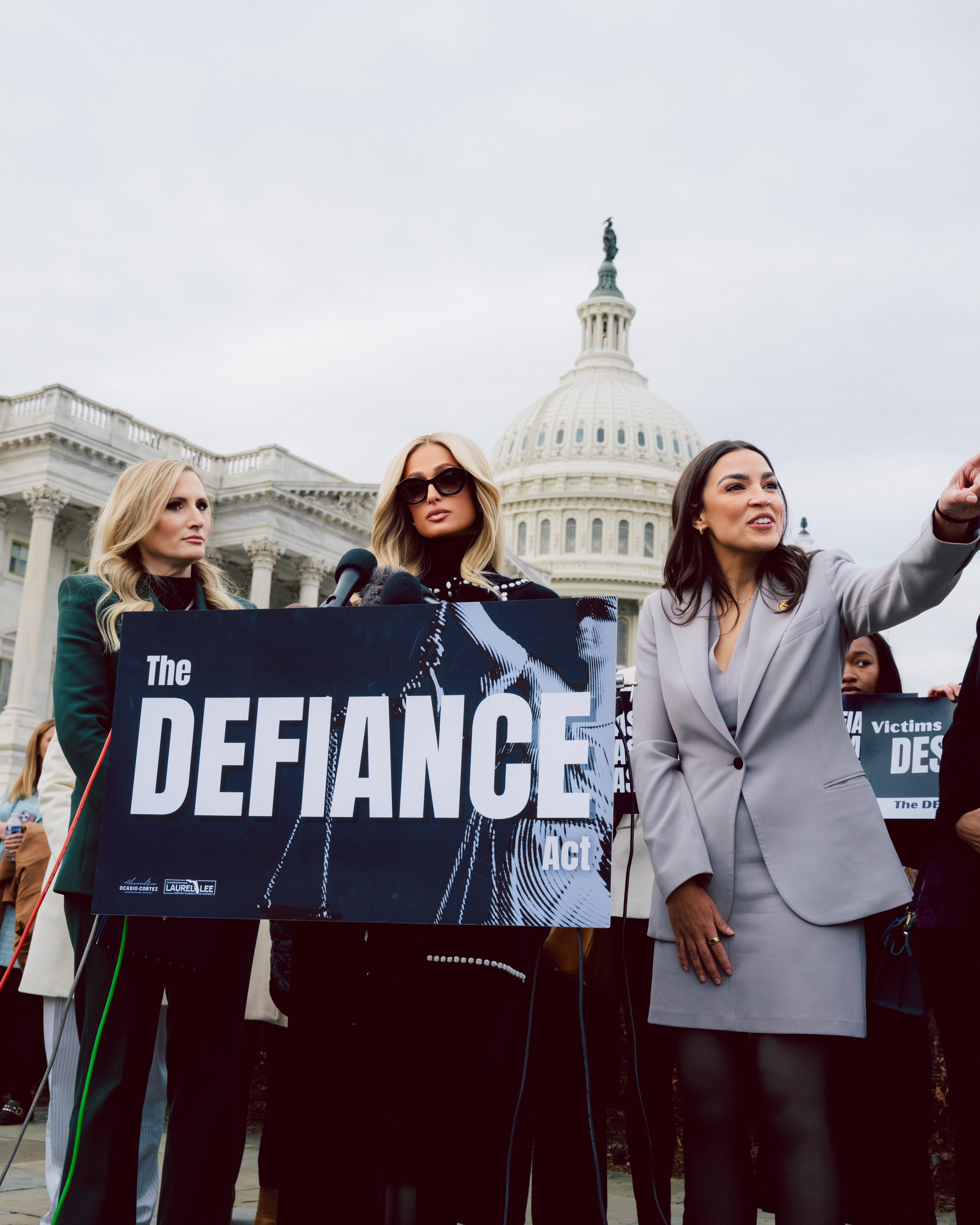
The series strengthened a broader advocacy effort around protections for victims, including the bipartisan federal DEFIANCE Act and California’s SB 1111, helping connect an abstract policy debate to the human beings affected by this technology. California’s SB 1111 has passed both chambers of the California legislature and is awaiting the Governor’s signature.
The project also proved that vertical video can carry the depth and rigor of major investigative journalism, while reaching people where they already consume information without reducing the complexity or seriousness of the story.
Searching for Mr. Deepfakes did more than inform. It helped expose an abusive system, contributed to a tangible outcome, elevated lived-experience voices, and showed how social-first storytelling can be a vehicle for meaningful change.