Most climate campaigns leave people informed. Rooted in Joy left people feeling like they belonged inside the solution.
Climate communication has become dominated by narratives of catastrophe, sacrifice, and fear. While those narratives successfully communicate urgency, they often leave people overwhelmed rather than empowered. We believed climate movements needed more than awareness, they needed stories people could emotionally inhabit.
The Center for Cultural Power created Rooted in Joy to reimagine climate storytelling through culture. Rather than asking communities to rally around climate crisis alone, the campaign invited people to recognize climate justice as something already woven into their everyday lives through food, migration, labor, neighborhood, family, culture, health, and collective care.
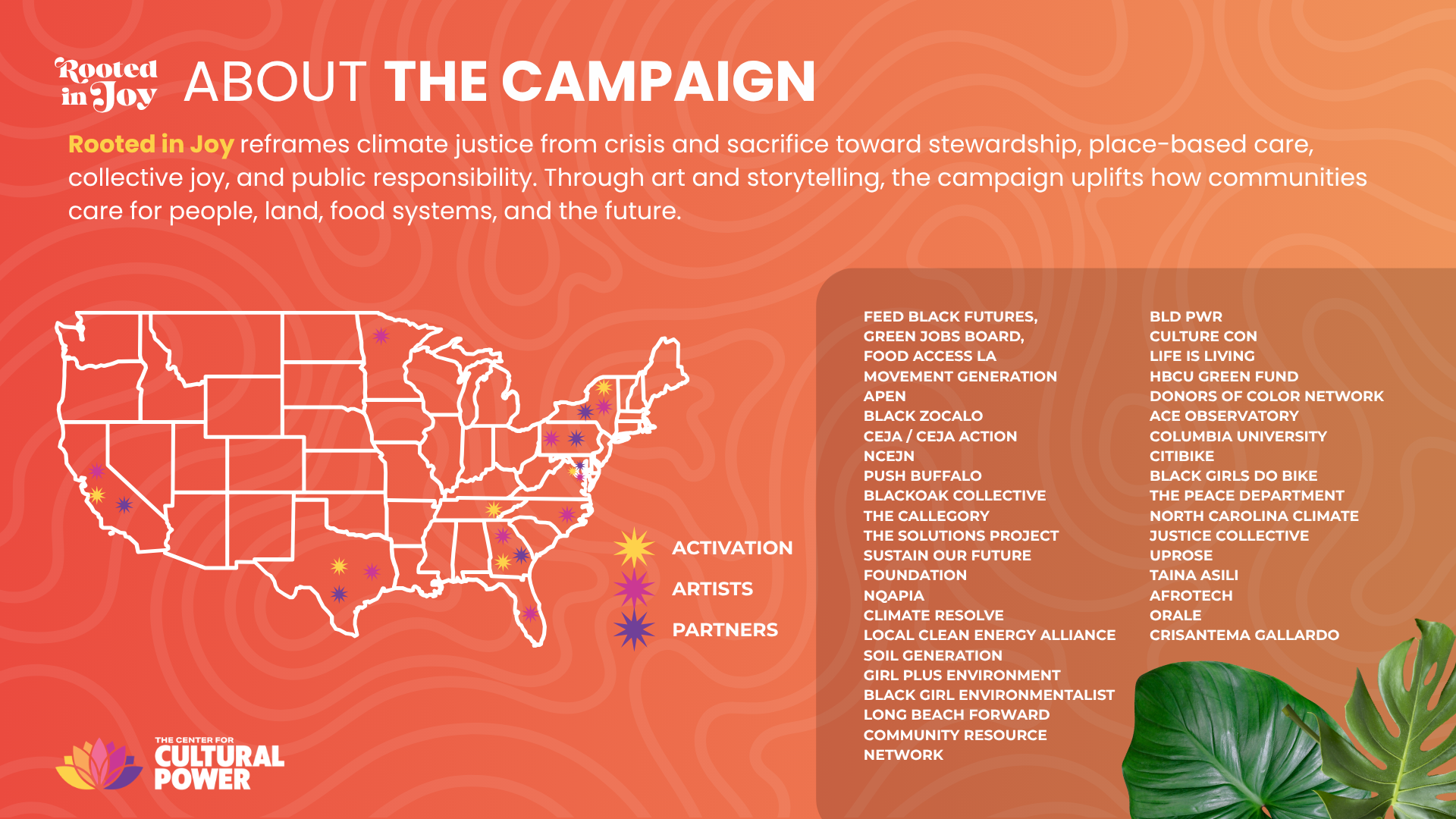
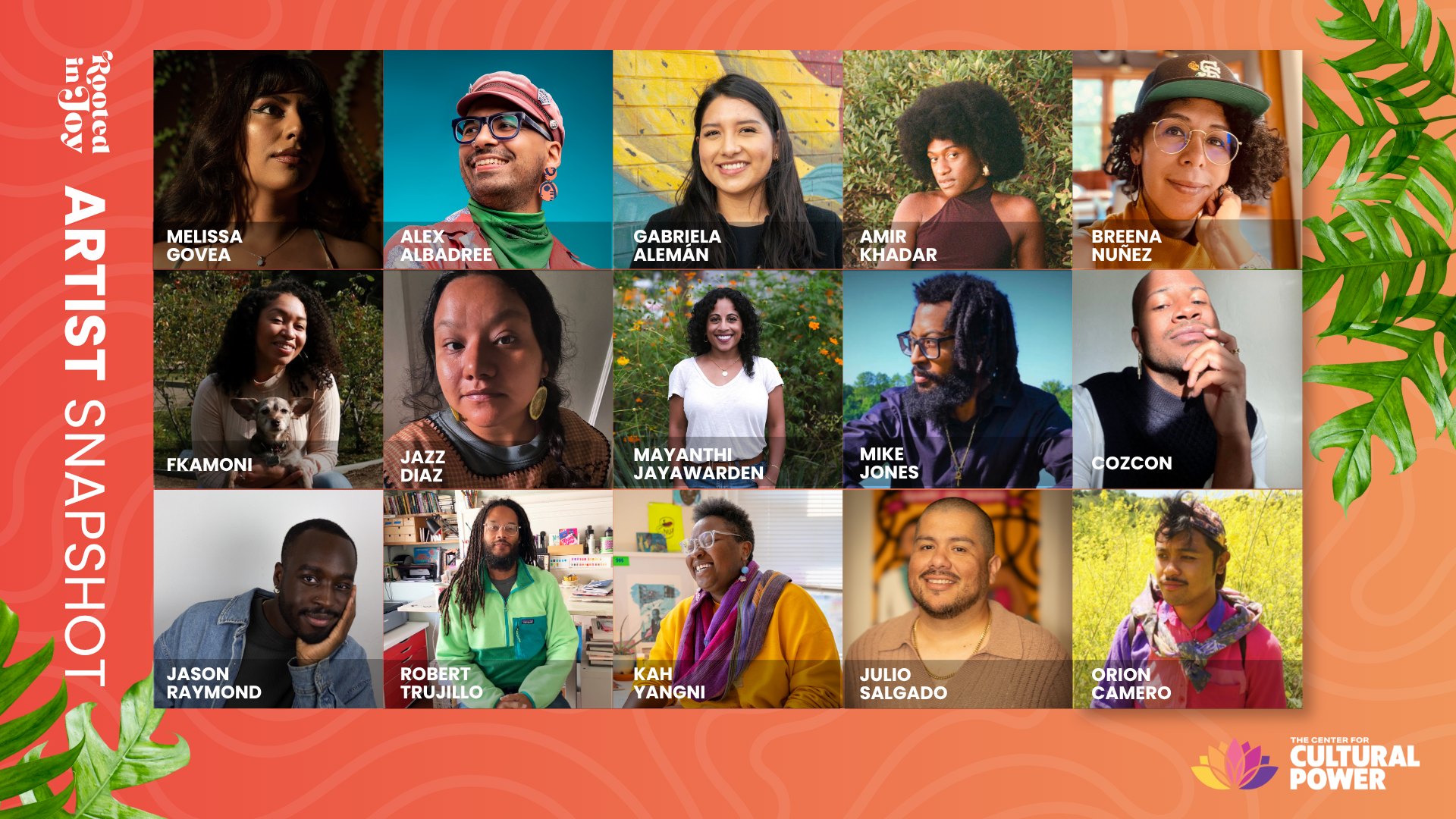
Guided by our climate narrative framework, Rooted in Joy partnered with BIPOC artists, trusted movement organizations, and frontline communities to shift dominant narratives from scarcity and sacrifice toward belonging, stewardship, abundance, and collective power.
Our goals were to:
• Expand who sees themselves as part of climate solutions.
• Build movement infrastructure that equips trusted community organizations with artist-driven storytelling tools.
• Transform climate storytelling from passive awareness into participatory cultural experiences.
• Use art to demonstrate that joy is not the opposite of urgency, it is what sustains participation, belonging, and long-term movement building.
Rooted in Joy set out to prove that climate campaigns can do more than educate. They can create futures people want to help build.
Fear captures attention. Joy sustains participation. Belonging sustains movements. That belief shaped every aspect of Rooted in Joy.
Rather than producing a traditional awareness campaign, we built a cultural storytelling system that helped people experience climate justice instead of simply learning about it. Guided by The Center for Cultural Power's Climate Narrative Framework, every campaign element served a role within one connected narrative ecosystem:
Narrative → Art → Story → Participation → Proof → Distribution.
Traditional climate campaigns often assume that if people understand the science, they will act. Rooted in Joy responded to a different challenge: many people already understand the urgency—they simply don't recognize themselves inside the climate story. Rather than leading with information, we led with belonging, creating cultural experiences that invited people to imagine the future they wanted to help build.
We invested in trusted messengers already organizing inside communities. Rather than asking organizations to distribute campaign materials, we partnered with environmental justice organizations, artists, and culture bearers to co-create storytelling assets, participatory activations, and narrative tools that reflected local priorities while advancing a shared climate narrative.
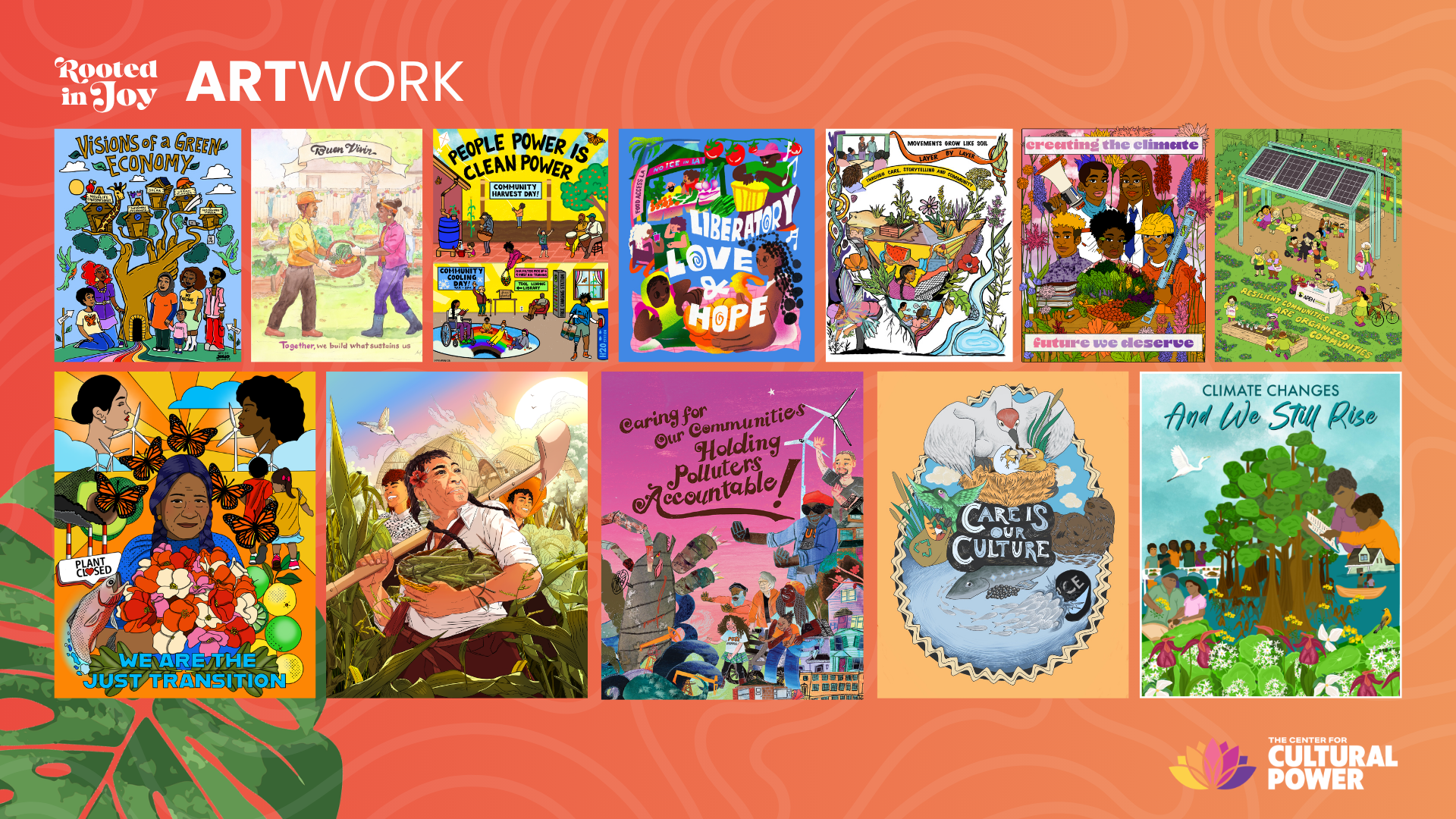
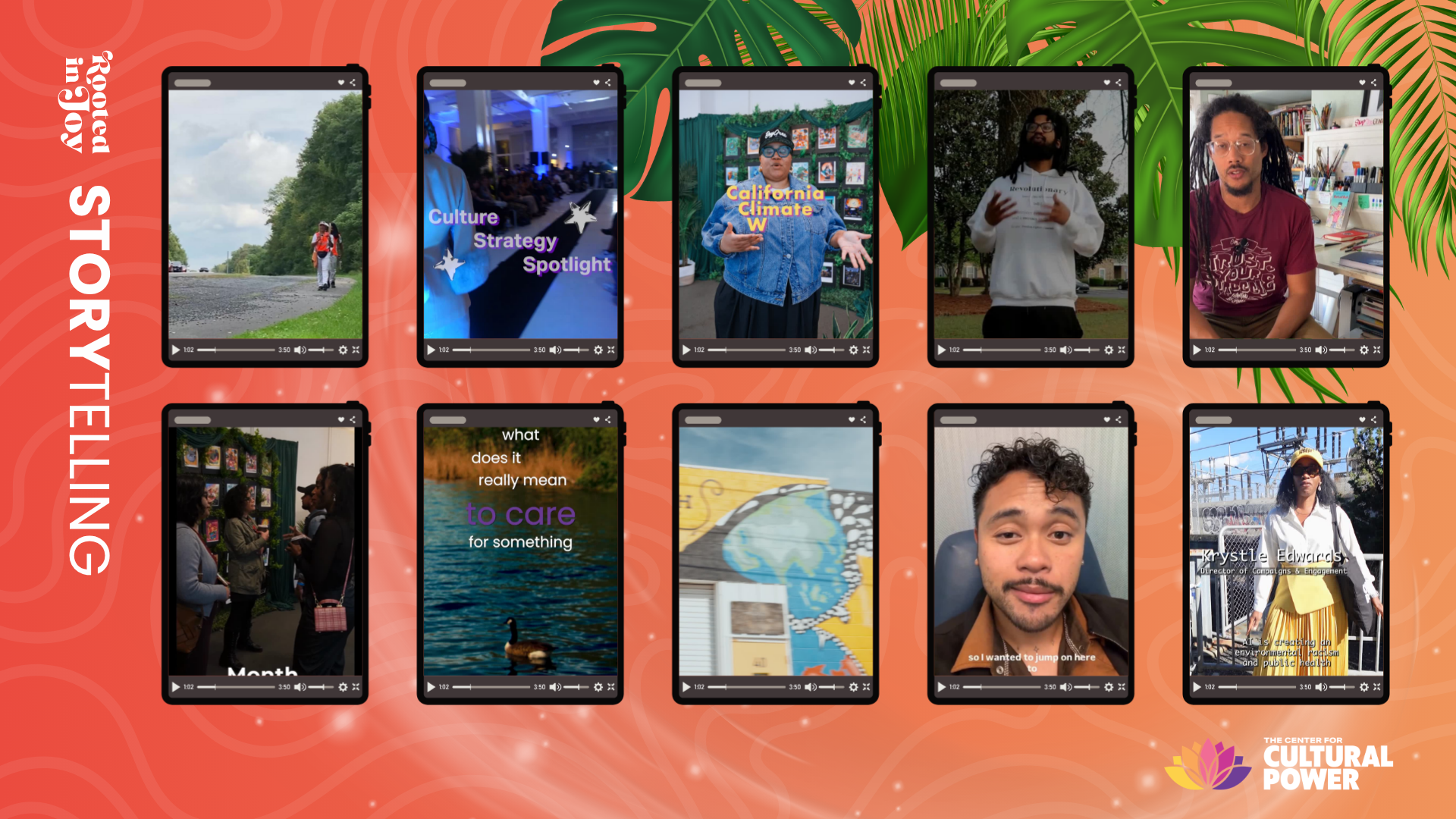
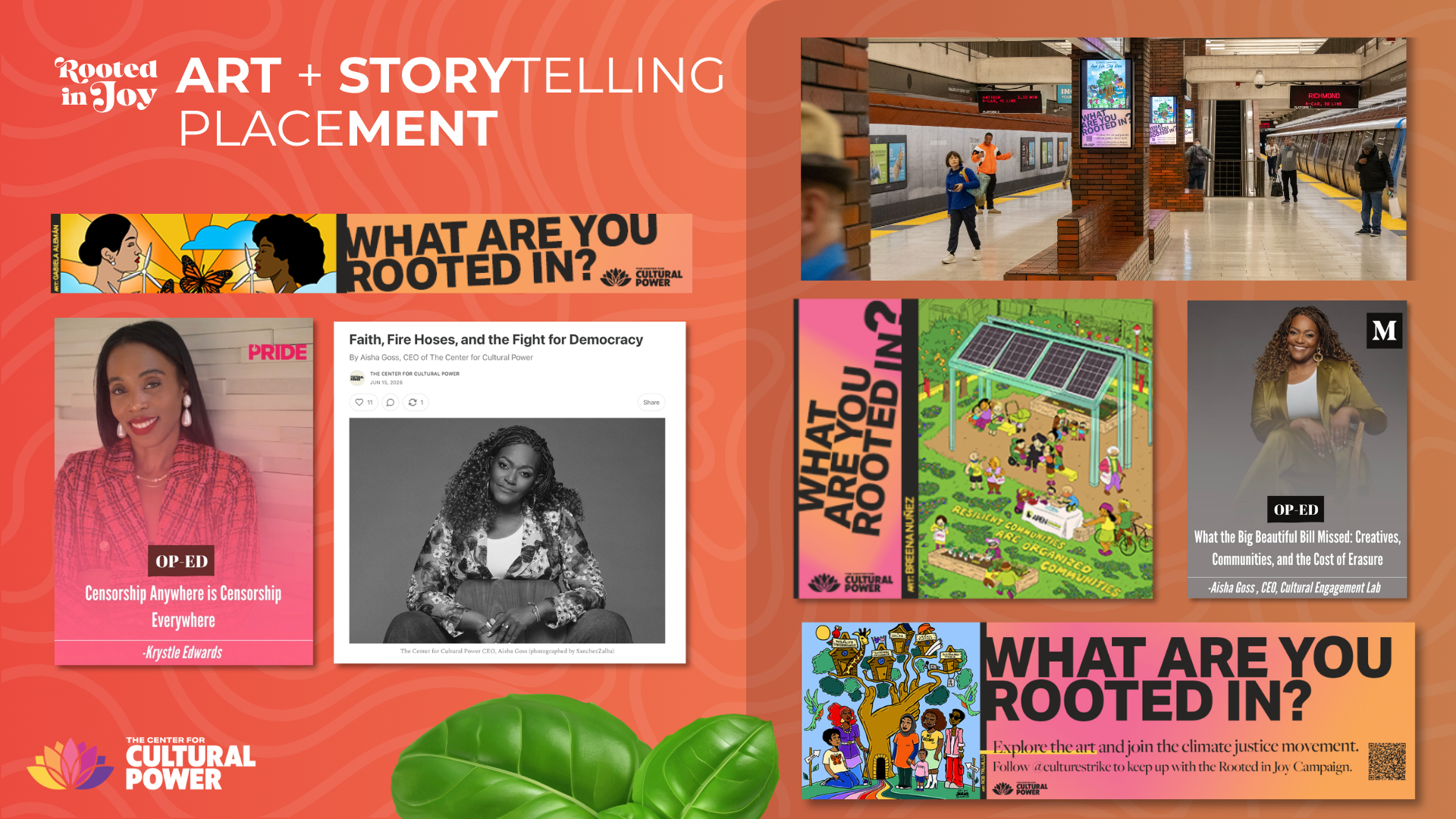
Original commissions translated climate displacement, food sovereignty, migration, Indigenous stewardship, labor, and community resilience into stories rooted in joy, care, and collective possibility. Artists were not asked to illustrate predetermined messages—they served as narrative strategists, translating movement values through lived experience and creative practice.
One of our greatest execution challenges wasn't producing artwork—it was creating the conditions for artists and movement organizations to build strategy together. Many partners were responding to climate crises while operating with limited capacity, making arts and culture easy to deprioritize. Our role was to demonstrate that artists were not marketers for movements; they were movement partners.
We met that challenge by embedding artists from the beginning, developing shared narrative briefs, facilitating collaborative planning, and designing activations that advanced both narrative and organizing goals. Rather than asking organizations to use art after a strategy was complete, we made artists part of the strategy itself. That investment built trust, strengthened partnerships, and resulted in storytelling communities recognized as authentic because they helped shape it.
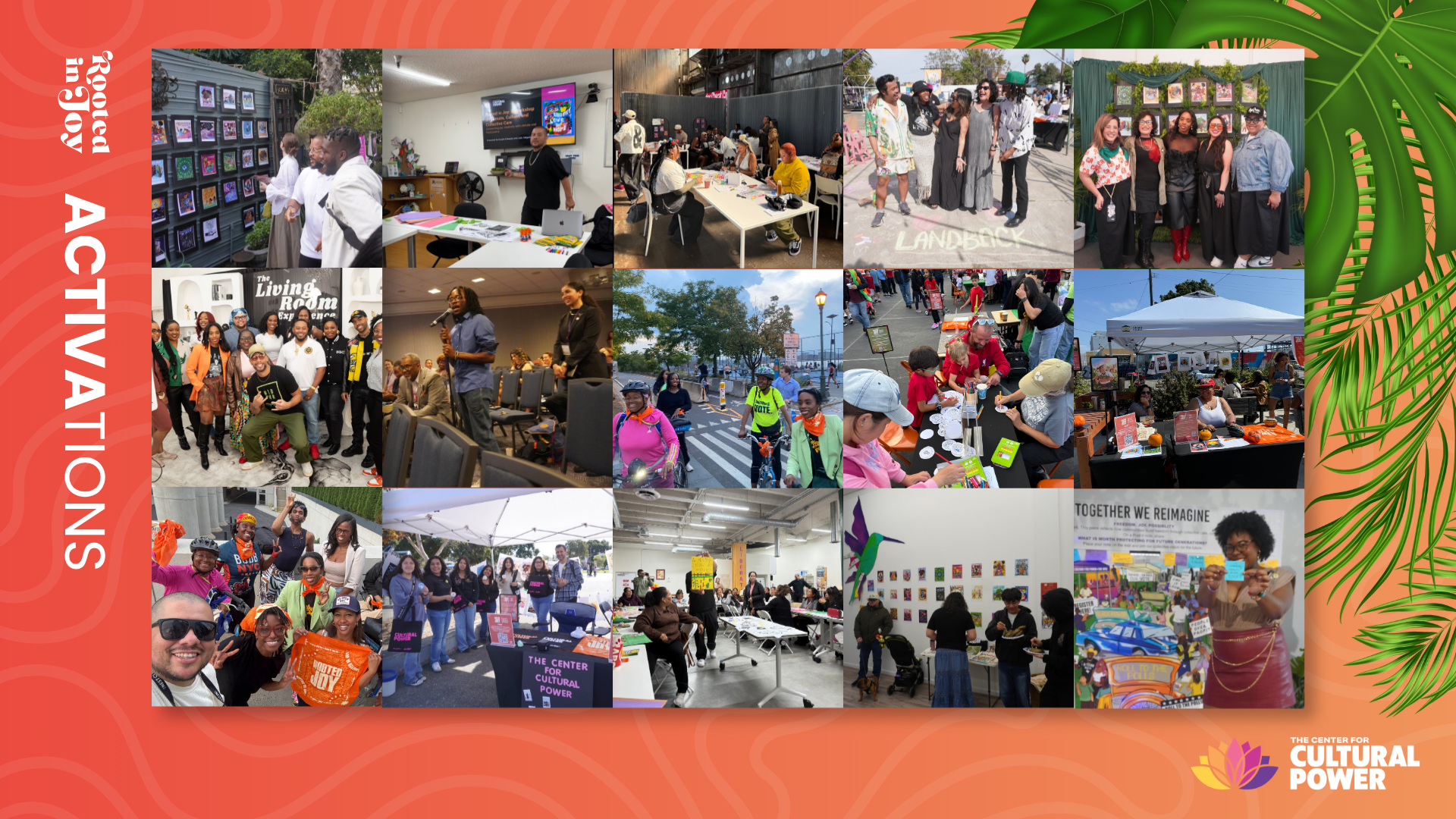
Our activations transformed storytelling into lived experience. During Climate Week NYC, visitors stepped inside an interactive mural, adding Polaroids and reflections that placed themselves inside the future of the green economy. At CultureCon, thousands experienced Art of Disruption, reflecting on how their own creative practice could contribute to social change. Across festivals, bike rides, workshops, exhibitions, and neighborhood gatherings, people didn't simply view artwork—they created it, responded to it, and recognized themselves inside climate solutions.
Every activation generated more than attendance. Community reflections became future storytelling. Workshops informed future exhibitions. Partners adapted campaign assets for their own audiences, allowing each activation to become the beginning of the next chapter of the campaign.
Rooted in Joy demonstrated that culture is not simply how climate movements communicate. It is how they become durable, memorable, and shared
Rooted in Joy didn't ask communities to care about climate. It revealed that they already did.
Through food. Migration. Neighborhoods. Family. Labor. Culture. Memory. Music. Care for one another.
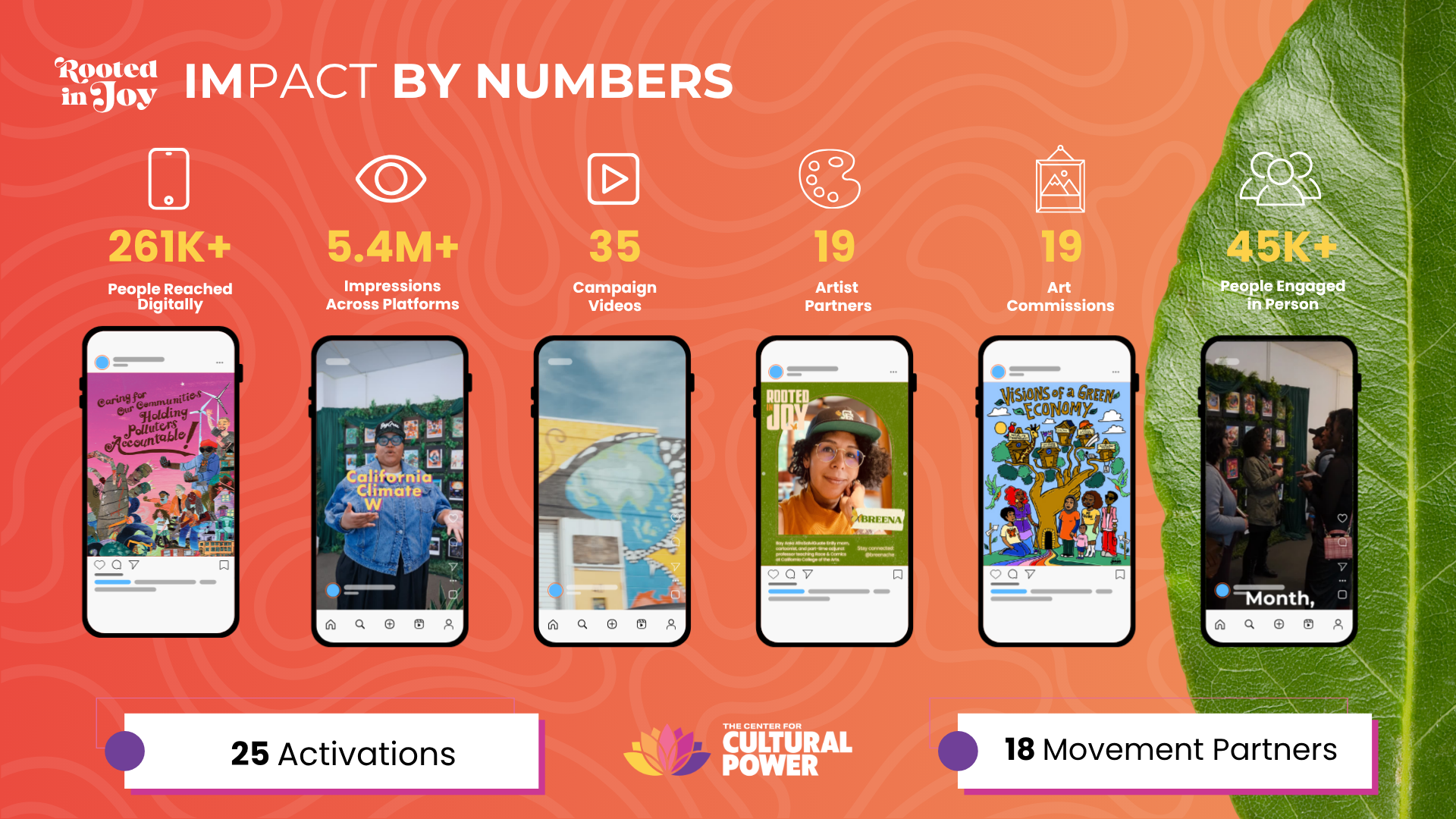
Between January 2025 and July 2026, the campaign built a national storytelling ecosystem that included 20 artists, 18 movement organizations, 20 original commissions, 23 public activations, 35 campaign videos, more than 45,000 in-person participants, 261,000 people reached digitally, and more than 5.4 million campaign impressions. These outputs became the foundation for something much larger: communities seeing themselves as protagonists in climate solutions.
The campaign left behind movement infrastructure by equipping trusted organizations with artist-created storytelling assets, participatory activation models, and narrative tools they could continue adapting for their own communities. Rather than distributing a centralized campaign, partners expanded, localized, and carried the work forward, demonstrating that cultural strategy scales through shared ownership.
Audience surveys consistently showed participants resonated most with solidarity, interconnectedness, joy, and collective care. Interactive experiences generated hundreds of reflections demonstrating shifts in how participants understood climate justice—not as an environmental issue affecting someone else, but as something connected to their own identities and communities.
Perhaps the clearest measure of success wasn't that people remembered Rooted in Joy. It was that partners began adopting its language, adapting its storytelling practices, and carrying its narratives into their own work. When a campaign's ideas continue traveling without the campaign itself, narrative change has begun.