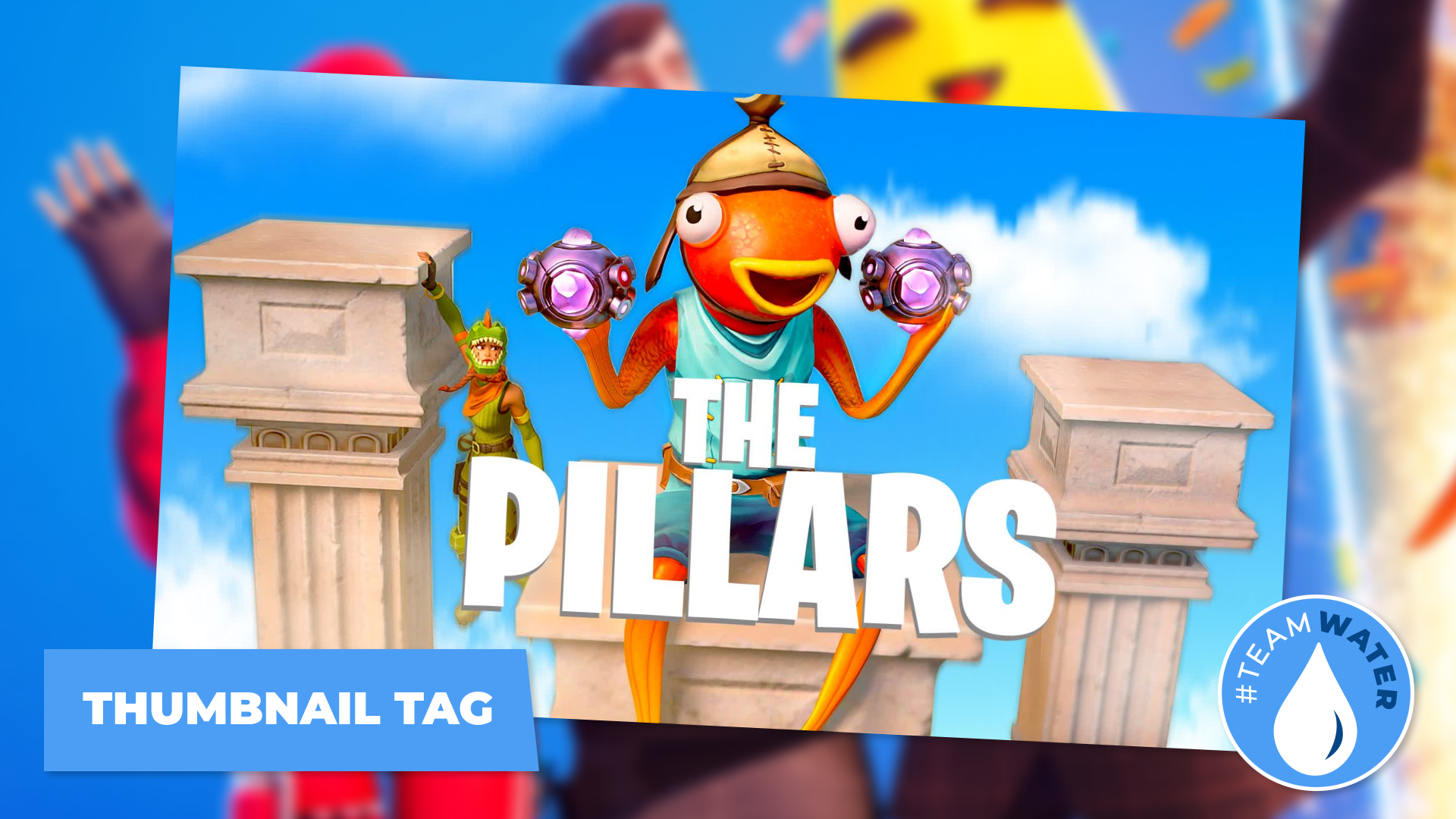
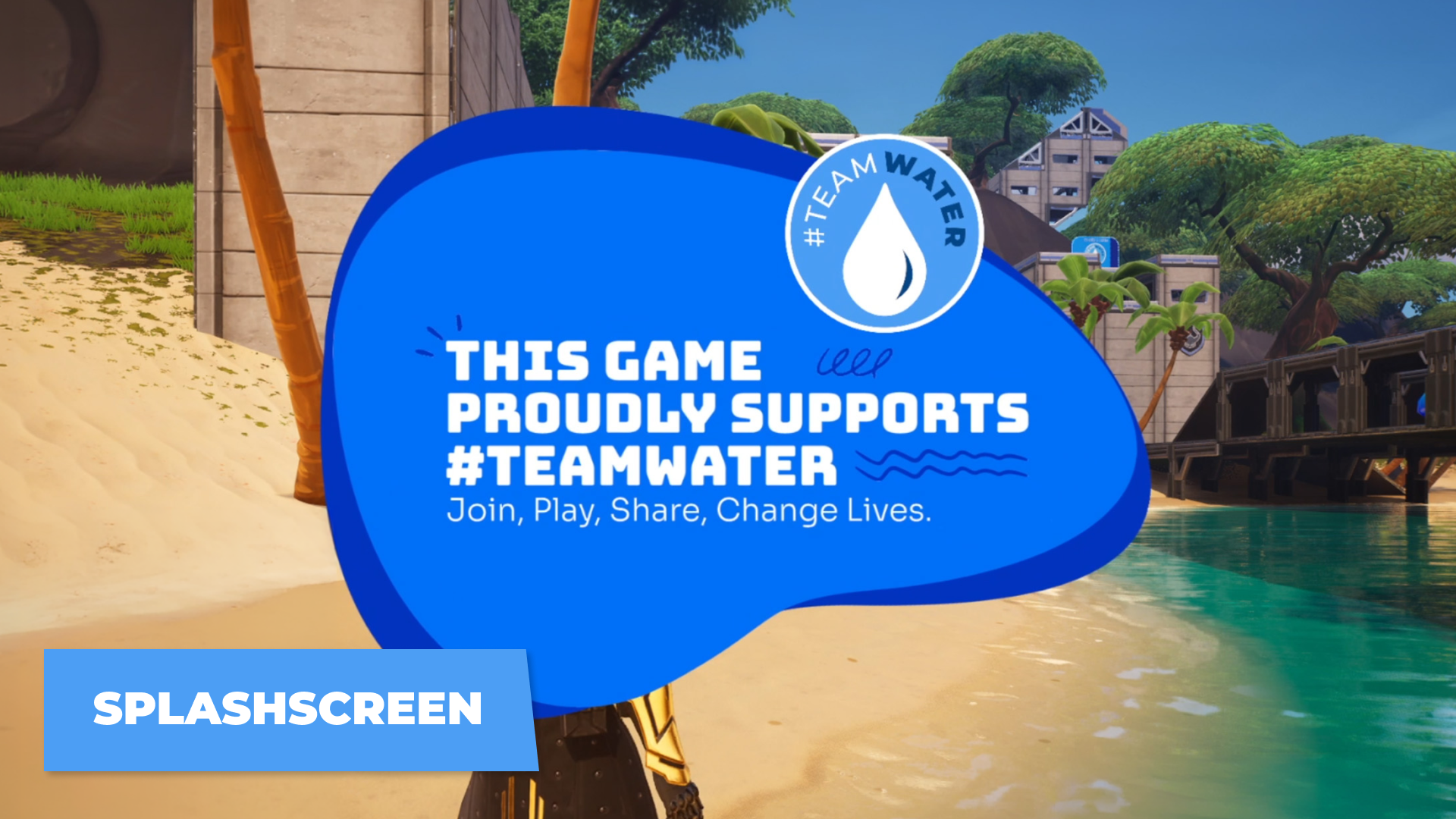
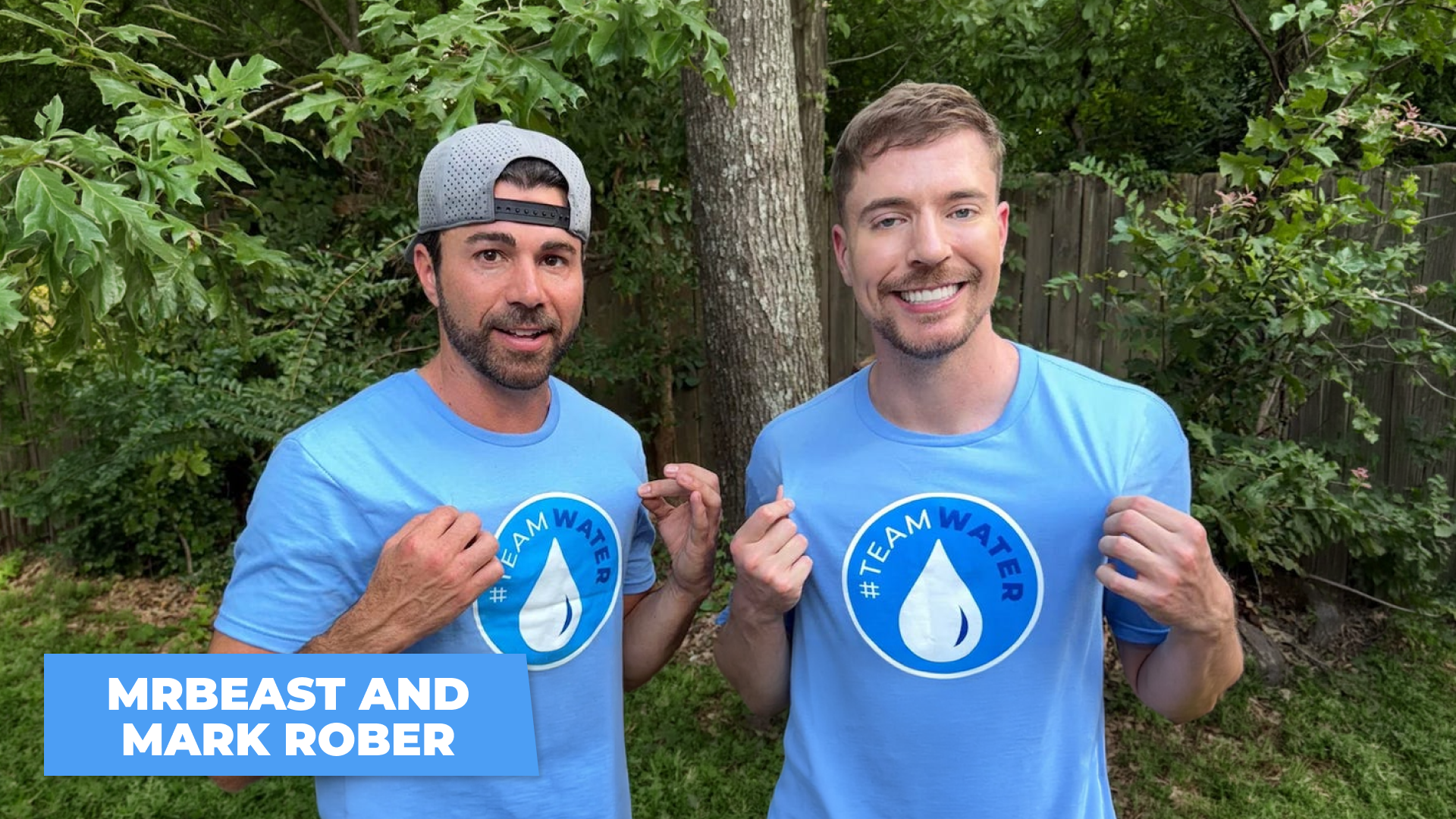
The global water crisis affects more than two billion people, yet remains largely invisible to the audiences most capable of amplifying its story online. When MrBeast and Mark Rober launched #TeamWater in August 2025 to raise $40 million for clean water, the campaign generated powerful storytelling across YouTube and social media. But that story had nowhere to live inside the world's largest entertainment platform for younger audiences: gaming. Traditional branded content interrupts gameplay. To reach gamers, the story itself had to become gameplay.
The challenge was finding a content format gamers wouldn’t skip. Fortnite players don't watch branded stories, they play them. To reach this audience authentically, the narrative needed to become content players experienced rather than consumed.
The PowerUP team was brought in to design a completely new form of branded content; one where narrative, interaction, and visual identity became inseparable from gameplay itself.
Success would be measured by how fully players engaged with the content itself: interactions, impressions, gameplay hours, droplets collected as a measure of narrative participation, selfies shared as user-generated content, and the media value generated relative to traditional storytelling channels.
The central creative challenge was philosophical before it was technical: gamers refuse to be told a story, they want to be inside one. Any attempt to deliver the #TeamWater narrative as a video, banner, or branded cutscene would have been skipped in seconds. The only path to genuine engagement was to build the story into the mechanics players were already using, making gameplay and storytelling one and the same.
Rather than creating a single branded asset, PowerUP designed a repeatable content system that transformed gameplay itself into the storytelling medium.
A Playable Branded Content Design System
PowerUP developed a modular, branded content design system built in UEFN, entirely independent of Epic Sponsorship, comprising three reusable storytelling layers. Together, they created a consistent visual and narrative identity that scaled across 20+ independent map experiences, while still giving each creator the freedom to add their own style and customisation without breaking the campaign’s overall consistency.
Storytelling Layer One: Interactive Narrative Interface
Storytelling Layer Two: Player-Created Content Engine
Storytelling Layer Three: Visual Identity System
A Multimedia Distribution Model
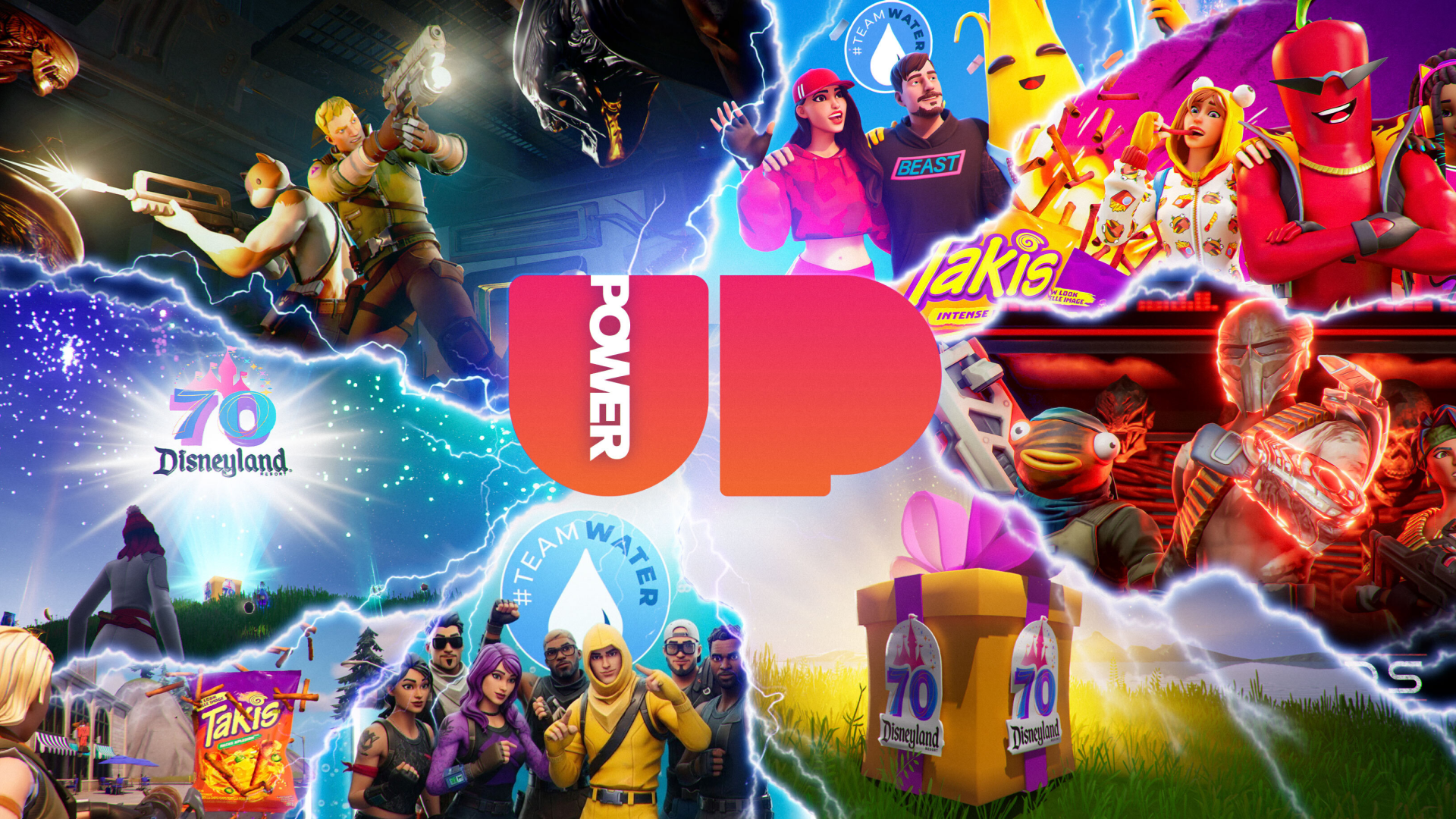
Rather than building one destination experience, PowerUP distributed a branded content and visual identity system across multiple experiences simultaneously. By partnering with 20+ of Fortnite's top-performing creator island owners, whose combined audiences spanned hundreds of millions of subscribers across gaming, entertainment, and youth culture, the campaign’s impact exceeded expectations and mobilized the gaming community behind #TeamWater.
Overcoming Platform Constraints
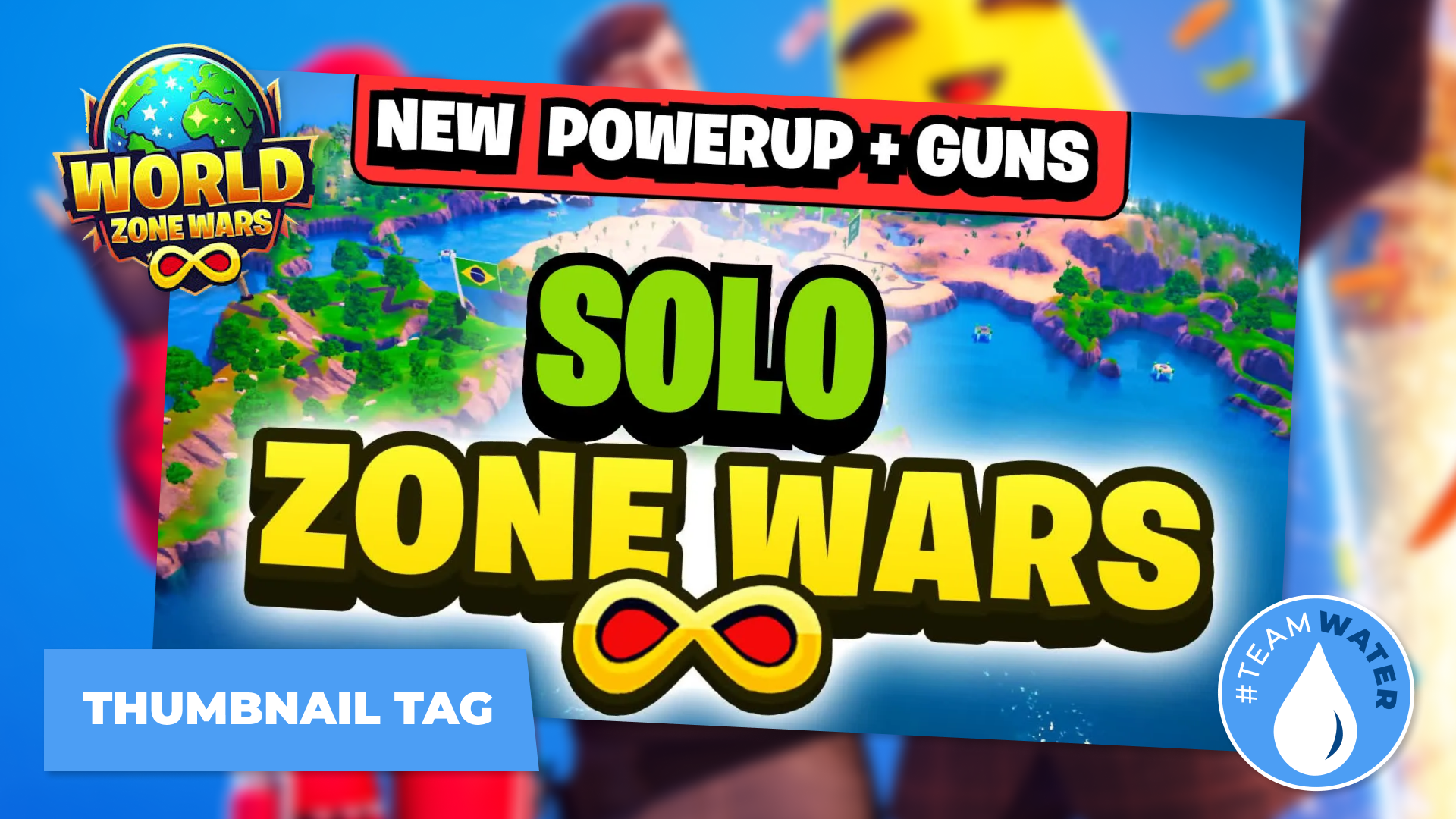
Fortnite prohibits external links and traditional calls-to-action inside experiences, ruling out conventional content formats like donation pages or embedded video. PowerUP redesigned the content architecture around gameplay, making participation, not clicks, the campaign’s primary call-to-action. Maintaining one consistent piece of branded storytelling across 20+ independently-styled creator maps within a compressed window required creating a modular content toolkit that allowed each creator to preserve their own visual identity while carrying the #TeamWater narrative intact.
The result was 31 days of branded content that never looked like an advertisement, because it was built from the same material as the entertainment surrounding it.
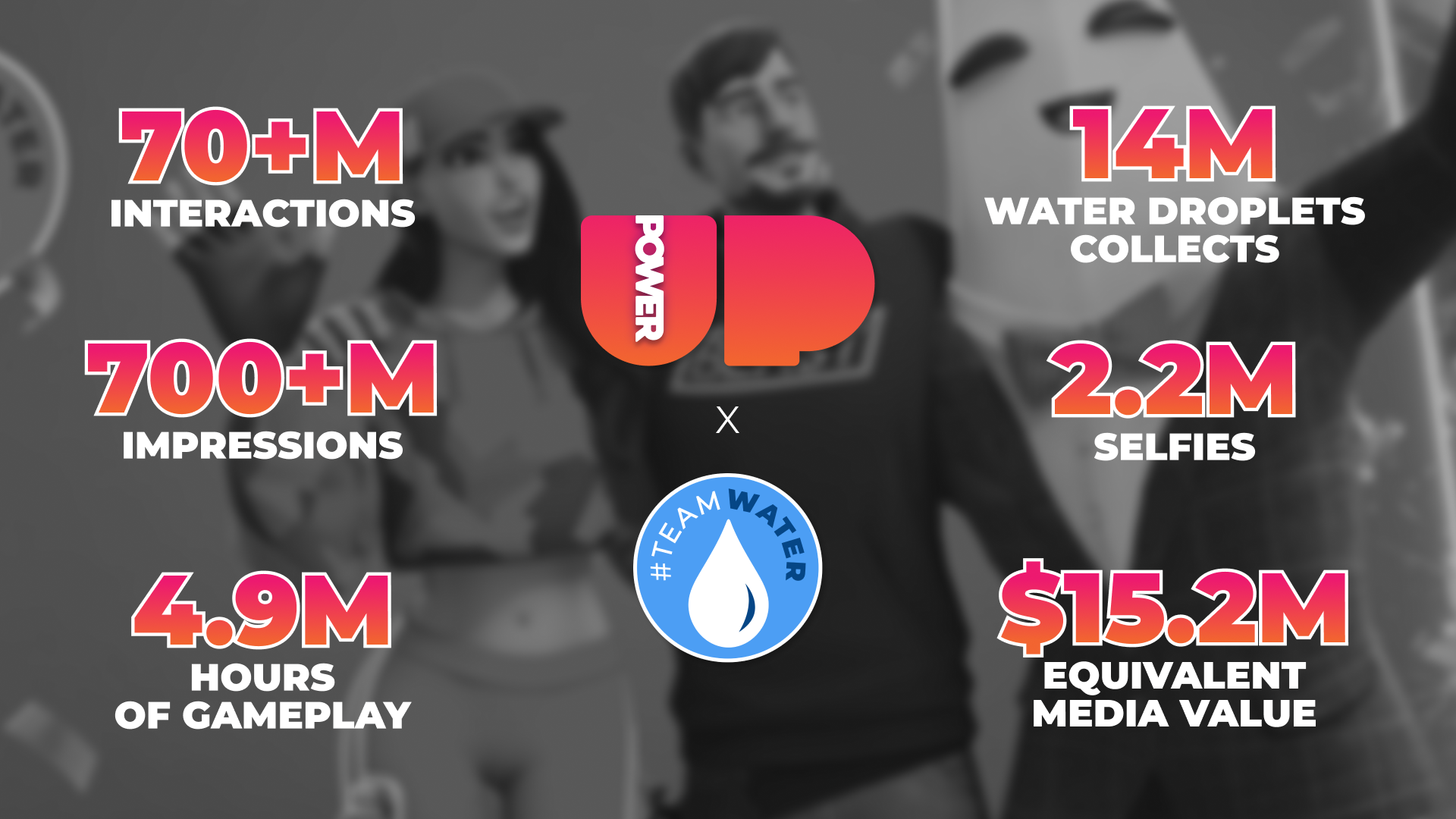
The #TeamWater Fortnite content activation exceeded every objective established at the outset. Across 31 days and 20+ maps, the branded content framework generated 70 million total interactions, 700 million impressions, and 4.9 million hours of gameplay centred on the global water crisis.
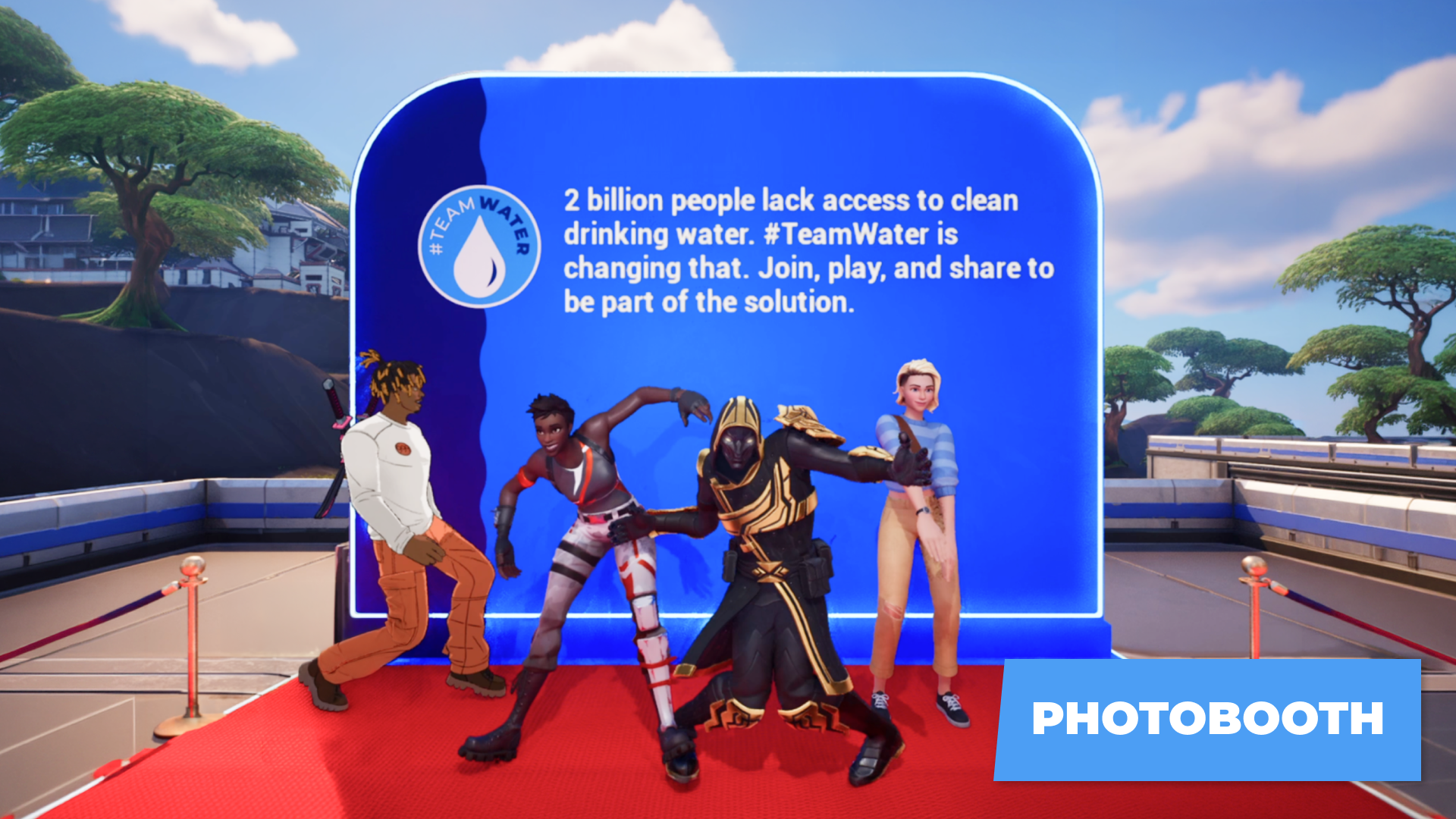
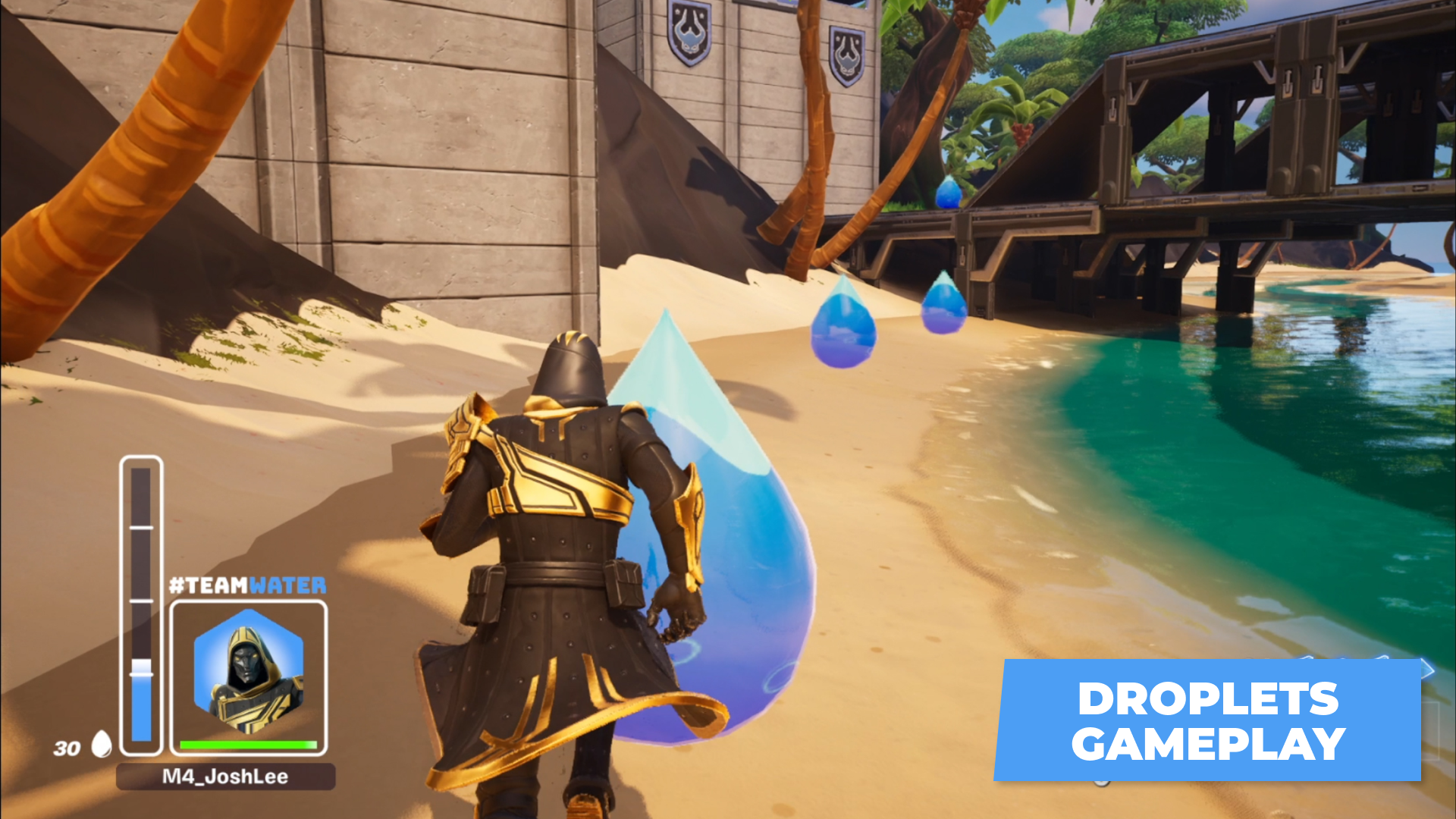
Beyond scale, the results demonstrated that players didn’t just experience the content, they carried it forward. The 14 million water droplets collected represented 14 million voluntary interactions with a narrative device designed to make the campaign's message tangible. Every collection reinforced the idea that water sustains life and every contribution matters. The 2.2 million #TeamWater Photobooth selfies provided even stronger evidence: millions of players chose to create and share their own piece of the campaign, extending its reach far beyond the game itself.
The branded content generated $15.2 million in equivalent media value, without Epic sponsorship, demonstrating that playable branded content can rival traditional storytelling formats in both reach and resonance. Rather than interrupting entertainment with a message, #TeamWater became the entertainment.
As part of the broader #TeamWater initiative, the branded content helped mobilize more than 10,000 creators and influencers across 144 countries and contributed to $41 million raised to bring clean water to approximately two million people worldwide. The campaign was recognized as PR Week's 2026 Global Influencer Campaign of the Year.
More importantly, it demonstrated that branded content can inspire participation, not just attention, by transforming players into active participants, creators and advocates for a global cause.