In Mexico, most violence against children happens in familiar places, at the hands of people they already know and trust. Museo Memoria y Tolerancia set out to move that fact from statistic to recognition — to make adults see it inside a room every one of them has been in.
Our objective was to position prevention as a public conversation — not to alarm parents or ask them to watch their children every second, but to change what adults understand protection to mean: learning to read the signals, to listen, and to believe.
We chose a children's birthday party because it is the most ordinary scene imaginable, shared across every income level and region in Mexico. It is also, unintentionally, where risk factors converge: a home full of trusted adults, normalized drinking, children whose silences disappear into the noise, and rituals that build exactly the atmosphere an abuser can use.
We set three goals: reach adults — parents, guardians and caregivers — far beyond the audience that already visits the museum; make the piece travel on its own, through sharing rather than spend alone; and hold viewers to the end, where the film points them toward organisations that work with children at risk.
All of this in a few seconds, and without aestheticizing harm or turning a child's suffering into spectacle.
We built the piece around a single idea: child abuse is closer than we think.
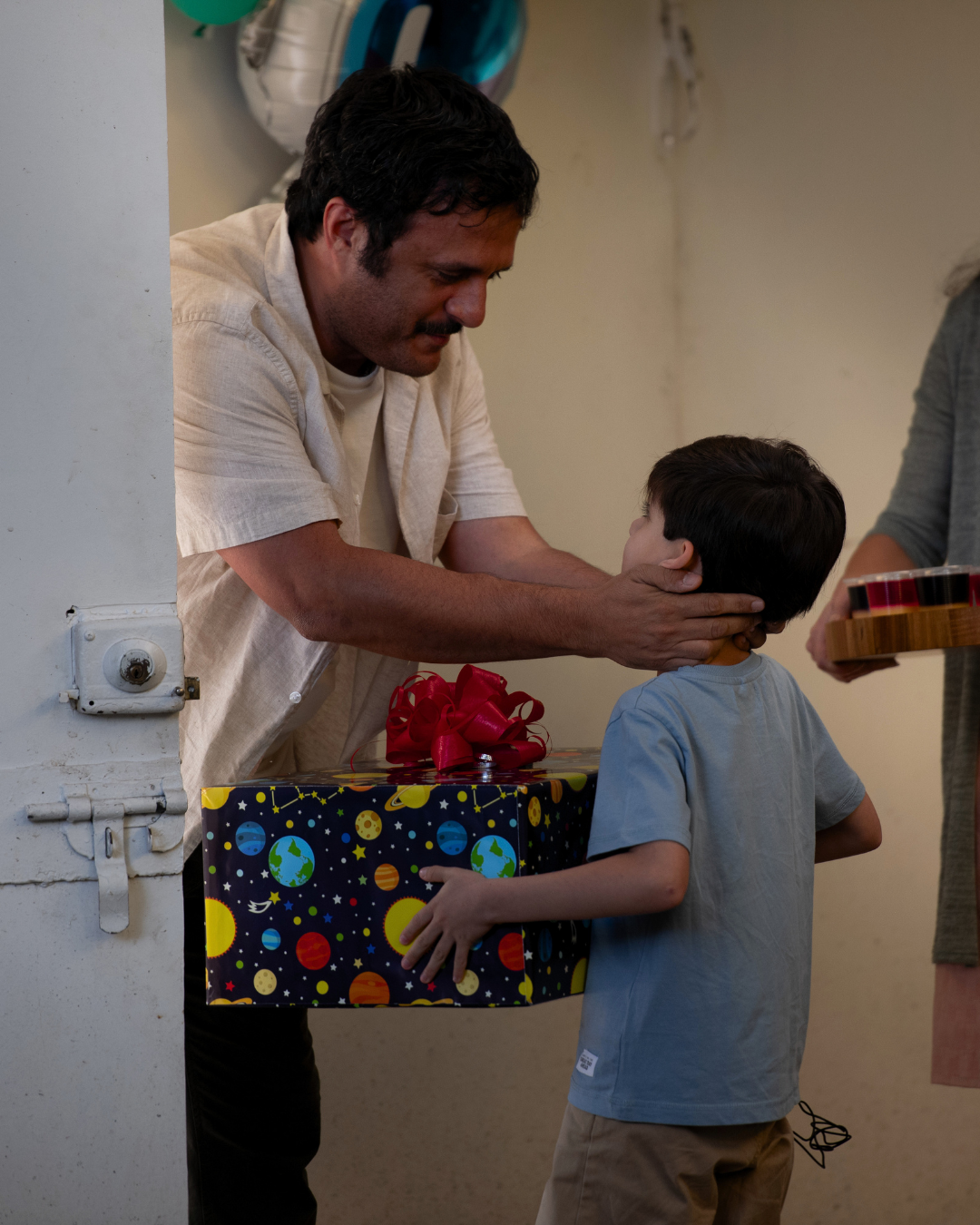
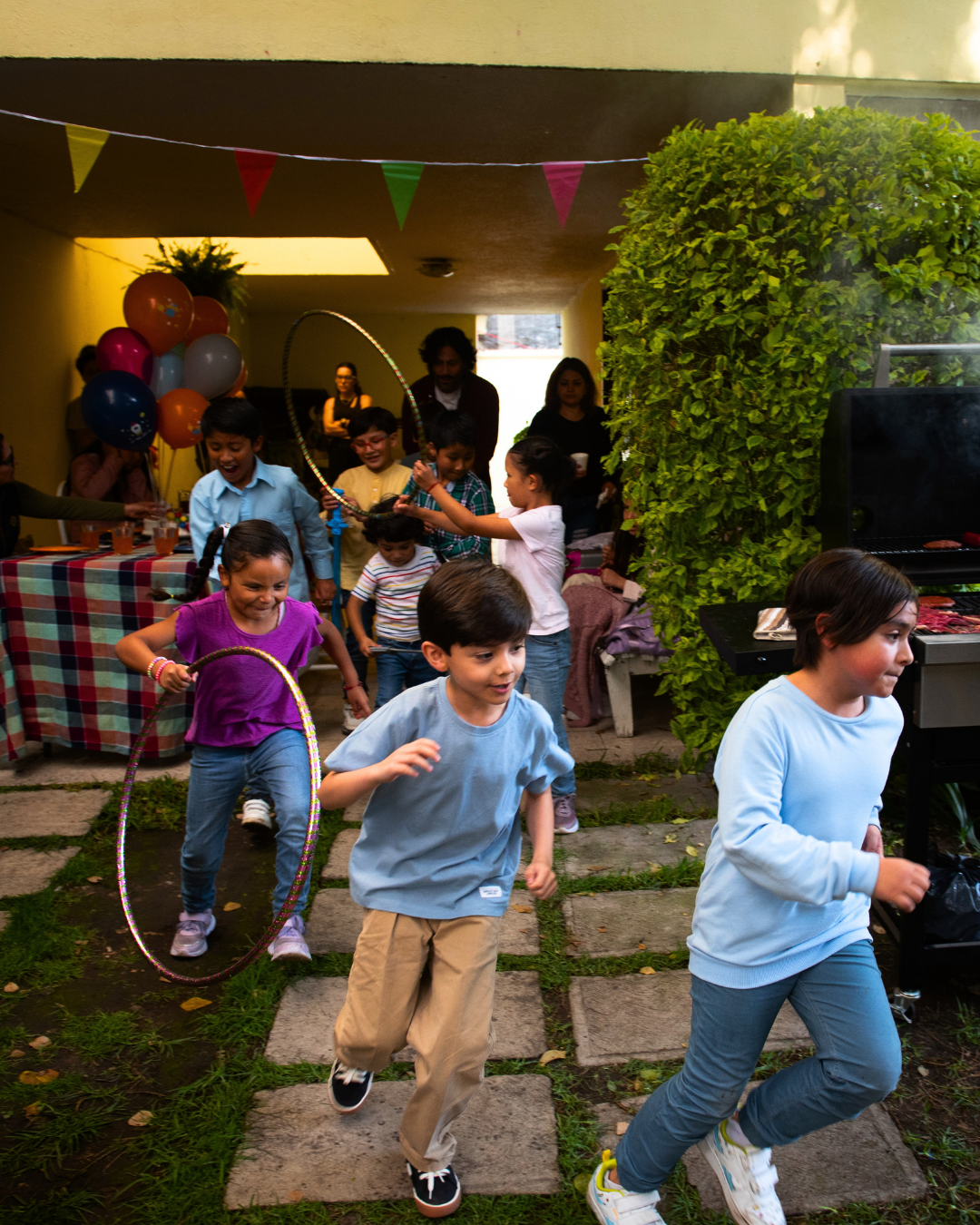
The film opens with a very common celebration for Mexican families: a child’s birthday party. Ana carries trays across a crowded garden. Her eight-year-old son, Pepe, waits for his piñata. Balloons pop, children shout, adults toast. Then Lalo—the uncle—arrives, and the boy’s face changes. He goes rigid. Ana, distracted and holding a tray, tells him not to be rude and to greet his uncle properly. Pepe obeys, but his face tells us something is wrong.
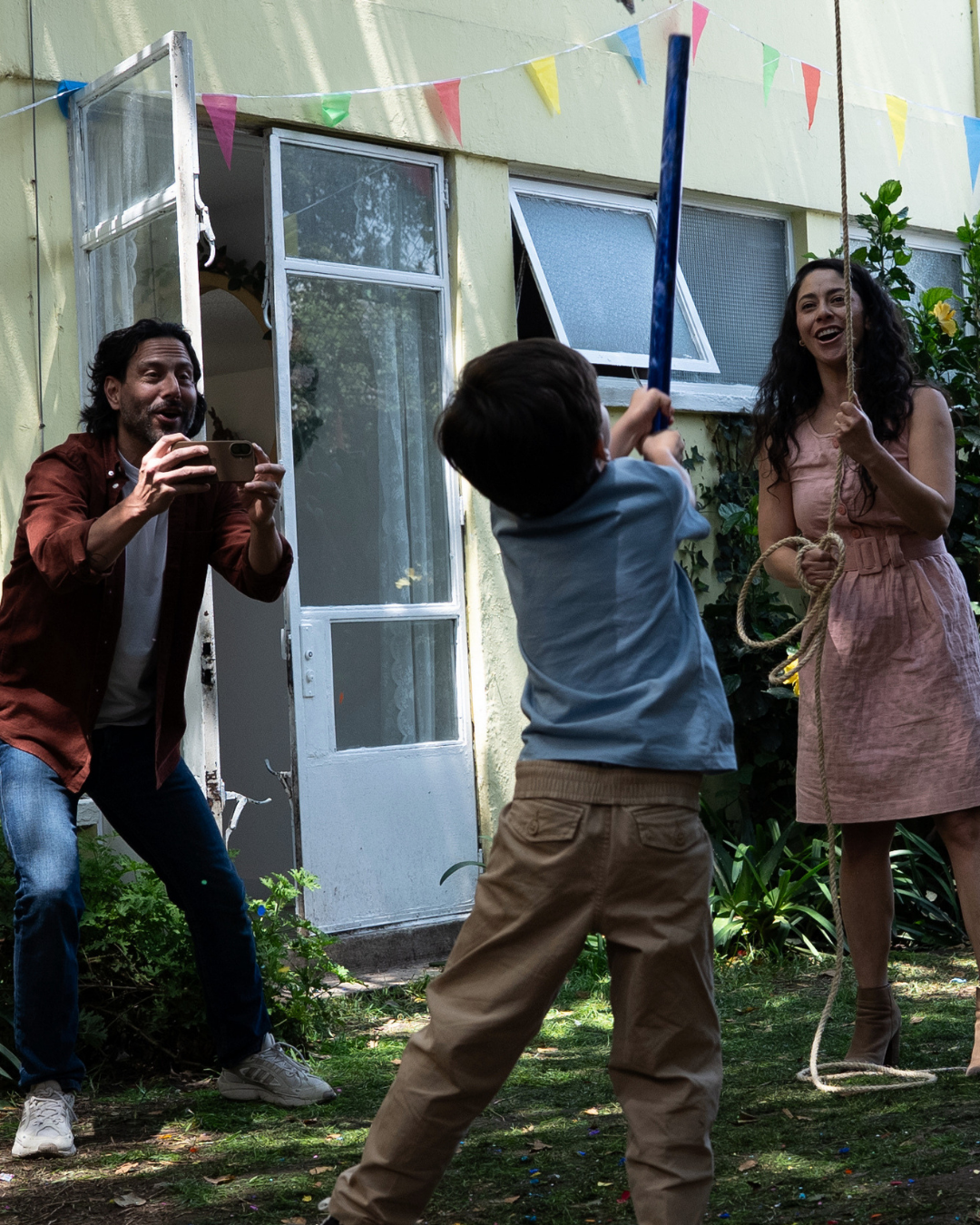
The party continues. Ana loses sight of her son during the piñata and looks for him. On the third strike, the noise falls away, and through a window Ana sees what had been in front of her the whole time: Lalo, the uncle, is harming Pepe, her son.
The piñata count became the film’s structure—three strikes, three chances to look—and the song became its clock, so the audience is singing along at the exact moment normality turns into horror. Nothing explicit is shown. The switch happens on the mother’s face as she realizes the worst.
The abuse is never depicted, only understood. The camera stays with the mother, and what she sees through the window is left for the audience to complete. We wanted adults to recognize the situation and realize how close the danger can be—in the people we trust.
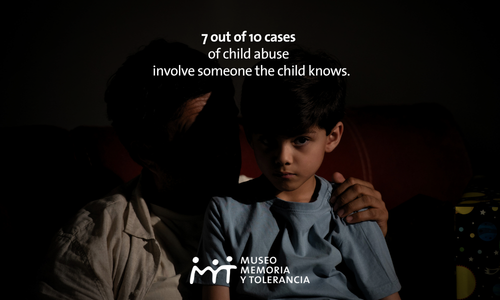
The film ends on the broken piñata, and one line: seven out of ten cases of child abuse involve someone close to the child. A QR code then connects viewers with organizations that assist children at risk. We did not want to leave anyone alarmed with nowhere to go.
Our hardest constraint was the subject itself. Platforms restrict content involving minors and abuse, while audiences tend to scroll past anything that feels like a lecture. We also did not want to sensationalize abuse or retraumatize children who have experienced it.
Our answer was to lead with warmth. Instead of showing abuse, we focused on the dangers children can face in ordinary, everyday situations—and, most importantly, at the hands of people they trust.
We had no media budget, so we set out to secure donated distribution—and every channel we ran on was donated because partners believed in the cause. Gebe Productions donated most of the short film’s production, while Promotora Social provided the funding needed to complete the project.
Cinépolis donated a one-minute spot on its screens for two weeks, allowing us to show the film across Mexico City and its metropolitan area from March 12 to 25, reaching roughly 70,000 people a day—the one context where an audience cannot simply scroll away. This represented screen time with a commercial value of MXN $60 million.
Meta and TikTok provided advertising credits, which we used from December through May. We adapted the film into several lengths, including a 20-second version designed to stop the scroll and longer cuts that allowed the story to unfold through its ending.
The museum paid nothing for media. Every channel on which the film ran was donated.
Meta and TikTok granted us advertising credits that carried the campaign from December 2025 through May 2026. Cinépolis gave the film 14 on its screens across Mexico City and its metropolitan area in March, reaching roughly 70,000 people a day—screen time with a commercial value of MXN $60 million.
On that donated footing, the film generated 31.4 million views and 246,952 interactions, including 13,065 shares, 10,220 saves, and 785 comments. Most importantly, 178,411 people watched the version they were served all the way through. For a film that turns in its final third and ends by directing viewers toward organizations working with children at risk, that number matters to us more than the total number of views.
The launch post became the museum’s most engaged piece of content ever, generating 56,539 interactions on Facebook and 38,910 on Instagram—far above our usual channel averages.
And the comments showed that people were not simply watching; they were reflecting on prevention. One viewer called it “a painful reality that we need to see in order to prevent it,” adding that change requires not only protecting children, but changing adult behaviour. Others thanked the museum “for opening this space for awareness” and for helping people “open their eyes.”
We consider it a success because the film did more than circulate. It changed what people were able to see—and, hopefully, what they will be able to recognize and prevent.