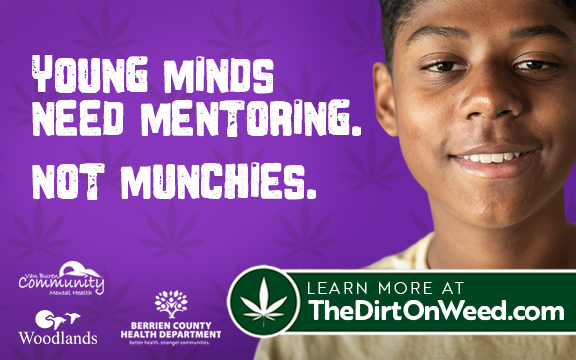
The Dirt on Weed campaign was designed to address a growing public health need across Berrien, Cass, and Van Buren counties: ensuring residents have clear, credible information to make safer decisions about marijuana use. Rather than relying on fear-based or stigmatizing messages, the campaign centered on prevention, harm reduction, and practical education—giving families information they could understand, trust, and act on.
For the 2026 campaign, our objectives were both mission-driven and measurable. We aimed to:
Ultimately, the campaign sought to make marijuana education a more accessible part of community health: expanding awareness, encouraging safer behaviors, and equipping residents with practical information to protect themselves and their families.
To bring The Dirt on Weed to life, our team approached marijuana education as a public health challenge requiring more than a one-size-fits-all message. Marijuana use can create different risks at different life stages, so the campaign focused on three areas where timely education could help residents make safer choices: pregnancy and infant development, adolescent brain development, and safe storage in homes where marijuana is present.
Our strategy was grounded in a simple principle: public health information is most effective when people can encounter and understand it in the context of their everyday lives. Instead of expecting residents to seek out marijuana education, we brought concise, actionable health messages directly to them.
We created a layered media presence across Berrien, Cass, and Van Buren counties using billboards, gas station video, connected TV, interstitial gaming ads, and digital display. Together, these channels allowed us to reach expecting and new parents, parents and caregivers of pre-teens and teens, working families, and adults who use marijuana across both urban and rural communities.
Each message addressed a specific opportunity for prevention or harm reduction. Pregnancy messaging increased awareness of potential risks to infant development. Teen-focused creative equipped parents and caregivers with information about marijuana and the developing brain. Safe-storage messaging encouraged adults to keep marijuana secured and inaccessible to children. Importantly, the campaign delivered this information without judgment or stigma, focusing instead on practical actions residents could take to support healthier outcomes.
Accessibility was also critical to the public health strategy. English- and Spanish-language rack cards were distributed through clinics, community centers, and partner locations, extending education beyond paid media and providing a tangible resource residents could take home and reference. Bilingual materials helped reduce language barriers and supported more equitable access to health information.
Geography presented another challenge. The three-county service area includes both population centers and rural communities where digital inventory and media consumption vary significantly. We addressed those differences by diversifying placements, negotiating added-value exposure, and optimizing delivery throughout the campaign to strengthen coverage.
What made The Dirt on Weed unique was its integration of public health education into everyday environments. By combining targeted health messages, broad community visibility, bilingual resources, and a judgment-free tone, the campaign transformed complex marijuana-related health considerations into accessible information residents could use to make safer decisions for themselves and their families.
In 2026 The Dirt on Weed campaign exceeded its major performance objectives, demonstrating the ability of accessible, prevention-focused communication to deliver critical marijuana health information at scale across Berrien, Cass, and Van Buren counties.
The campaign generated more than 2.3 million paid impressions, supplemented by 3.18 million added-value digital billboard impressions. Audience-specific goals were also met or surpassed: pregnancy and infant-development messaging reached tens of thousands of expecting and new parents; teen brain-development education reached parents and caregivers throughout the region; and safe-storage messaging generated more than 1.3 million billboard impressions alone.
Just as importantly, residents engaged with the health information rather than simply being exposed to it.
English- and Spanish-language rack cards distributed through clinics, community centers, and partner locations further expanded access to practical health information beyond digital channels.
Ultimately, success was measured by our ability to put credible, actionable marijuana education in front of residents at meaningful scale. By pairing exceptional reach and engagement with prevention, harm reduction, and accessible health education, The Dirt on Weed helped residents better understand risks, adopt safer practices, and make more informed decisions for themselves and their families.