In a retail landscape where health and commerce are too often treated as competing priorities, FairPrice Group (FPG) and the Health Promotion Board (HPB) came together to design a shopping environment that made lower-sodium choices easier to find, easier to act on, and easier to repeat.
Over 60% of Singapore's sodium intake comes from the salt, sauces and seasonings used during food preparation [1]. While over 70% agree their health would improve with reduced sodium consumption, only half are actively limiting their intake [2]. Shoppers in high-frequency categories like condiments and seasoning are largely on autopilot - reaching the familiar and rarely pausing to compare sodium levels. As a result, Singapore residents consume nearly twice the recommended daily sodium intake [3], fuelling a rise in hypertension and cardiovascular disease.
The disconnect was clear: health campaigns built intent upstream, while retail environments determined outcomes downstream. What shoppers lacked was not more information but an environment that made the healthier choice feel easy, familiar and accessible.
The campaign sought to achieve the following objectives:
[1] Health Promotion Board, triangulated with information from NielsenIQ and Euromonitor
[2] Blackbox Research, Lower-Sodium Post-Campaign Evaluation FY2024, 2024
[3] Health Promotion Board, National Nutrition Survey, 2022
[4] FairPrice Group, Lower-Sodium Retail Media Campaign Final Report, 2026. Non-Shoppers have not purchased HCS lower-sodium products in the last 12 months and when converted, are labelled New Shoppers. Lapsed HCS Shoppers have not purchased lower-sodium products in the last 3 months but have done so previously in the last 12 months.
If over 60% of Singapore's sodium intake comes from the salt, sauces and seasonings used during food preparation [1], then the condiment aisle of a supermarket is one of the most consequential health environments in the country.
The strategic question FPG and HPB asked was simple: what would it take to make that environment work for shoppers rather than against them? The answer was choice architecture.
Choice architecture shaped every channel and creative decision. The strategy was built on three principles.
First, lower-sodium options needed to be visible earlier in the journey, before habit could take over. Pre-shopping touchpoints in the FairPrice app surfaced relevant options during the consideration phase, when shoppers were still open to new choices.
Second, every touchpoint had to feel helpful rather than prescriptive. Shoppers respond poorly to being told what to eat. They respond well to being shown something relevant, easy and worth trying.
Third, the initiative had to work with existing behaviour, not against it. The strategy embedded lower-sodium options into the habits shoppers already had (e.g. app browsing, aisle navigation, voucher redemption) so that healthier choices required no additional effort or intention.
The omnichannel approach was not about being present everywhere, but about being present at the right moments, with the right friction removed.
Pre-shopping touchpoints in the FairPrice app were designed to surface lower-sodium options during the consideration phase, before habit and familiarity could take over. In-store touchpoints were designed to guide attention at the point of choice, where the final decision is made. Personalised engagement, delivered through scan-at-entry vouchers calibrated to individual purchase history, bridged the two by connecting digital intent with physical action in a way that felt timely and relevant.
Each channel reinforced the others. The cumulative effect was a shopping environment where lower-sodium choices were consistently easier to find, easier to act on, and easier to repeat.
Execution
The collaboration rolled out across FPG’s ecosystem, ensuring sustained engagement. Choice architecture principles guided how each channel was deployed, not as isolated media placements, but as a sequenced system of nudges designed to reduce friction at every stage of the shopper journey.
1. Pre-shopping and In-App Discovery
HCS lower-sodium options were surfaced within the FairPrice app through:
2. In-Store
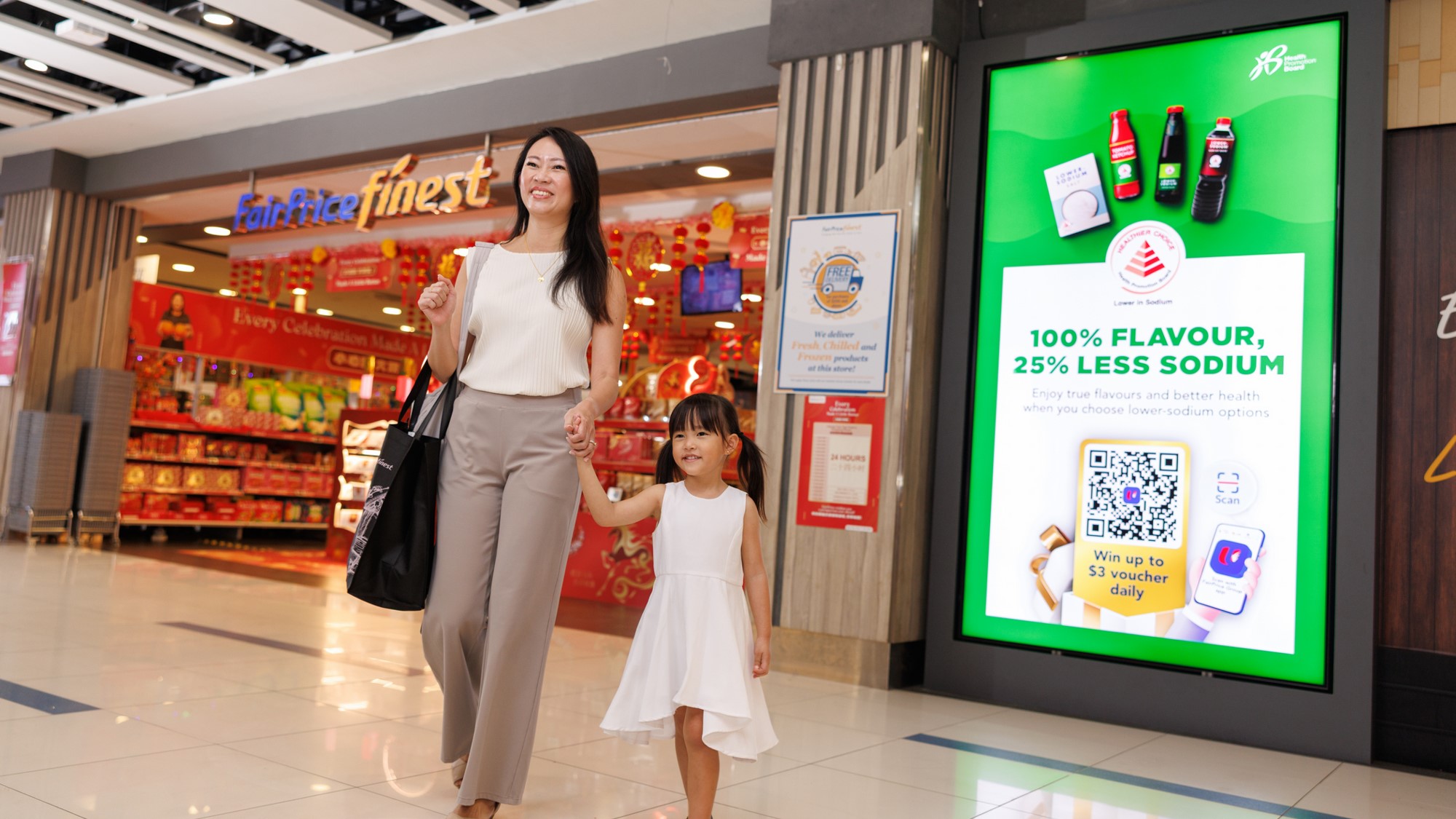
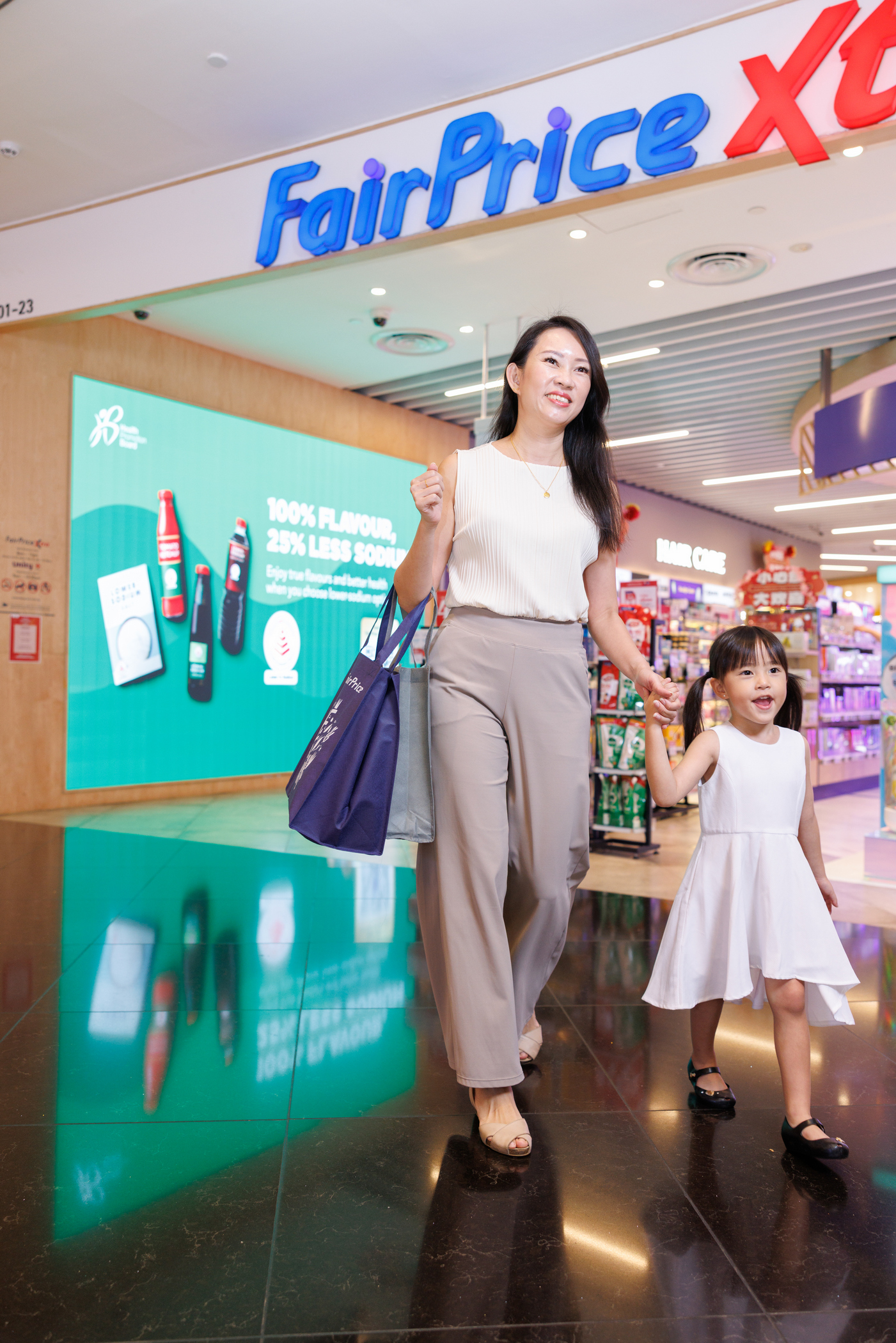
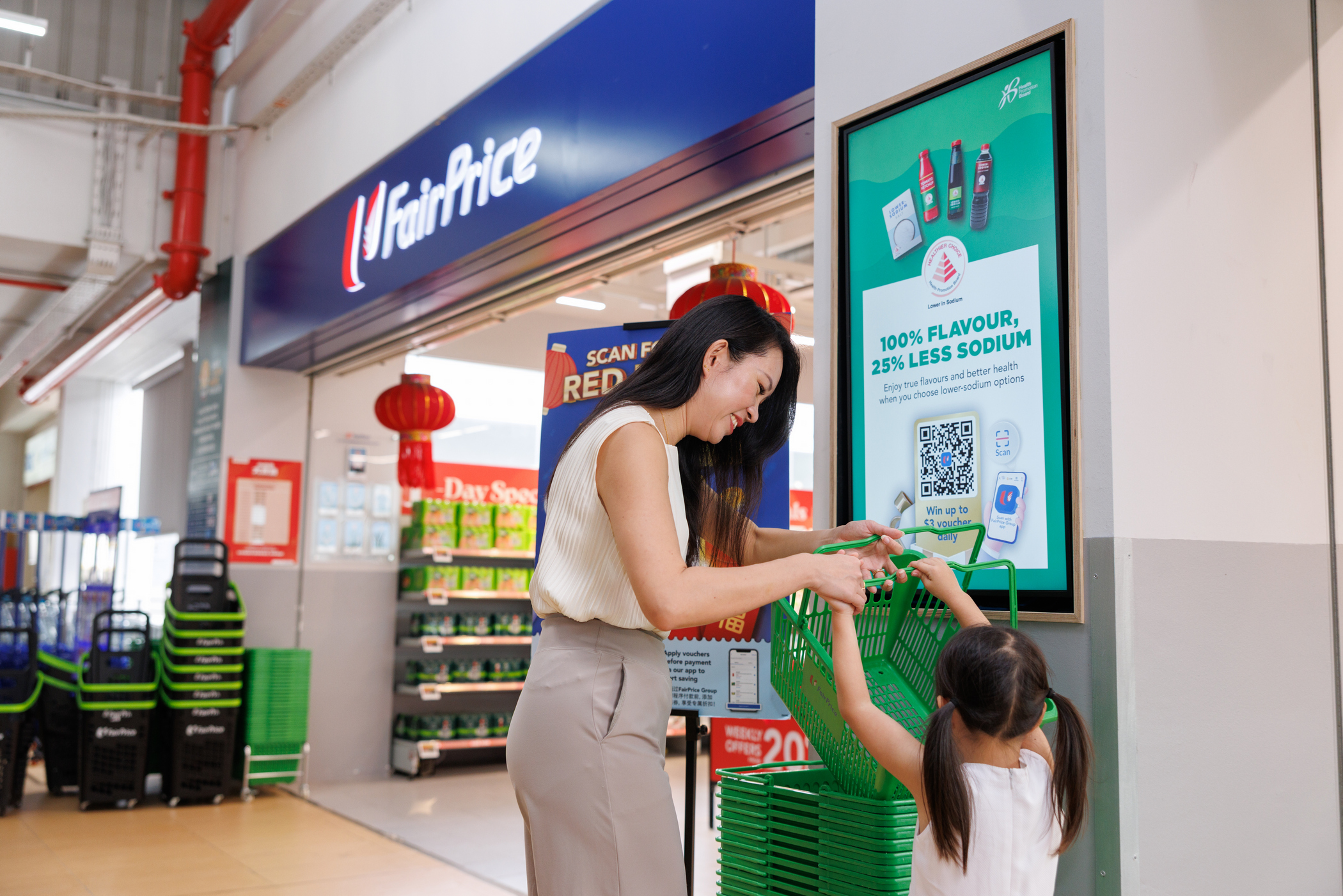
The partnership came to life through multiple, complementary formats:
3. Personalised Engagement and Reinforcement
Scan-at-entry functionality served vouchers of differentiated values based on purchase history, reinforcing lower-sodium choices at the start of each shopping trip.
All prompts were designed to feel helpful rather than promotional, maintaining trust while nudging action.
[1] Health Promotion Board, triangulated with information from NielsenIQ and Euromonitor
Across the four-month campaign period, the partnership delivered clear behavioural and commercial outcomes, signalling a shift in everyday shopping habits. Results are benchmarked against the same period the year prior, underscoring the campaign's ability to drive incremental impact beyond seasonal or baseline performance.
The results illustrate how choice architecture, applied systematically across an omnichannel retail environment, can influence behaviour at scale. By redesigning the shopping experience, the partnership helped normalise lower-sodium choices within routine grocery trips, translating awareness into sustained shifts in everyday consumption patterns.
The campaign also demonstrated the untapped potential of retail media as a public health instrument. FPG ADvantage's first-party data infrastructure enabled a level of personalisation and contextual precision that traditional health campaigns cannot achieve, reaching shoppers at the exact moments their decisions are made.
As the approach continues to evolve across more stores and formats, it offers a replicable blueprint for how retailers and public-sector partners can collaborate meaningfully to improve everyday health outcomes through relevance, trust, and the thoughtful design of choice environments.
[1] Blackbox Research, Lower-Sodium Post-Campaign Evaluation FY2024, 2024
[2] Singstat, Key Annual Indicators on Population, 2025
[3] FairPrice Group, Lower-Sodium Retail Media Campaign Final Report, 2026
[4] Non-HCS Shoppers have not purchased healthier choice lower-sodium products in the last 12 months
[5] Lapsed HCS Shoppers have not purchased lower-sodium products in the last 3 months but have done so previously in the last 12 months