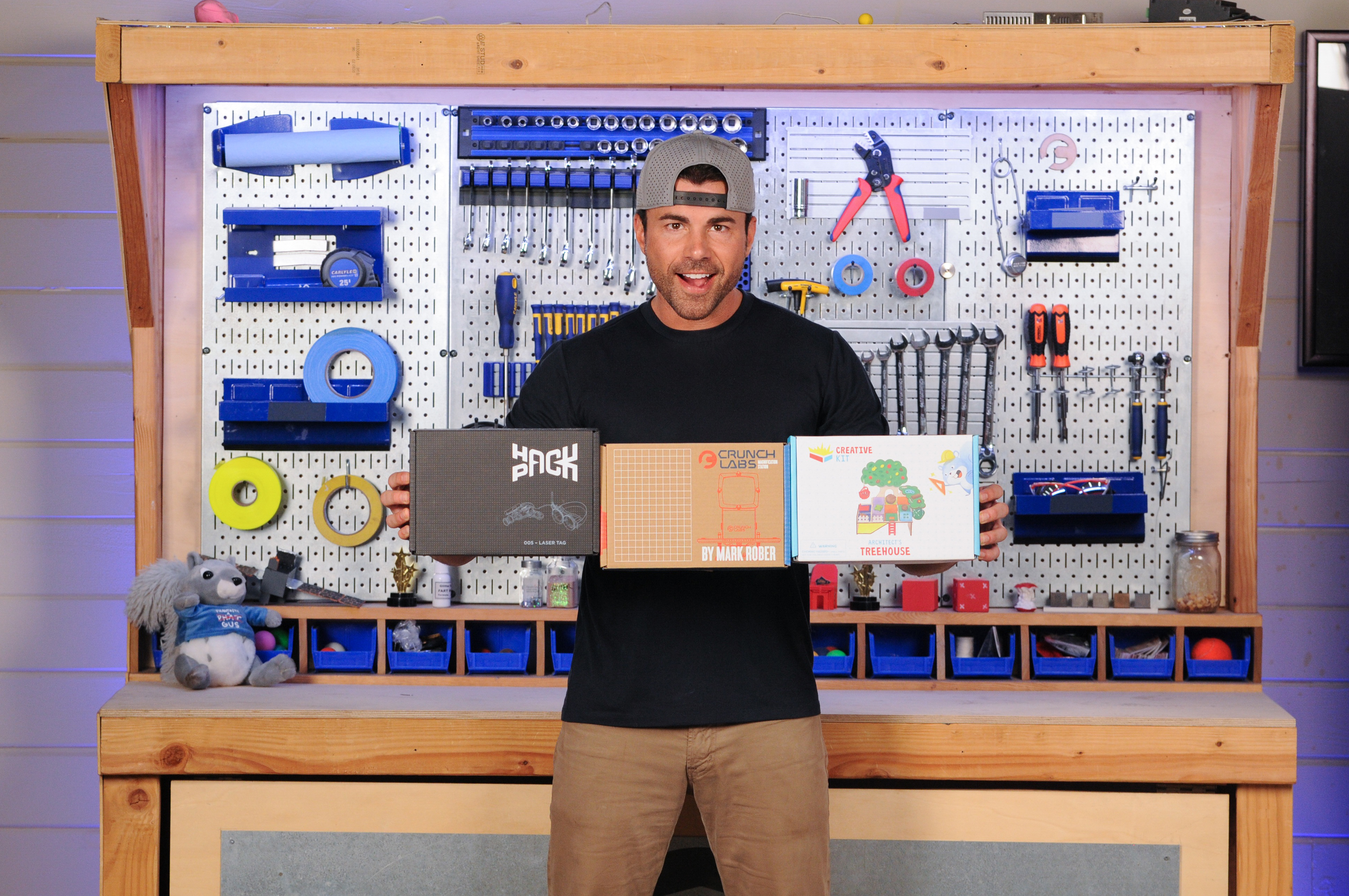
The idea driving CrunchLabs is to challenge the perception that STEM education has to feel like traditional schoolwork. CrunchLabs set out to show that when kids are given opportunities to build, experiment, read, problem-solve, and embrace failure, learning becomes an adventure—one that can spark curiosity and build creative confidence long after the school day ends.
Our goal was to bridge entertainment and education by meeting kids where they already are. Mark Rober has shown that kids will enthusiastically engage with science and engineering when it captures their attention and makes learning fun. CrunchLabs takes that excitement beyond the screen, turning it into opportunities for kids to build, experiment, create, and solve problems themselves. What began as hands-on experiences at home has expanded into the classroom through Class CrunchLabs, giving more kids access to the same curiosity-driven approach to learning.
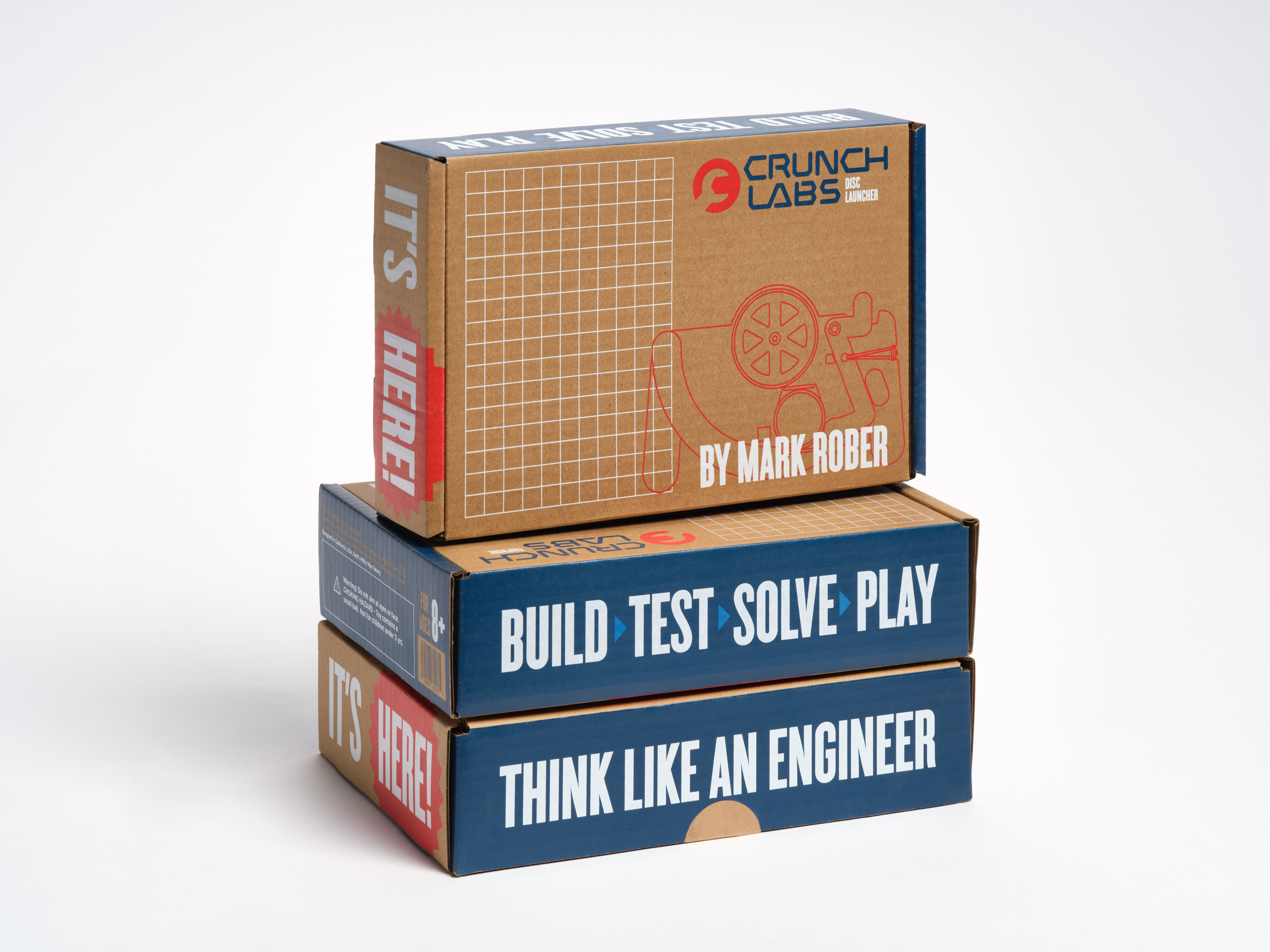
We brought the CrunchLabs story to life with the product that established the brand: Build Box. The monthly hands-on engineering experience extends Mark Rober’s ability to make science and engineering exciting, giving kids the opportunity to transition from watching Mark solve problems to building, testing, and trying out the challenges themselves.
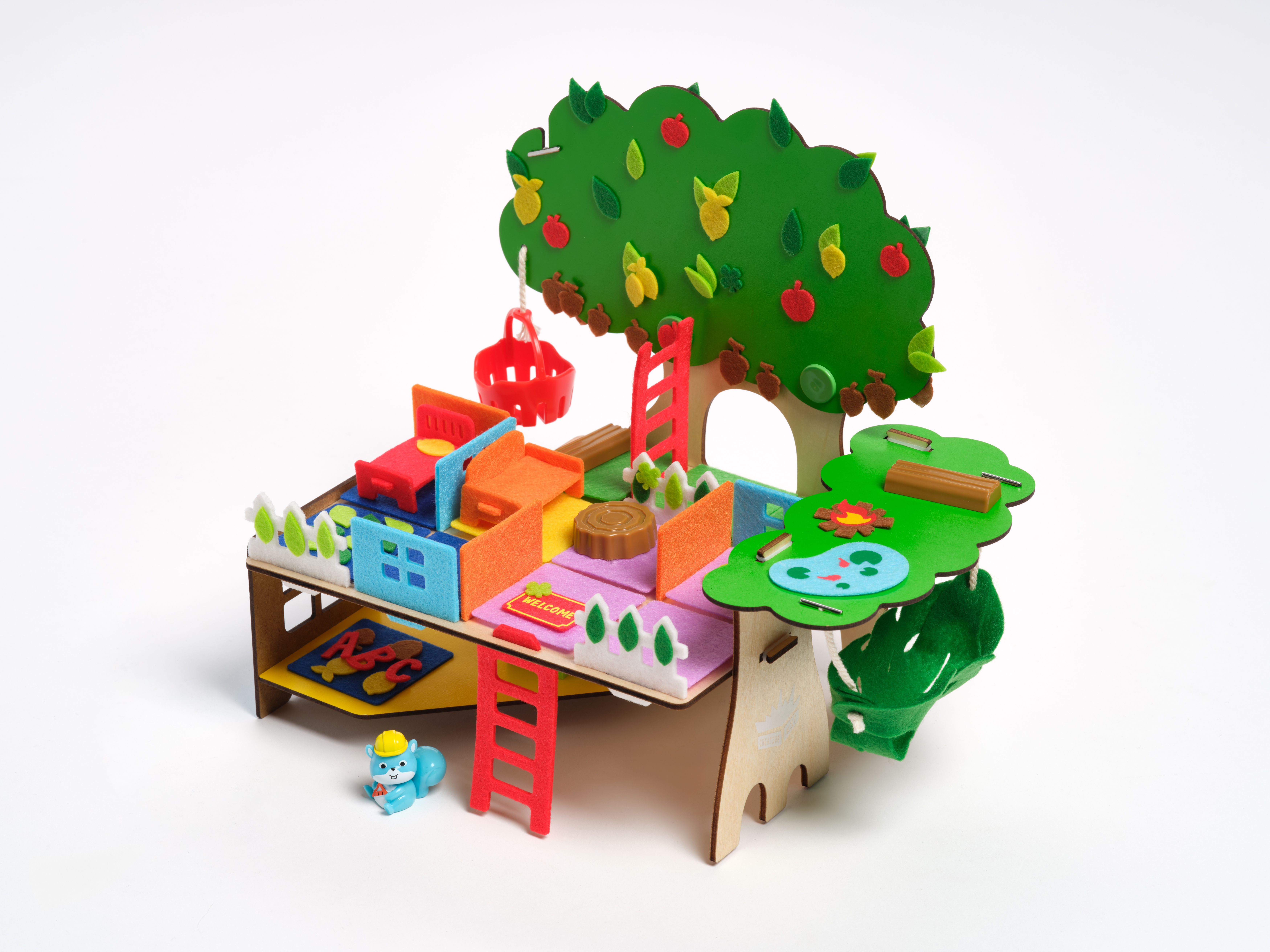
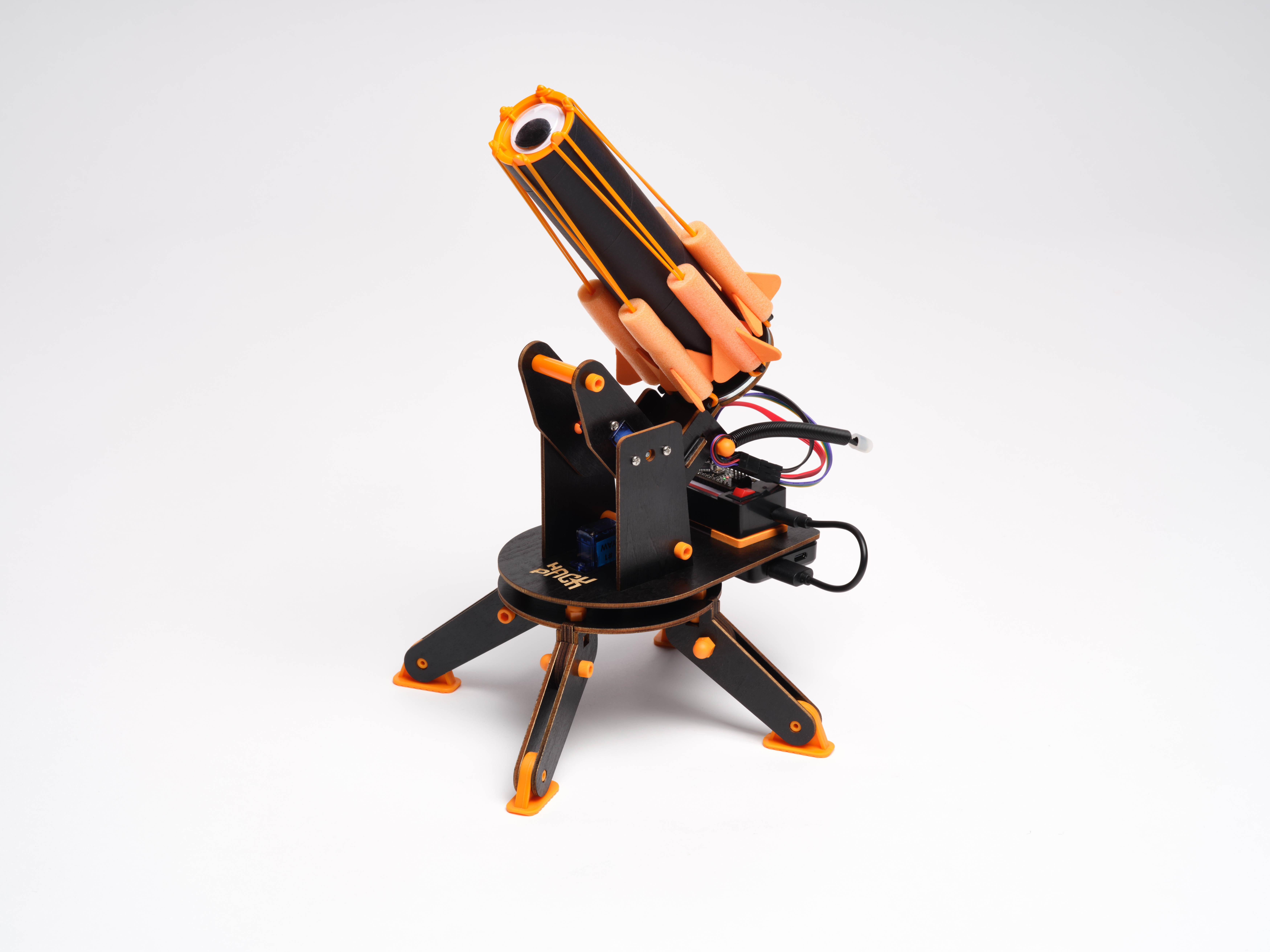
From there, CrunchLabs expanded the ways kids could engage with STEM. Hack Pack introduced hands-on robotics and coding, empowering kids to modify their builds and make them their own. Creative Kit opened the door to younger kids and those drawn to creativity before they see themselves as “engineering kids,” with open-ended builds designed around experimentation, iteration, and discovery. Mysteries brought the same approach to literacy, pairing adventure stories with hands-on builds that bring the science on the page to life. While each experience offers a different entry point, they all connect to the same core idea: capture kids’ attention through engaging content, then give them the tools to experience what they’ve watched, read, or imagined for themselves.
That idea shaped a broader narrative around a simple belief: kids are naturally curious, and the best way to keep them learning is to give that curiosity somewhere to go. We connected CrunchLabs to timely conversations around summer learning loss, screen time, literacy, and STEM education, showing how learning can feel more like play. Camp CrunchLabs, a 12-week virtual summer camp featuring 12 subscription boxes, gave kids a way to spend their summer building and creating rather than losing momentum to passive scrolling. The Mysteries book series offered another way to strengthen literacy while keeping kids engaged through storytelling, problem-solving, and hands-on discovery.
A key challenge CrunchLabs faced while developing and promoting these products was the perception that STEM is only for kids who already see themselves as “math and science kids.” Engineering is about creativity, imagination, experimentation, problem-solving, and finding new ways to make things work. By expanding its products to include art, design, and storytelling, CrunchLabs aims to help more kids—particularly girls who have historically been underrepresented in STEM—see a place for themselves.
Access was another challenge. Hands-on STEM learning shouldn’t depend on a family’s income or a school’s resources. That belief led to Class CrunchLabs, a free, standards-aligned curriculum that brings CrunchLabs’ curiosity-driven approach to science and engineering into classrooms and homes. By removing cost as a barrier, Class CrunchLabs became a powerful proof point for the brand’s mission to make quality STEM learning more accessible.
CrunchLabs also expanded its reach beyond the subscription model through strategic partnerships that help get educational activities into the hands of more kids, more easily. Through its recent Moose Toys line launch–which brings CrunchLabs toys to major retailers like Amazon, Target, and Walmart—as well as a multi-year Scholastic partnership that brings books and activity kits to schools, retailers, and book fairs, CrunchLabs is bringing its signature approach to hands-on STEM learning and curiosity to a broader audience, helping spark curiosity, embrace failure, and build creative confidence among even more kids and families.
CrunchLabs’ strategy successfully repositioned the brand from a STEM subscription-box company to a leader in educational entertainment, now shipping to all 50 states and 44 countries internationally.
That momentum was reflected in strong media interest, with coverage across top-tier outlets including Good Housekeeping, Forbes, and The Toy Insider. The CrunchLabs Mysteries series proved a particularly effective hook for summer-learning coverage, giving media a fresh, screen-free angle beyond traditional toy roundups. Meanwhile, the Moose Toys partnership extended CrunchLabs’ mission into major retail channels, marking the brand’s first major expansion beyond its subscription model.
CrunchLabs has turned kids’ enthusiasm for science and engineering into active participation, creating more ways for them to build, experiment, create, read, code, and problem-solve. To date, CrunchLabs has shipped millions of boxes, reaching a wide audience of kids and families.
That impact now extends well beyond families purchasing CrunchLabs products. In less than six months, Class CrunchLabs has attracted teacher and homeschool-parent signups from all 50 states and 146 countries and has seen tens of thousands of downloads of the curriculum. Furthermore, CrunchLabs’ free social channels have experienced significant growth and engagement, reaching more than 3.4 million followers and generating 7.3 million social engagements and 407.9 million video views in 2025.
The growth in both media perception and market reach shows that STEM storytelling rooted in curiosity and play can compete for attention in the crowded family and lifestyle landscape—and, more importantly, inspire kids to actively engage with learning beyond the classroom.