Missouri ranks 40th in the nation for women's health and reproductive care, according to the Commonwealth Fund—a ranking shaped by widespread health misinformation, high maternal mortality, and contraceptive inequity. Cost is another major barrier: some methods cost thousands of dollars, being out of reach for many patients and straining clinics that serve the uninsured, leaving them unable to stock the full range of methods. Many patients travel hours to reach a clinic that may not offer same-day availability.
The Right Time (TRT) is a multi-pronged contraceptive access project that helps participating Missouri health centers offer all methods of same-day contraception at no cost. The communications campaign supports that effort by connecting people with trusted providers, building knowledge of contraceptive options, and helping Missourians navigate directly to health centers offering care.
To reach people wherever they sought information, The Right Time combined paid media, influencers, public education, earned media, digital tools, and community outreach into one coordinated statewide strategy. Every tactic pointed audiences toward trusted resources, including the Health Center Locator and Method Explorer, reinforcing one goal: make it easier for Missourians to find accurate information, locate participating providers, and access the birth control that's right for them.
Our challenge during the award period was no longer just building awareness—it was helping Missourians move from seeking information to accessing care. We built our strategy around one principle: every communication should remove a barrier between someone seeking contraception and the care they need.
This initiative is funded by Missouri Foundation for Health.
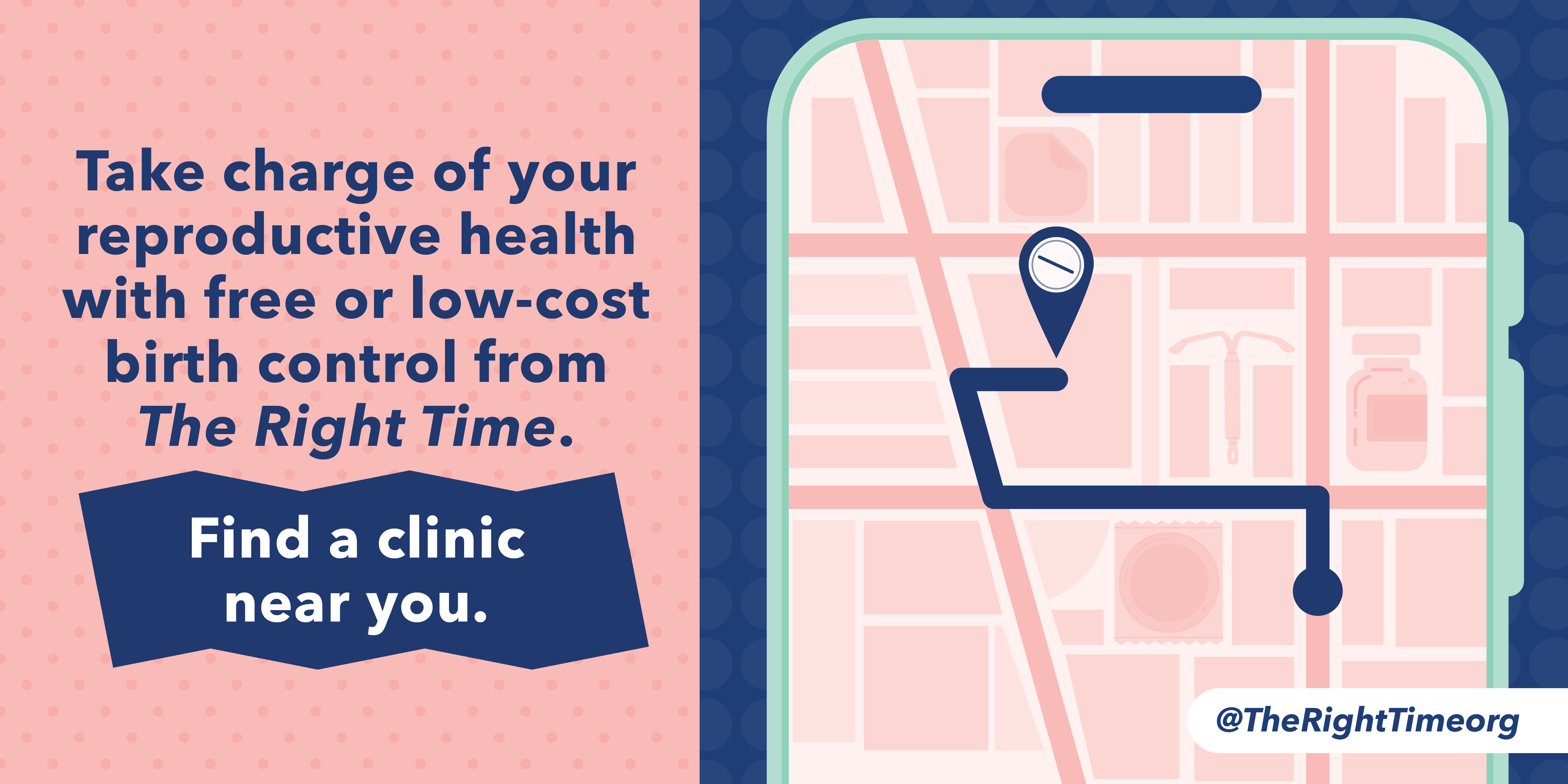
When TRT brought Digital Out-of-Home (DOOH) advertising to Missouri gas stations, convenience stores, rideshares, gyms, and bars, it marked the first time the initiative had used this approach, placed deliberately where our audience already spent their day, regardless of whether contraception was on their mind. Every placement included a QR code linking to TRT website, plus a text-based clinic locator for anyone without a smartphone able to load it. Because DOOH can't be clicked like a digital ad, success was measured by presence and recall rather than traffic, accepting a higher cost to reach people in high-traffic spaces like bars, and treating the small volume of direct response we did see as a signal of engagement quality, not scale.
We began by reducing friction in the digital experience. Analysis of search behavior revealed that people were looking for highly specific information, not simply "birth control," but questions about cost, methods, insurance, and where to access care. We redesigned our Google Search strategy around audience intent and strengthened the website with a Method Comparison Tool and Mini Health Center Finder, allowing visitors to compare contraceptive options and locate participating health centers without interrupting their experience.
As the campaign matured, we partnered with four lifestyle influencers, including Abigail Porter, to broaden representation of why people choose contraception. Abigail brought a national following, but her content spoke directly to Missourians who are child-free by choice, and to those who support that choice.
Separately, after participating health centers requested Spanish-language patient education materials, we translated our most-requested resources to support outreach within Missouri's Spanish-speaking communities. Health centers also put trusted information directly into exam rooms: 15,450 printed materials (brochures, one-pagers, and palm cards) with partner surveys sent to health centers, reporting 100% of surveyed health center staff reported patients were receptive to the materials.
Communications alone could not close this gap. Health centers in the partnership expanded same-day access and strengthened patient-centered contraceptive counseling in the same communities our campaign reached. Every pathway our campaign built, from a gas station screen to a text message, ended somewhere in that community prepared to receive the patient.
The campaign also reflected TRT's broader statewide efforts, including Missouri's newly signed annual supply provision, which will allow privately insured patients to receive a year's supply of birth control at one time beginning January 1, 2027 — a change that will be felt in every community this campaign reached.
We measured success through digital reach, quality of contraceptive information, and patients seen at TRT health centers offering full-range, same-day care.
TRT's Digital Out-of-Home (DOOH) campaign delivered 597,974 impressions across 2,445 screens in 410 Missouri communities, reaching people in everyday places with a direct path to care built into each placement. DOOH contributed to a 147% increase in direct website visits during the campaign. Rideshare placements achieved an $8.06 eCPM, well below typical in-vehicle rates. The Abigail Porter partnership generated 288,100 cross-platform views, 22,597 engagements, and a 16.3% engagement rate. This, and additional influencer sponsorships, drove 12,388 new website users, a 22% increase year over year.
Health Center Searches rose 97% (75,501 to 148,965); website users rose 25% (191,948 to 239,653); website visits grew 20% (226,570 to 271,102); and key method pages saw gains too: IUD up 23% (4,009 to 4,943), implant up 17% (3,429 to 4,017), pill up 25% (2,666 to 3,344), patch up 59% (1,849 to 2,949). These data indicate more users were using the TRT website to find care in their community and to learn about birth control methods.
Alongside these results, 95,613 unique Missourians have received care since the initiative began. An estimated 85% of IUD/implant patients got it same-day. TRT patients were far more likely to be uninsured and living below the poverty line than Missouri women overall, reflecting reach into communities facing the steepest barriers.
Accessible birth control changes lives, and for the Missourians who found care through this initiative, that access became real.