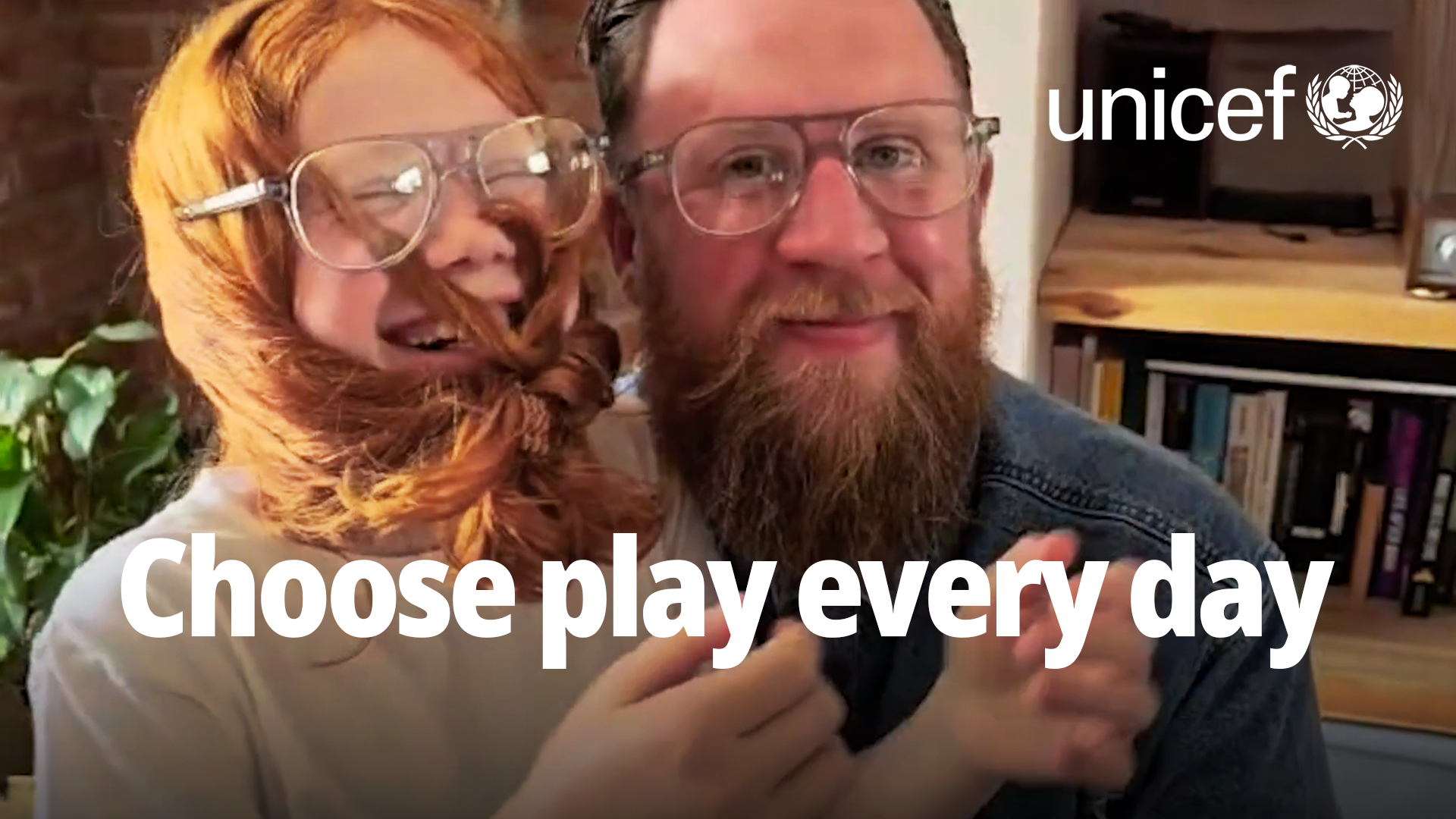
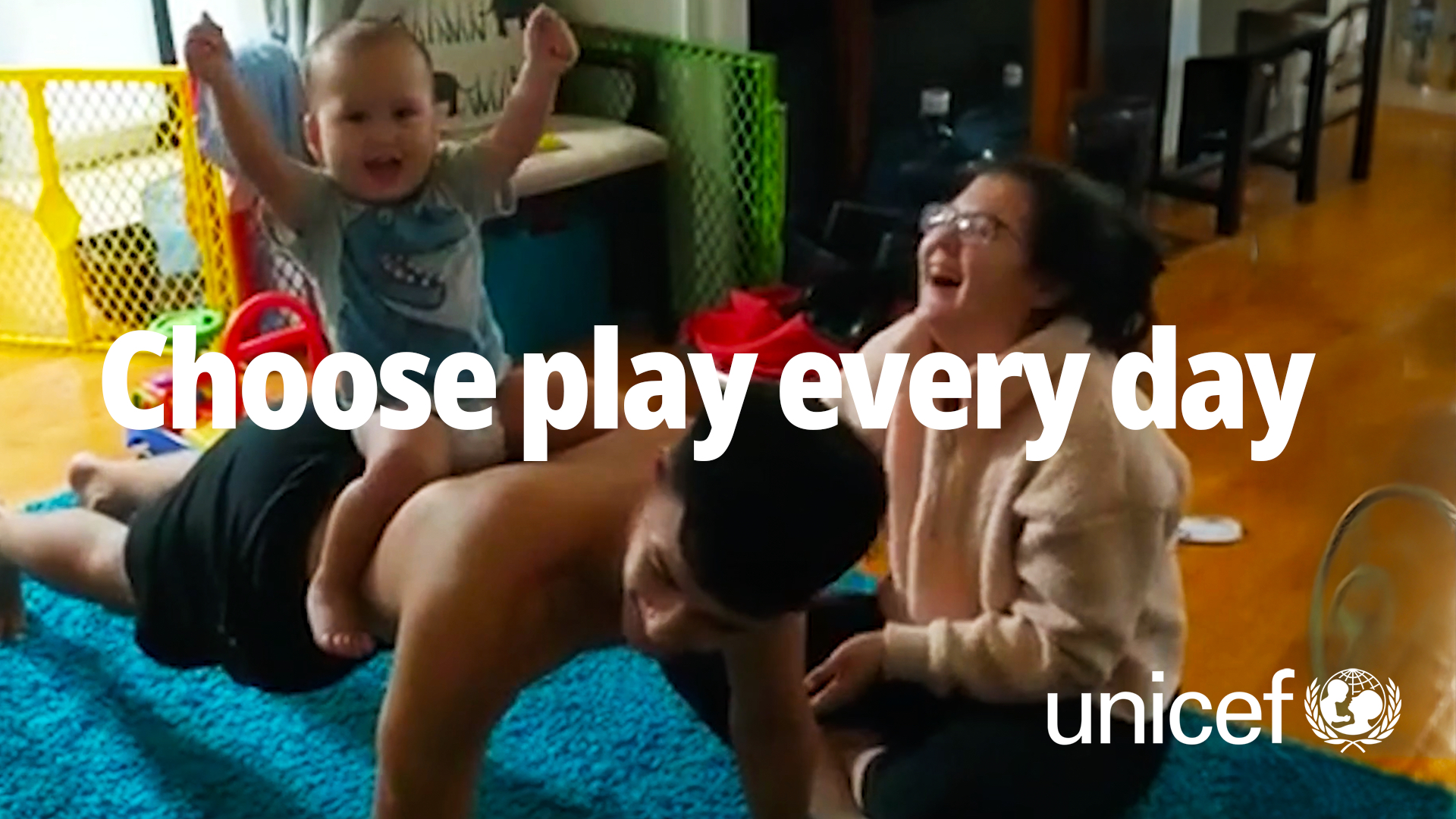
Even though play is fundamental to children’s holistic growth, parents play less with their children. This is due to time and support constraints, limited practical information and cultural myths about play. Research showed that 4 in 5 children wished they could play more with their parents. Many adults saw play as something children could do independently rather than as a meaningful shared activity. Parents underestimate the value of joining in the play activity with their children.
The campaign set out to:
Our objective was to shift parents from passive encouragement to active involvement; reframing shared play from something trivial or expendable into something emotionally meaningful and developmentally important.
The idea behind Choose Play Every Day was decisive.
Rather than lecture parents or make them feel guilty, we wanted to inspire them through recognition. The creative idea was to use real user-generated footage of parents and children playing together in ordinary, everyday moments, then elevate those moments with the drama and emotion of iconic sports commentary. A silly game at home could suddenly feel like a championship-winning moment — because to a child, that shared time can feel just as important.
Our strategy began with a behavioural challenge: parents were not necessarily against play. Many simply undervalued playing together. The strategic shift was therefore from passive encouragement to active involvement: make parents see shared play not as trivial downtime, but as something transformative for both child and caregiver.
Using the COM-B behaviour-change framework, we focused on motivation, capability and social norms, with UGC playing a crucial role in showing that everyday parents were already finding simple ways to play.
That led to our creative unlock: make ordinary family play feel like the biggest game in the world.
A key strategic decision was to embrace the truth that, for social content, unpolished can often be more powerful than polished. Highly produced parenting content can feel distant, staged or instructive. UGC carries the texture of real life: imperfect framing, spontaneous reactions, messy homes and genuine laughter. That authenticity made the behaviour we wanted to encourage feel attainable rather than aspirational. So instead of casting actors and recreating family play, we built the film from real footage parents had already captured themselves.
Clips were sourced across platforms including TikTok, YouTube, Vimeo and Catch+Release, with the final selection reflecting different abilities, ethnicities and socioeconomic backgrounds. No traditional shoot was required.
The creative transformation came in post-production. We paired these intimate home videos with iconic commentary from some of the world’s biggest sporting moments. Suddenly, a child rolling across a bed or a family competing in a homemade game carried the drama, anticipation and triumph of a championship final. The contrast was humorous and unexpected, but also emotionally revealing. To adults these may look like tiny moments; to children, they can feel enormous.
UGC was therefore not simply an aesthetic choice. It was the proof of the campaign’s message. Real families made the behaviour feel achievable, culturally recognisable and human rather than instructional. In a category often dominated by polished brand filmmaking, we intentionally let the imperfections of real life carry the story.
The biggest executional challenge was finding footage that was simultaneously spontaneous, emotionally strong, globally relatable and diverse enough to represent UNICEF’s worldwide audience. The team spent weeks mining family UGC for genuine moments of joy, while also working with broadcasters to source the right iconic commentary across diverse sports disciplines and painstakingly matching each line of audio to the physical action and emotional beat of the footage. We also sought commentaries in various languages to enhance the diversity of the video.
The final video was a viral 60seconds film with pure engaging humour from start to finish.
For distribution, the film was published on 11th June 2025 on global UNICEF and country/regional channels. The final film was adapted into English, French, Spanish and Arabic and formatted for multiple social platforms. Partners like LEGO foundation and International Cricket Association shared it on the social channels on the day.
The campaign succeeded because it did more than earn attention: it moved parents toward the behaviour we set out to inspire.
“Choose Play Every Day” generated 23 million YouTube views, 200 million social impressions, 150,000 engagements and a 90% video completion rate, demonstrating that audiences did not simply encounter the film, they were hooked by it. Traffic to UNICEF’s Parenting website also increased by 300%, reaching 4.1 million page views during the campaign period.
But the most important measure was whether our UGC-led storytelling changed how parents thought and felt about play.
An independent Ipsos uplift study conducted immediately after launch found that 84% of parents in the UK and 97% in India said the film encouraged them to spend more time playing with their children. In the UK, 92% agreed that playing together is essential for children’s development, while 91% agreed in India.
Organic audience responses brought those numbers to life. One parent admitted their first reaction was, “maybe I should roll the boys up in a giant towel at bath time…”
Another comment was “What we need is empathy and inspiration, and a reminder of the joy and not the chore. So thank you UNICEF for that reminder, and for giving me some ideas to try this weekend.”
For us, that is the real success: ordinary footage created by families became a global behaviour-change campaign. By showing authentic play rather than staging it, we made the desired behaviour feel familiar, achievable and worth celebrating.