An unfinished illustration stood in the middle of SisterSong's Let's Talk About Sex Conference. It wasn't waiting for an artist. It was waiting for the community.
Participants reflected on what bodily autonomy meant in their own lives, adding handwritten responses that would help shape the final artwork itself. In that moment, they weren't consuming a campaign, they were helping create one.
That is Autonomy Is My Joy.
These weren't isolated moments. They were all expressions of the same narrative strategy.
Created by The Center for Cultural Power, the campaign is rooted in the organization's Cultural Power Narrative System a framework that uses art, storytelling, and shared cultural experiences to create the cultural conditions where new ways of seeing ourselves and one another can take root. Rather than responding to individual headlines or policy debates, Autonomy Is My Joy became one expression of that larger strategy.
Real life doesn't happen one issue at a time. The communities most impacted by attacks on bodily autonomy are also navigating Black maternal health, trans liberation, immigrant justice, postpartum care, civic participation, and community care. Rather than separating these into individual campaigns, Autonomy Is My Joy reflected how people actually experience them in relationship to one another.
Through artist commissions, exhibitions, participatory installations, storytelling, and movement partnerships, the campaign invited communities not simply to witness a movement, but to recognize themselves inside it. Our goal wasn't simply awareness. It was to build cultural power that communities could contribute to, carry forward, and make their own.
Traditional campaigns often begin with messaging.
Autonomy Is My Joy began with narrative.
Guided by The Center for Cultural Power's Cultural Power Narrative System, we first identified the narratives we wanted communities to experience not simply the information we wanted them to remember. Every commission, exhibition, activation, video, and partnership was designed to reinforce shared narratives of dignity, belonging, collective care, and liberation, replacing fear-based advocacy with stories that invited people to imagine the future they were fighting for.
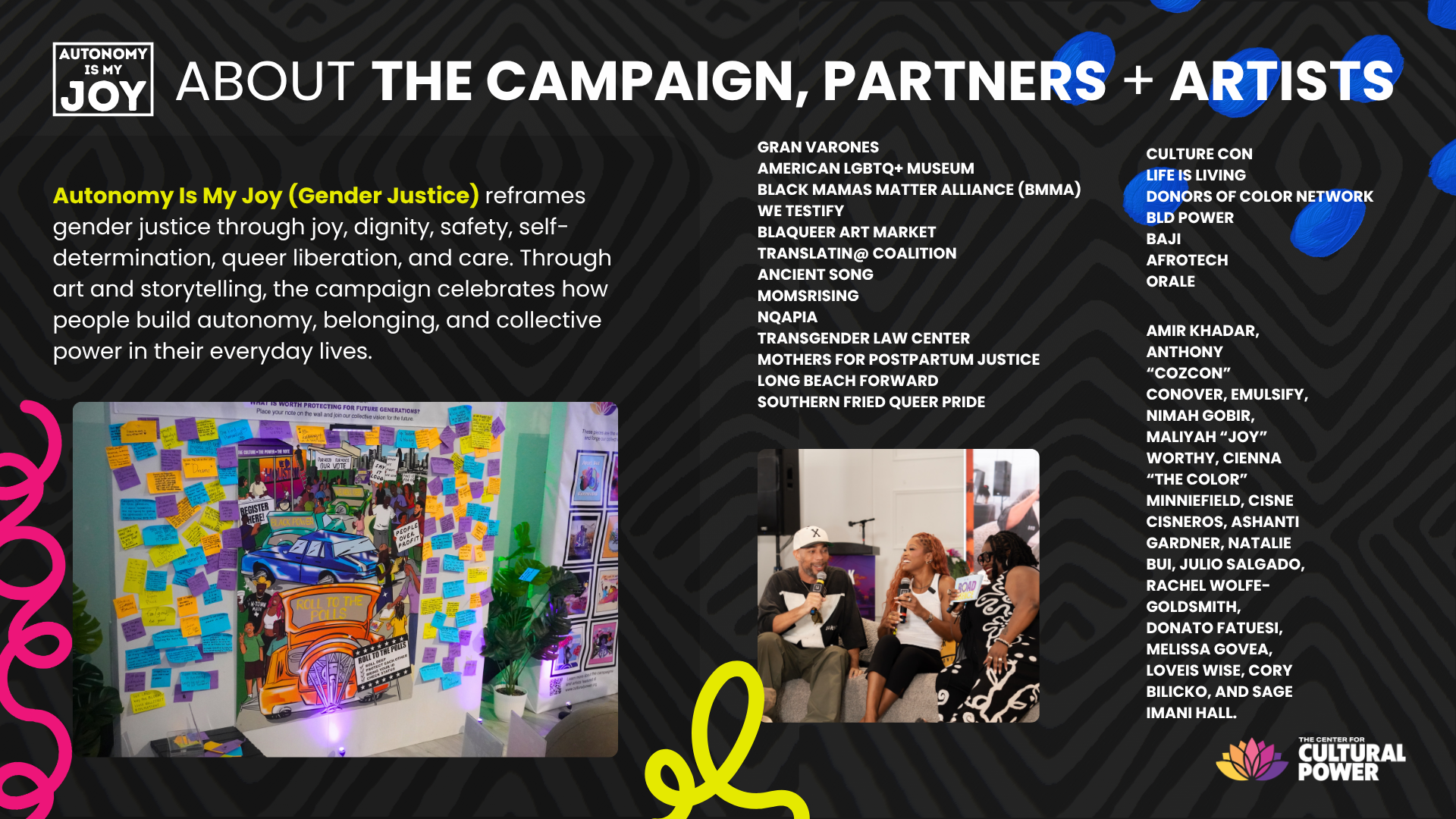
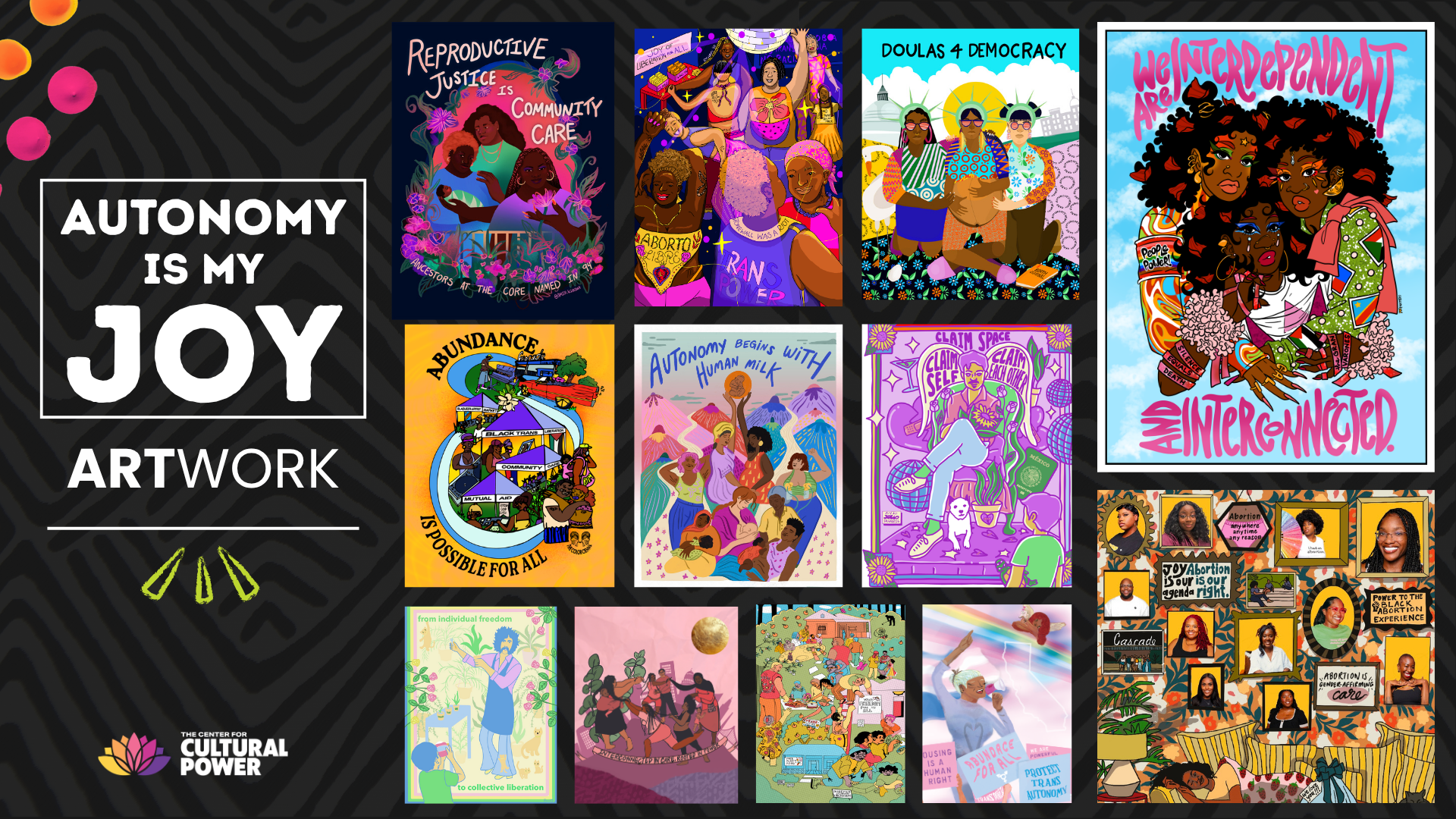
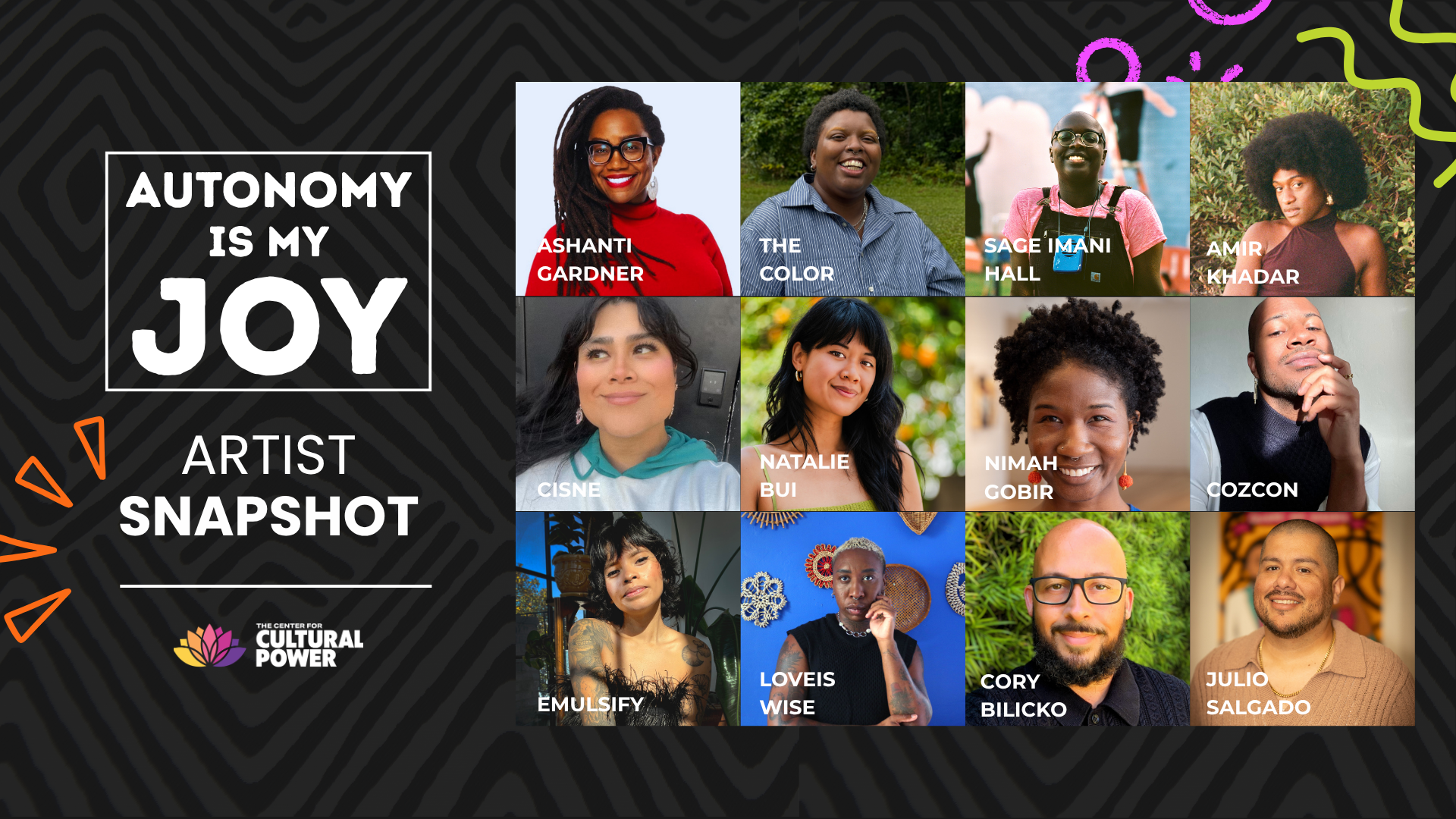
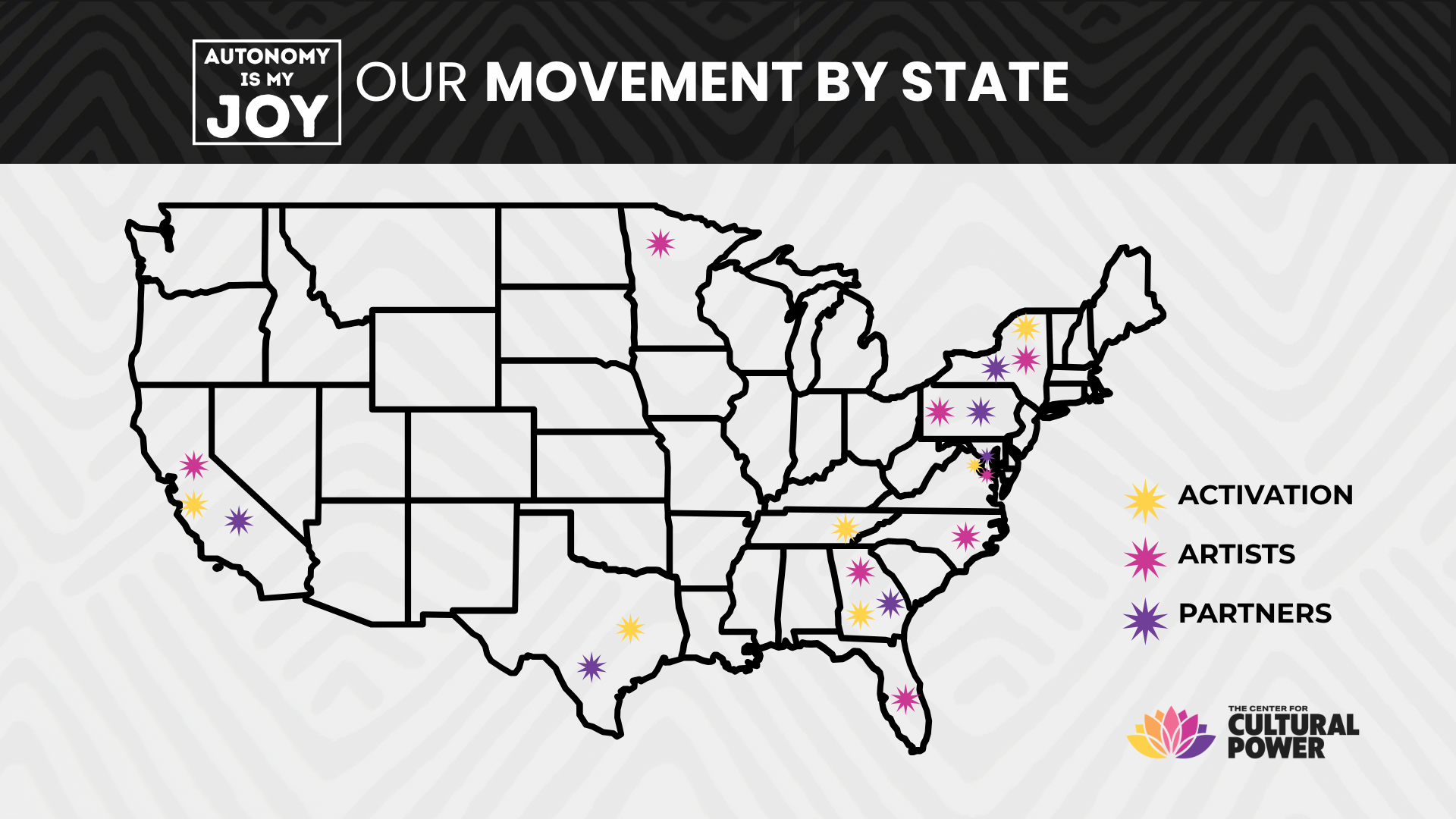
Artists were not hired to illustrate predetermined messages. Fifteen artists were commissioned as cultural storytellers and movement builders, working alongside movement organizations from the earliest stages of the creative process. Partners including Black Mamas Matter Alliance, Ancient Song, We Testify, Gran Varones, TransLatin@ Coalition, MomsRising, SisterSong, Long Beach Forward, Mothers for Postpartum Justice, the Transgender Law Center, Southern Fried Queer Pride, NQAPIA, and others helped shape creative direction, ensuring each commission reflected the lived experiences, histories, and aspirations of their communities.
Our greatest challenge was maintaining one cohesive narrative across dozens of artists, organizations, issues, and activations while honoring each partner's authentic voice. Rather than prescribing creative outputs, we developed shared creative briefs rooted in our Narrative System and invited artists and partners to interpret those ideas through their own creative practice and community expertise. The result was work that felt locally authentic while contributing to one larger movement story.
Instead of asking where artwork should be promoted, we asked where it should live.
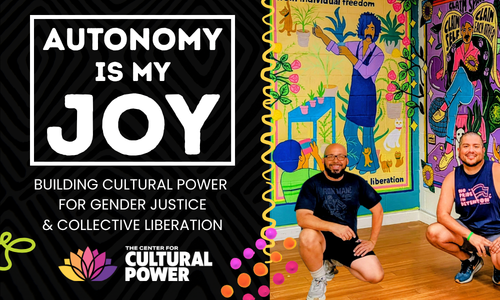
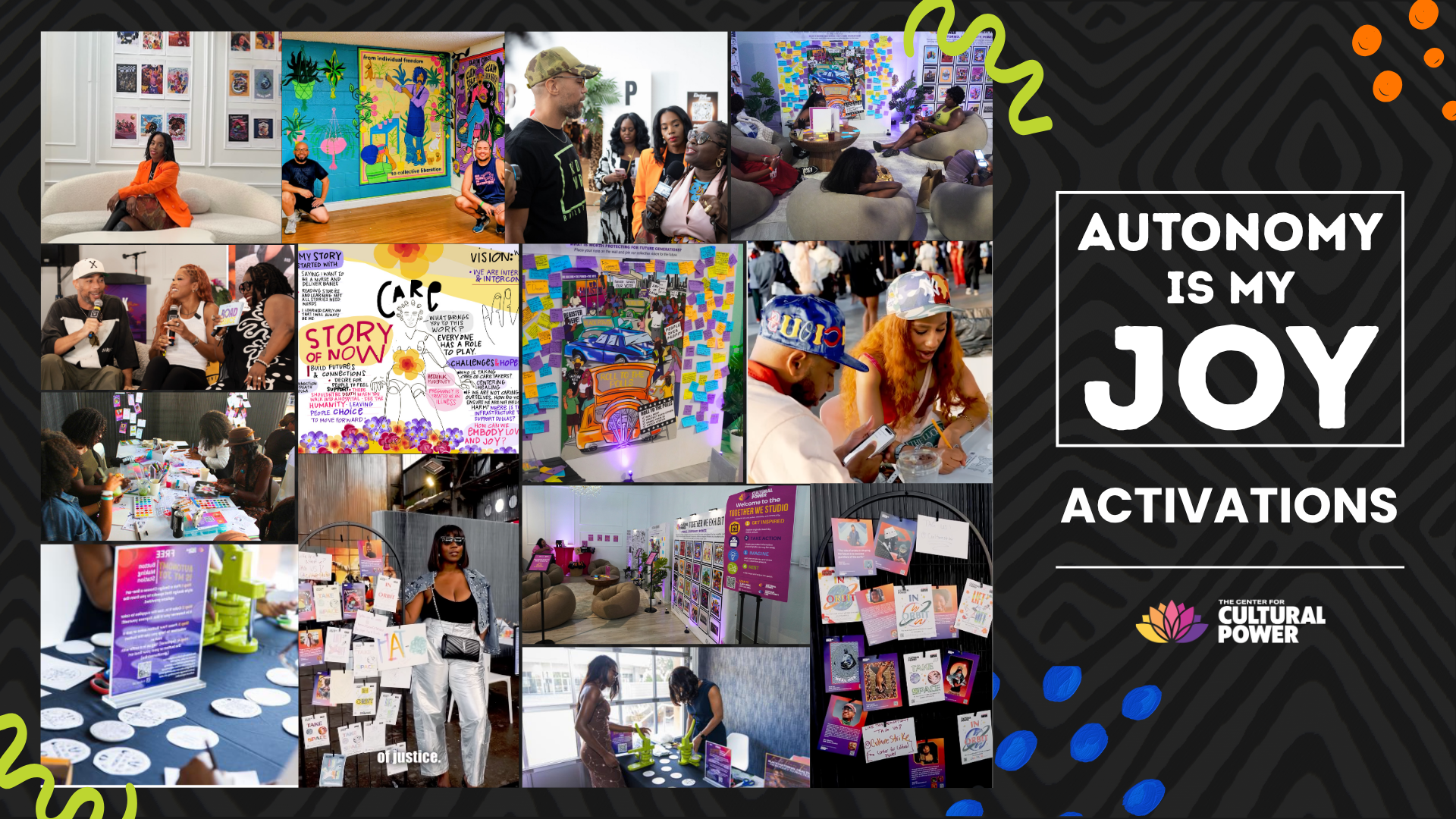
At CultureCon, visitors slowed down to color and reflect in the middle of one of the country's largest gatherings of Black and Brown creatives. During the Birthworker Storytelling Workshop, community stories became live illustrations. In Long Beach, commissioned artwork moved from social media onto gallery walls. At BLD PWR's Juneteenth celebration, prompt walls invited public reflection. At SisterSong, Kin Folkz's We Decide remained intentionally unfinished until community members helped shape its final form.
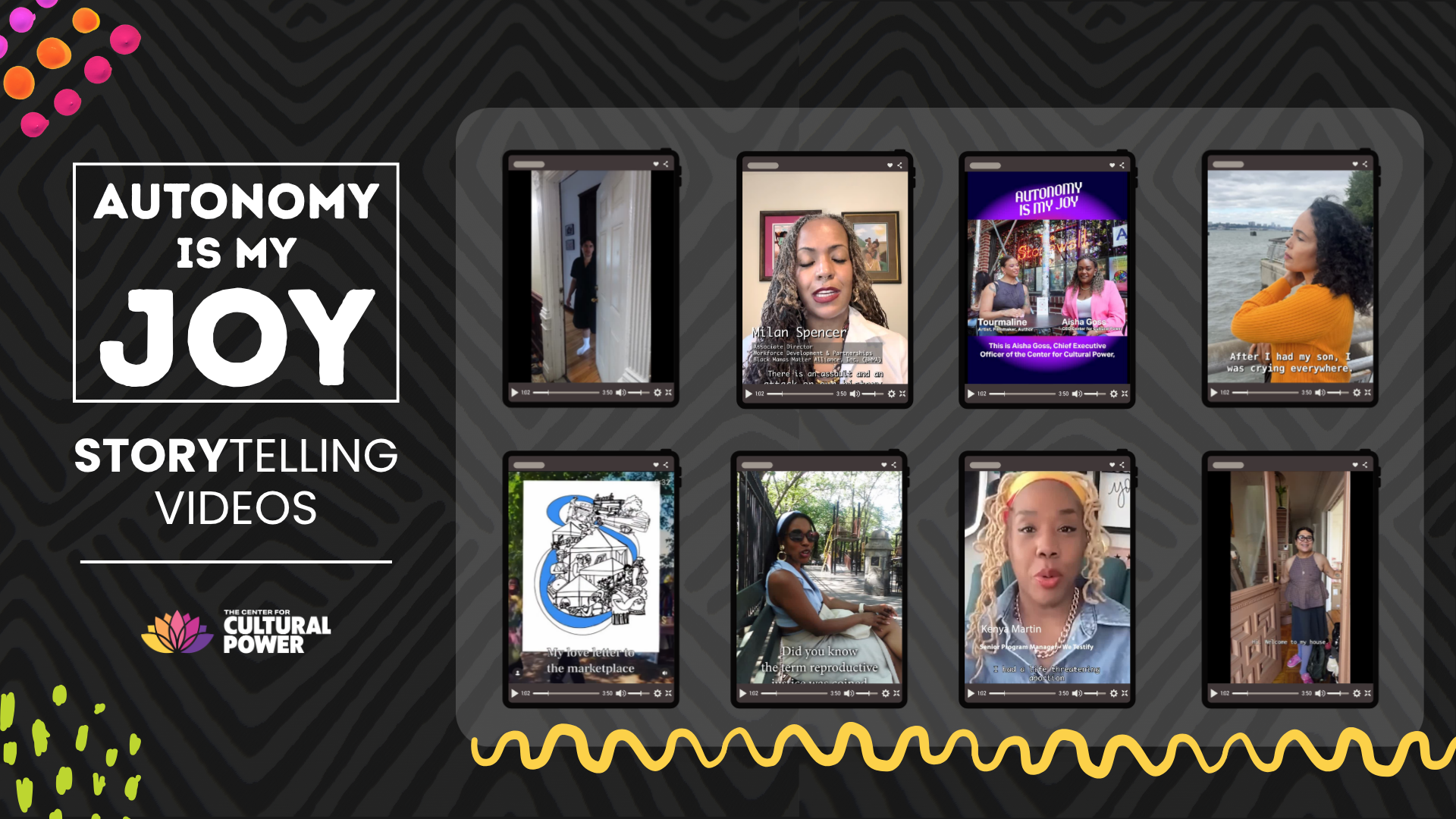
Digital storytelling extended these experiences beyond physical spaces. Thirty-nine campaign videos responded to cultural moments, elevated artists, amplified movement partners, explored reproductive justice and Black maternal health, and deepened conversations between activations. Together, exhibitions, storytelling, and participatory experiences created a connected audience journey where people encountered the campaign through multiple touchpoints over time.
Autonomy Is My Joy demonstrated that narrative change happens not through a single message, but through an accumulation of stories, relationships, and cultural experiences that people can see themselves inside and ultimately help shape themselves.
The campaign succeeded because communities didn't simply encounter the work they participated in it.
Visitors added their own reflections to collaborative installations. Birth workers watched their lived experiences become visual archives. Conference attendees carried artwork, prints, and coloring pages back into their own communities. Movement partners integrated campaign narratives into workshops, exhibitions, and organizing efforts of their own, extending the work far beyond any single activation.
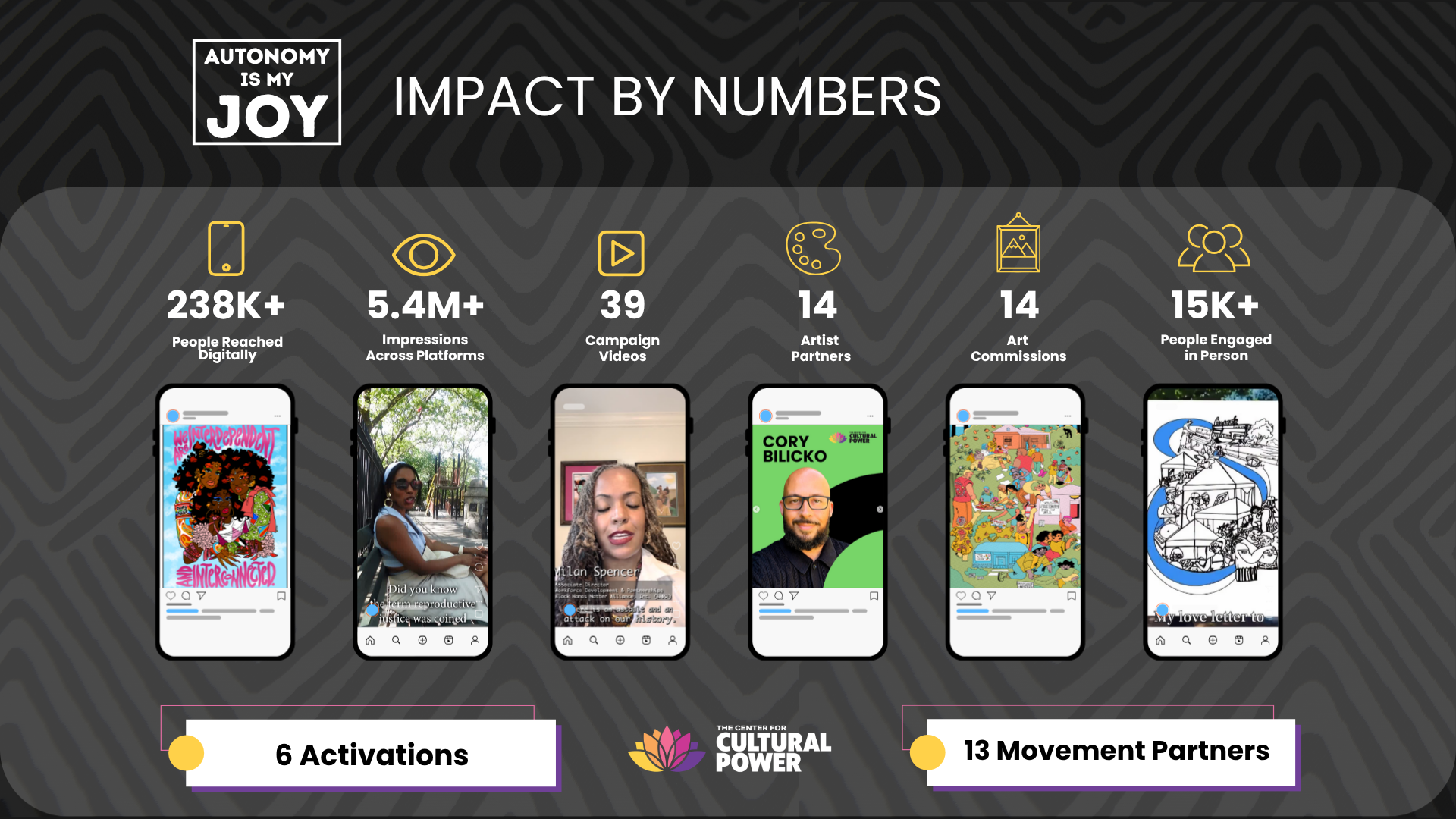
Between January 2025 and July 2026, Autonomy Is My Joy commissioned 15 artists, partnered with 14 movement organizations, produced 39 campaign videos, and activated the campaign through exhibitions, workshops, festivals, conferences, and community gatherings across the United States. The campaign generated more than 5.4 million impressions, reached hundreds of thousands of people digitally, and engaged thousands more in person, with additional July 2026 analytics still pending at the time of publication.
The metrics demonstrate reach. The stories demonstrate resonance.
Across surveys and participant feedback, people described feeling seen, inspired, more connected to the issues, and more hopeful after participating. The campaign created spaces where people recognized themselves, their families, and their futures in the artwork not as audiences, but as contributors. That sense of belonging became one of the campaign's most meaningful measures of success.
Autonomy Is My Joy proved that arts and culture can do more than communicate ideas. They can build belonging, strengthen social movements, connect multiple justice issues through shared narrative, and create cultural infrastructure that communities continue carrying forward long after a campaign ends.