For families already stretching every dollar to cover rent and groceries, something as simple as a bottle of shampoo, a baby bottle, or school supplies can feel like an impossible luxury. These are the trade-offs millions of families face daily — choosing between feeding their family and keeping them clean, safe, and cared for.
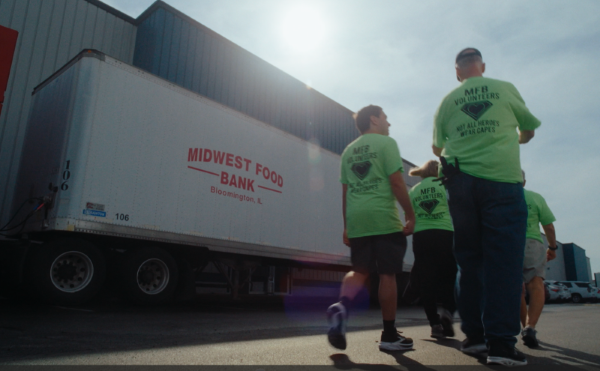
Amazon partners with nonprofits like Midwest Food Bank to launch the Targeted Donations program to ease these burdens. The program delivers essential items — hygiene products, baby care, household basics — directly to hyperlocal nonprofits serving families in need. When a parent picks up a box of baby wipes or a bottle of detergent at no cost, that's money back in their pocket for groceries, for rent, for the things that keep life going.
Through Midwest Food Bank's network of 2,400 community partners across 29 states, these donations have the potential to reach 620,000 families — not as afterthoughts from a warehouse, but as intentionally selected essentials matched to what communities actually need.
Behind this is a story about innovating on behalf of the community: Amazon saw a need in the community and built technology that identifies essential products from its returns and surplus inventory, and then uses Amazon’s logistics network to deliver them directly to community partners, eliminating unnecessary redistribution layers. This means more goods reach families faster, with less waste.
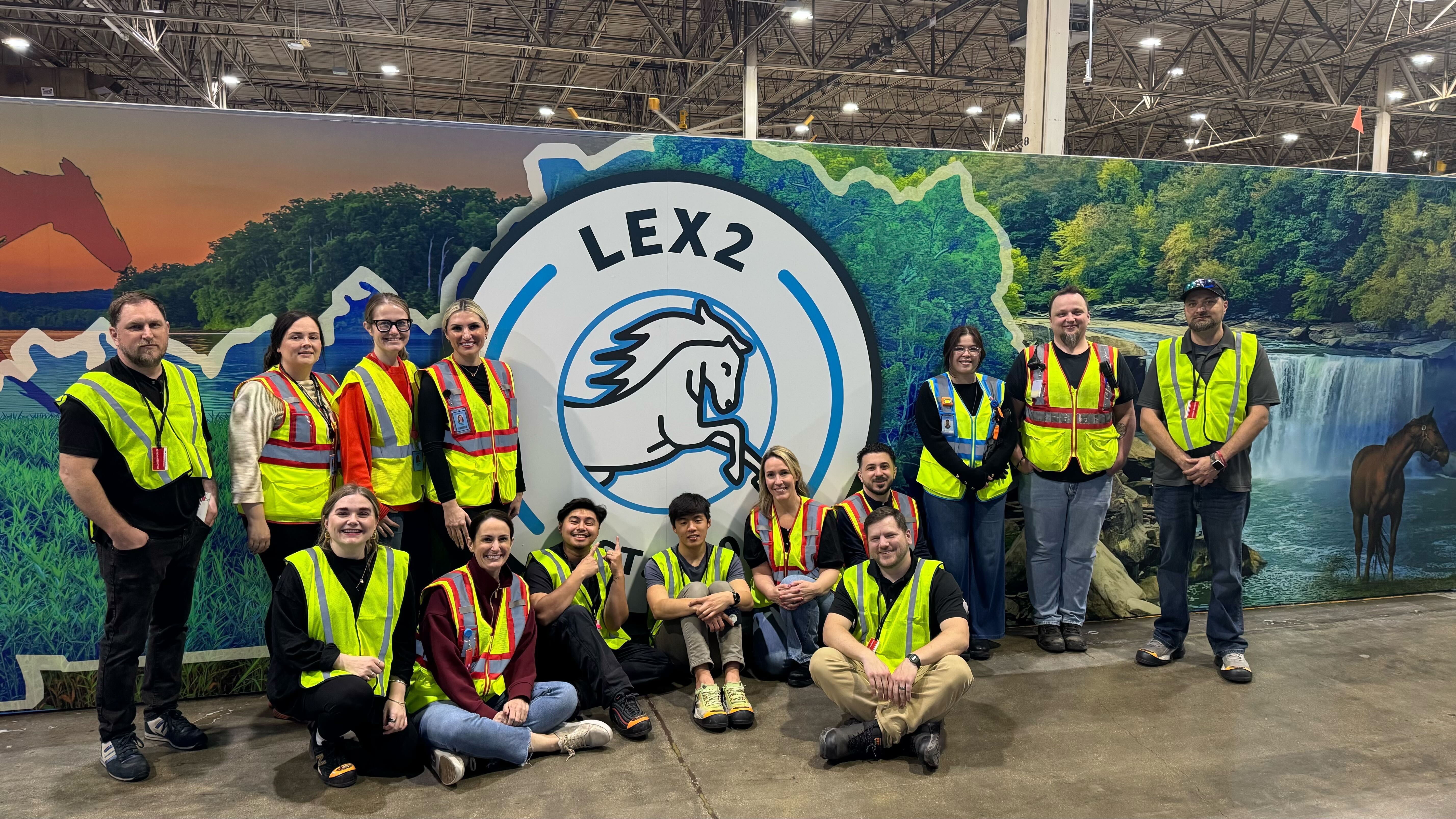
What started at a single site in Lexington, Kentucky is now scaling to multiple Amazon sites across the U.S. with additional nonprofit partners joining to serve even more communities — turning what was once surplus into something that makes day-to-day life just a little bit easier.
Our strategy centered on one principle: listen to the community first, then build the systems to serve them.
COMMUNITY-LED PRODUCT SELECTION
Amazon didn't decide what communities needed — our nonprofit partners did. Working hand in hand with partners like Midwest Food Bank, we identified more than 500 essential product categories that community members had specifically requested: baby bottles, hygiene products, cleaning supplies, small household goods, and other essential items families struggle to afford. Midwest Food Bank's community pantry model ensures local agencies can select exactly what supports the families in their networks — from toiletries for someone sleeping in a shelter, to a toaster for a family moving into their first apartment, to an e-reader for a child who doesn't have one at home.
OPERATIONAL INNOVATION IN SERVICE OF COMMUNITY
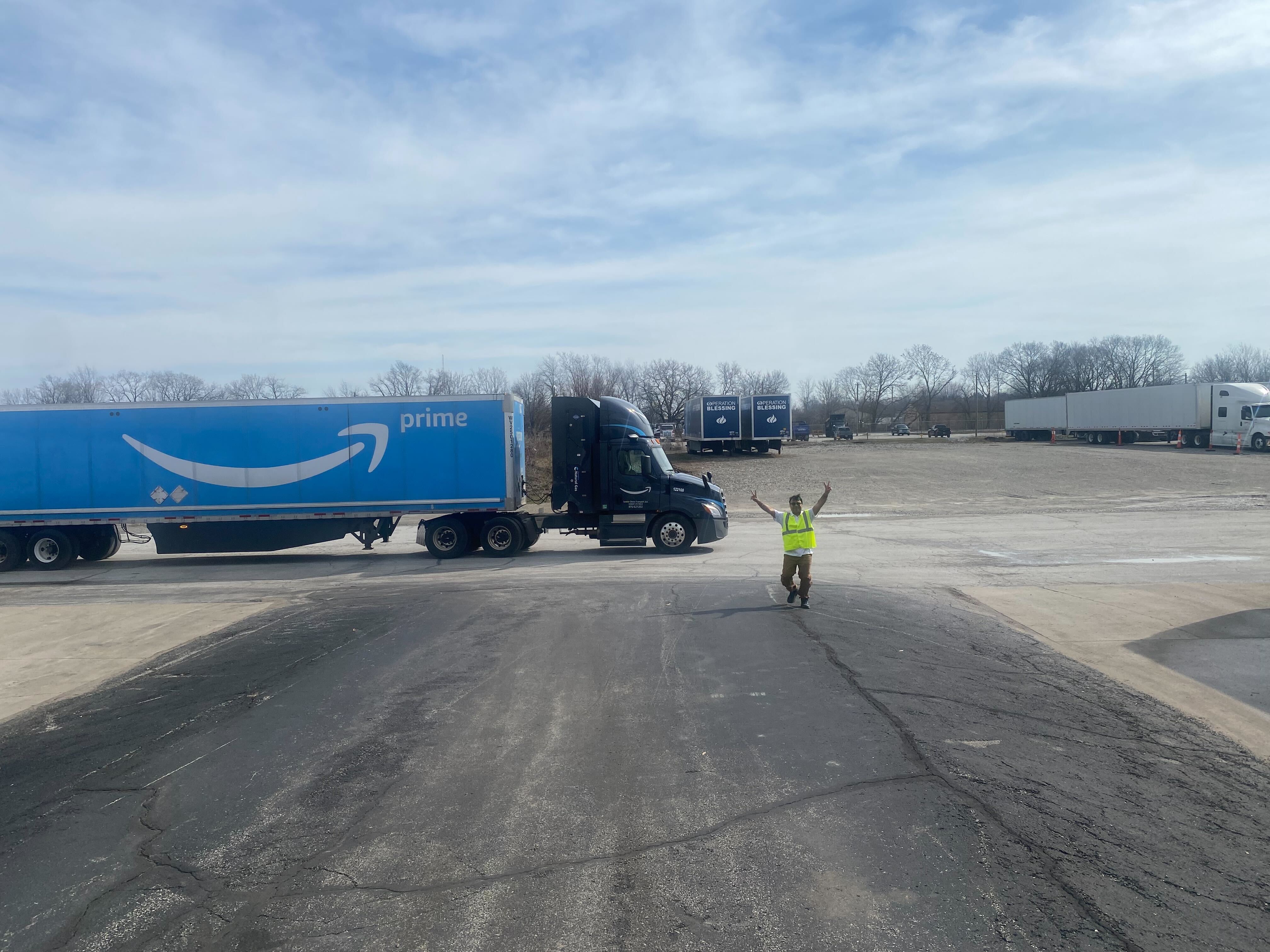
With the right items identified, we built the technology to deliver them at scale. At Amazon's LEX2 return center in Lexington, Kentucky, automated sorting technology now identifies essential products from the returns stream and routes them directly to Midwest Food Bank — eliminating the middlemen and redistribution layers that slow down traditional bulk donations. The program leverages Amazon's existing transportation fleet to deliver full trailer loads of curated essentials directly to eight nonprofit partners serving communities across 7 states, and more to come.
STORYTELLING CAMPAIGN
To make communities aware of this partnership and the resources available to them, we partnered with Midwest Food Bank to produce a "Community First" video, part of a series a stories around Amazon's community impact:
Two :30-second videos — one showcasing the innovation behind the sorting process, one highlighting impact through Midwest Food Bank's community reach
One :60-second combined video blending both stories
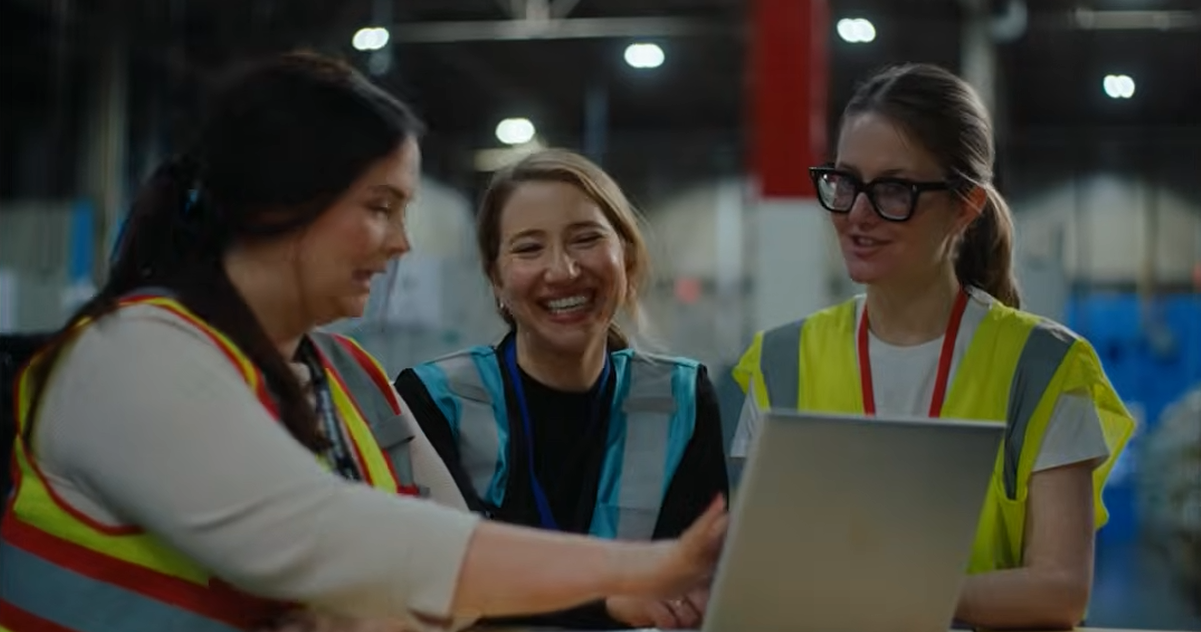
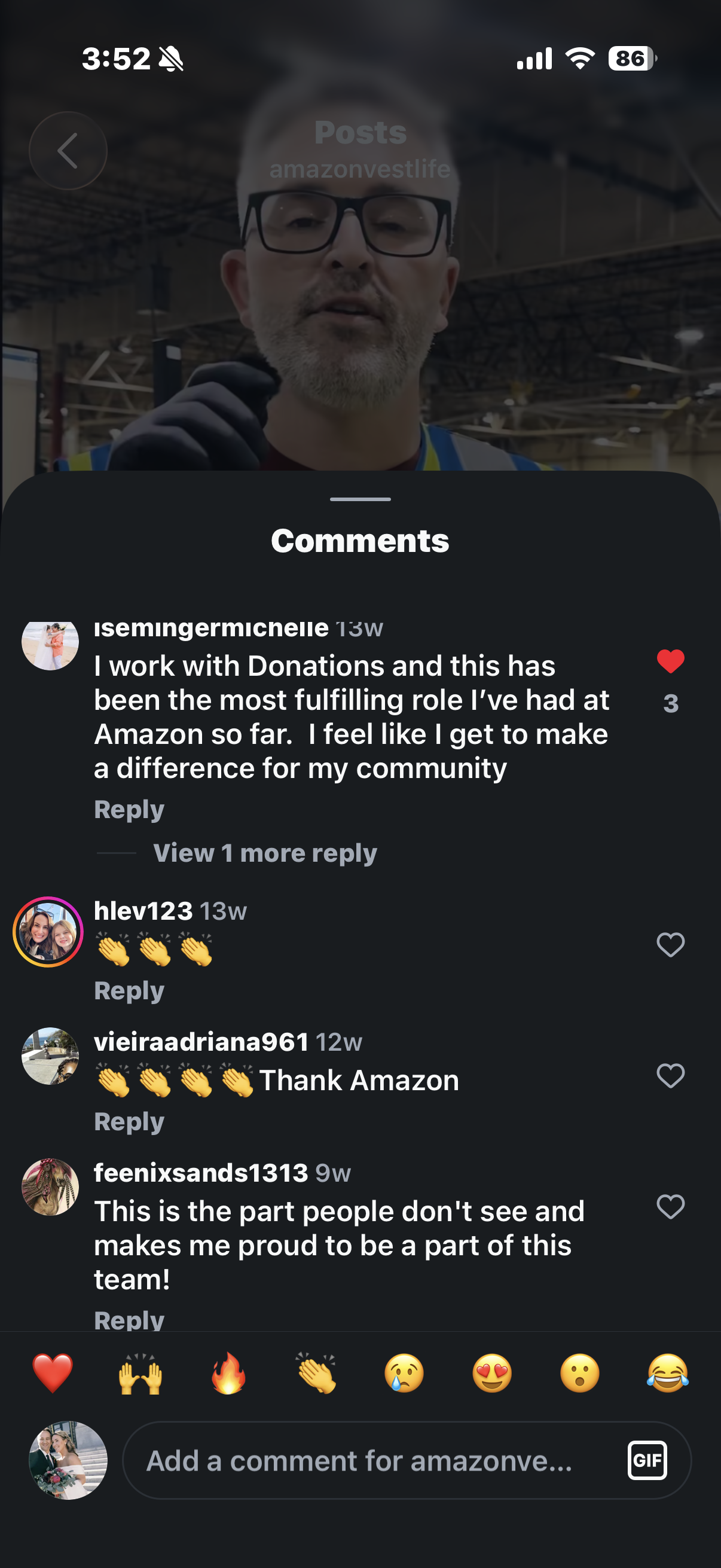
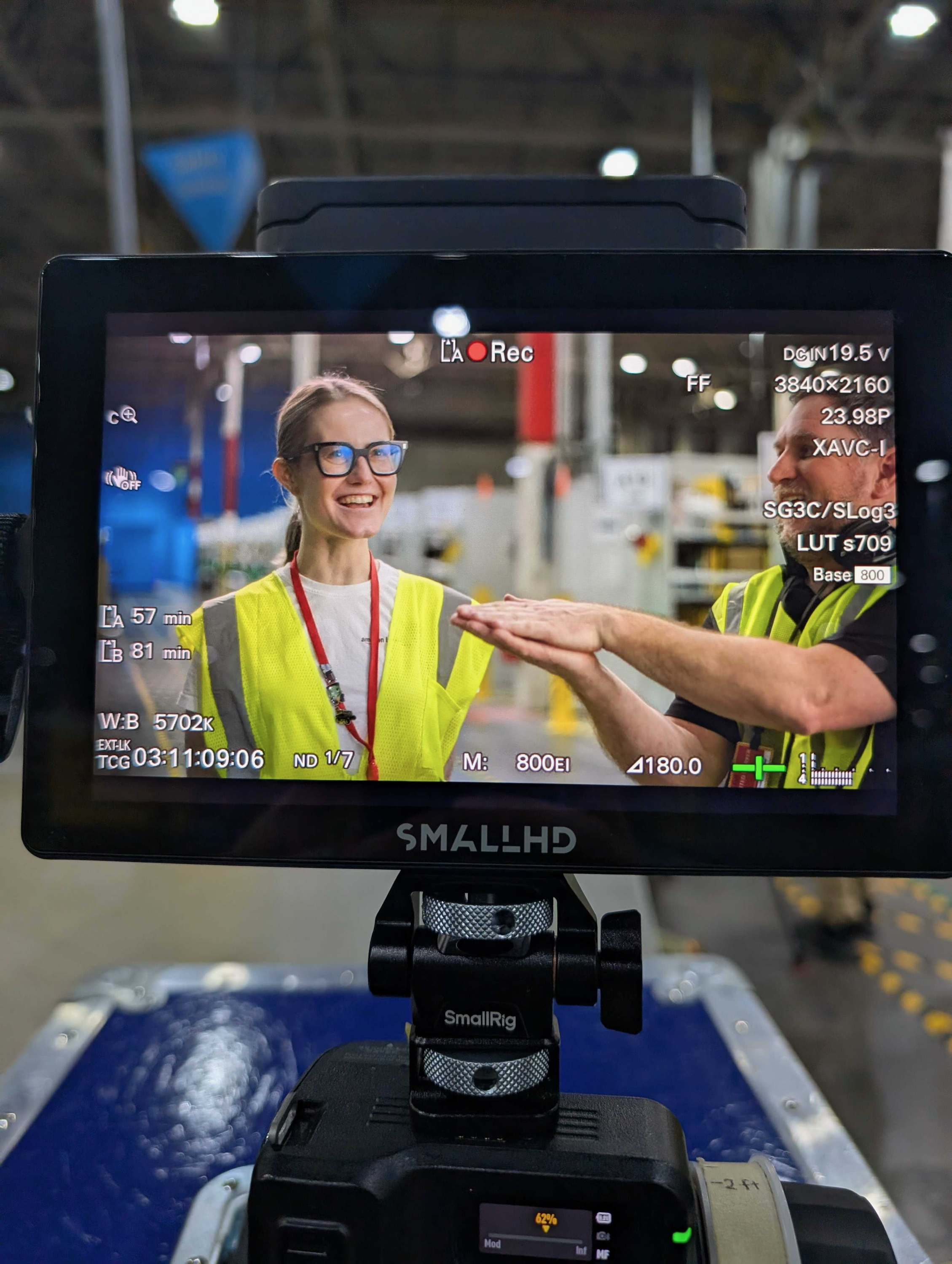
A social-first cut featuring Amazon associates at LEX2 sharing what this work means to them
The campaign launched across YouTube, LinkedIn, Facebook, and Amazon-owned streaming TV placements, with executive leaders and employees organically sharing the content.
SCALING TO SERVE MORE COMMUNITIES
What launched at a single site in February 2026 is now available at six U.S. Amazon sites, with plans to scale to additional sites by end of year. Each new site means more essential items redirected from surplus into the hands of families who need them — and more nonprofit partners joining to serve their local communities.
The Targeted Donations program delivered measurable impact across all four dimensions of our value proposition:
SOCIAL IMPACT
600K targeted units distributed to 20+ partners in 2025 pilots; on track for 3M units in 2026
Curated donations delivered directly to eight nonprofit partners serving communities across 7 states, and more to come
CAMPAIGN PERFORMANCE
132.4M impressions on streaming TV (through 27-Jul)
LinkedIn engagement: +74.5% vs. benchmark
Facebook video views: +221% vs. benchmark
YouTube watch time: +442% vs. benchmark
Reputation Marketing message testing showed +5.2 percentage point lift in "supports good causes" perception among U.S. audiences and +3.6 percentage point lift that Amazon builds relationships with local organizations
All three videos significantly improved perceptions that Amazon cares about making a positive community impact (+2.9pp to +3.0pp)
SUSTAINABILITY
Program diverts essential goods from landfill to community reuse
EMPLOYEE ENGAGEMENT
Overwhelmingly positive associate sentiment, with employees sharing on social media unprompted like: "I work with Donations and this has been the most fulfilling role I've had at Amazon so far. I feel like I get to make a difference in my community."
Program cited as a driver of workplace fulfillment and community connection
By leveraging Amazon’s technology and logistics alongside Midwest Food Bank’s hyperlocal community relationships, we created a model that converts corporate surplus into measurable social good—at scale.