Regular physical activity is one of the most effective ways to improve health, independence, and quality of life as we age. Yet many adults know exercise is important and still struggle to begin. The challenge is often not awareness, but action. Many people feel intimidated by fitness programs, lack access to gyms or equipment, or believe exercise requires more time, skill, or athleticism than they have.
AARP created the 30-Day Couch-to-Fit Challenge to help adults 50+ overcome those barriers and build sustainable exercise habits through a simple, approachable, and rewarding experience. Our primary goal was to motivate inactive or low-to-moderate fitness participants to establish a regular movement routine that could improve their long-term health and well-being.
We also aimed to demonstrate that fitness can be accessible to anyone, regardless of experience level, by providing short, home-friendly workouts requiring minimal equipment. Rather than promoting a quick transformation, we focused on achievable daily progress and consistency.
A secondary objective was to create a high-value digital experience that encouraged ongoing engagement with AARP's health resources and Rewards platform. By combining expert-guided fitness content with gamification and community participation, we sought to drive repeat visits, increase program registrations, and introduce new audiences to AARP's mission of empowering people to choose how they live as they age.
The 30-Day Couch-to-Fit Challenge was designed around a simple insight: people are far more likely to stick with a fitness program when it feels achievable, structured, and rewarding. Instead of asking participants to dramatically change their lifestyles overnight, we created a guided experience that broke fitness into manageable daily actions.
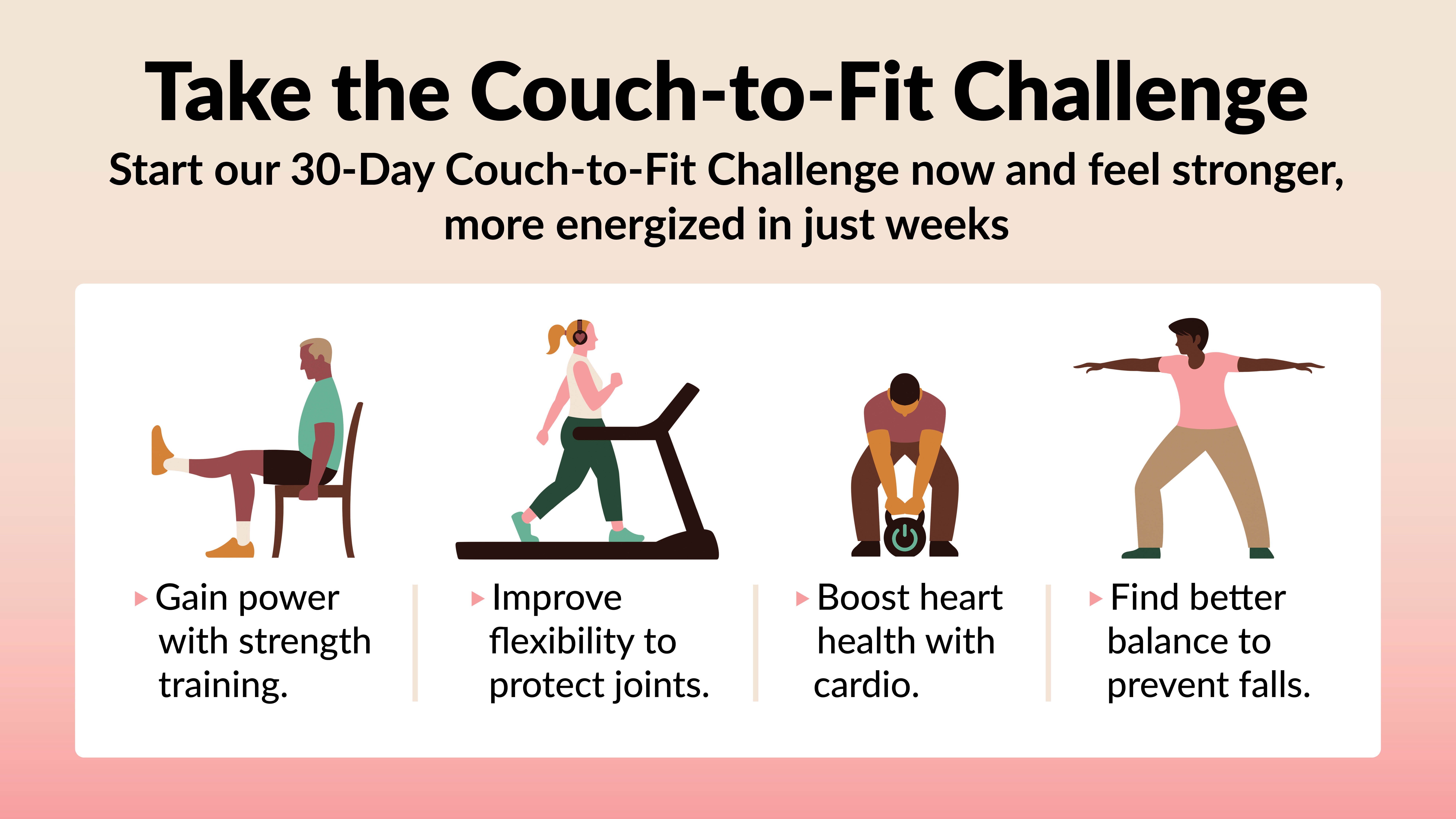
We began by identifying our target audience: adults 50+ who wanted to become more active but may have felt overwhelmed by traditional fitness programs. Working with Peter Ronai, exercise science professor and spokesperson for the American College of Sports Medicine, we developed a 30-day progression built from existing AARP fitness content and aligned with the four key exercise categories recommended for healthy aging: strength, cardio, balance, and flexibility.
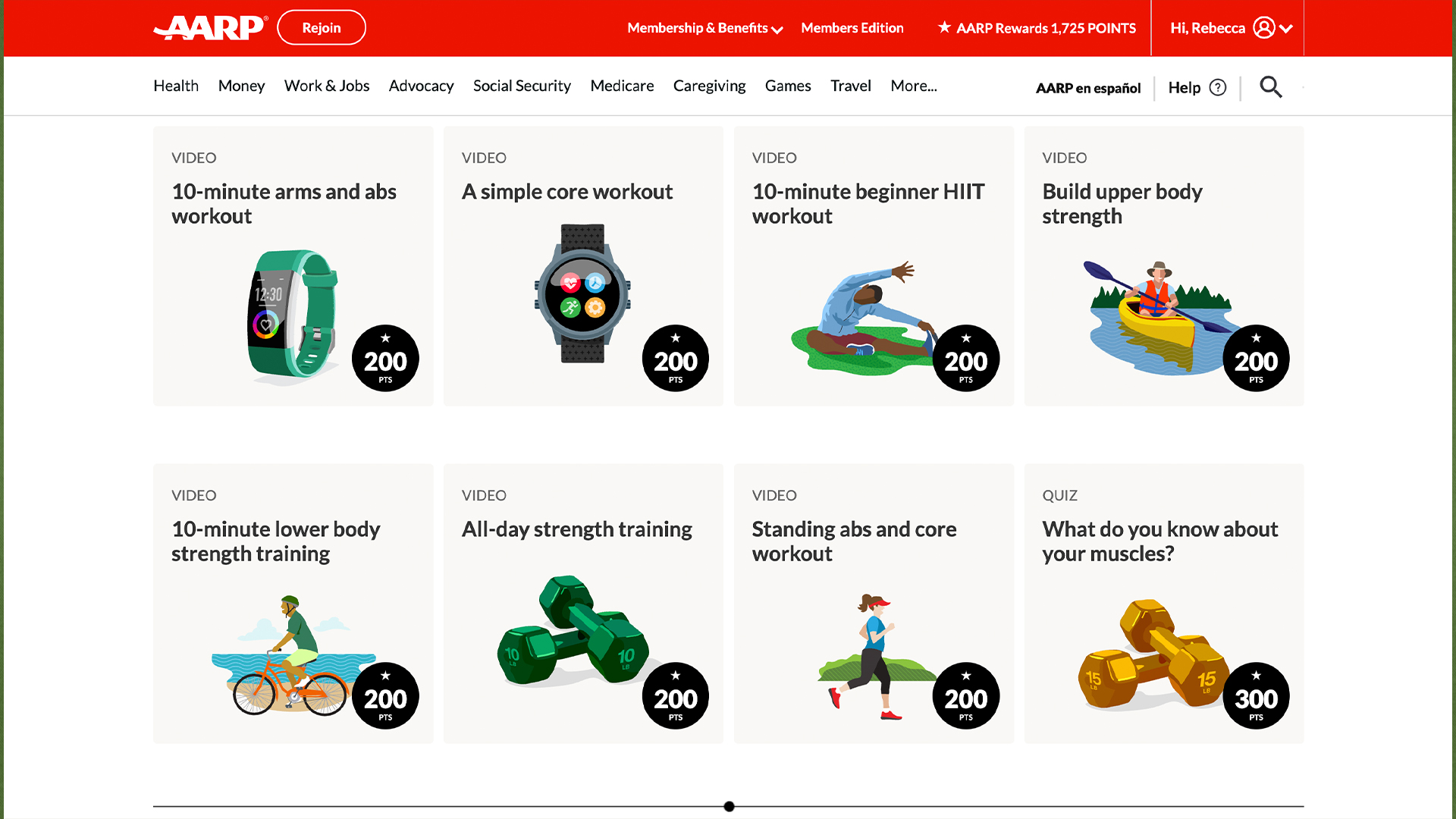
One of our biggest challenges was addressing both the practical and psychological barriers that prevent people from exercising. Many fitness programs unintentionally cater to highly active individuals, leaving beginners feeling excluded. To overcome this, we designed workouts that were intentionally approachable, averaging about 10 minutes in length, requiring minimal equipment, and easily completed at home.
We also recognized that motivation often fades when goals feel too large. Rather than presenting fitness as an overwhelming lifestyle overhaul, we framed participation as a 30-day challenge with clear milestones and a progressive weekly structure. This transformed exercise into a series of small, attainable wins that helped participants build confidence and momentum over time.
To further increase engagement, we integrated the challenge into the AARP Rewards platform. Participants earned points for completing workouts, which could be redeemed for gift cards, sweepstakes entries, and other incentives. This gamified approach reinforced healthy behaviors while providing immediate rewards for consistent participation.
Timing was also a key component of our strategy. We launched the challenge in late December, aligning with the period when many people are setting New Year's health goals and actively looking for support to create positive habits. Promotional efforts across AARP channels helped drive awareness and participation while introducing users to a broader ecosystem of health and wellness resources.
What made the program unique was its ability to combine evidence-based fitness guidance, habit-building principles, digital incentives, and an accessible user experience into a scalable program specifically designed for older adults. Rather than focusing on short-term fitness results, the challenge focused on helping participants create lasting behavior change, turning exercise from a daunting aspiration into a realistic daily habit.
The 30-Day Couch-to-Fit Challenge exceeded expectations by driving both large-scale participation and sustained engagement, demonstrating that accessible, habit-based fitness programming can successfully motivate older adults to take action.
In its first six months, the challenge attracted more than 233,000 unique visitors, generated 50,000 participant logins, drove 17,000 AARP Rewards activations, and resulted in more than 1,200 new site registrations. These outcomes not only expanded participation in the program but also supported our goal of growing engagement across AARP's digital ecosystem.
Most importantly, participants came back. Of the 233,000 visitors, more than 156,000 were repeat visitors, reflecting exceptionally strong retention and signaling that users found ongoing value in the experience. This high return rate demonstrated that the challenge successfully moved beyond awareness and encouraged sustained participation, a critical indicator of behavior change for any fitness initiative.
The campaign also generated strong social engagement, with Facebook content related to the challenge earning a 28% engagement rate, helping extend the program's reach and foster additional participation.
We consider the challenge a success because it achieved far more than traffic or views. It created an accessible pathway for adults 50+ to begin exercising, established a framework that encouraged consistency, and generated meaningful repeat participation at scale. The results validate our core hypothesis: when fitness is approachable, structured, rewarding, and designed around the realities of people's lives, individuals are far more likely to start and maintain healthy habits.